Faithful Stewardship: Lessons from Jacob's Offering
“Two hundred she goats, and twenty he goats, two hundred ewes, and twenty rams,” — Genesis 32:14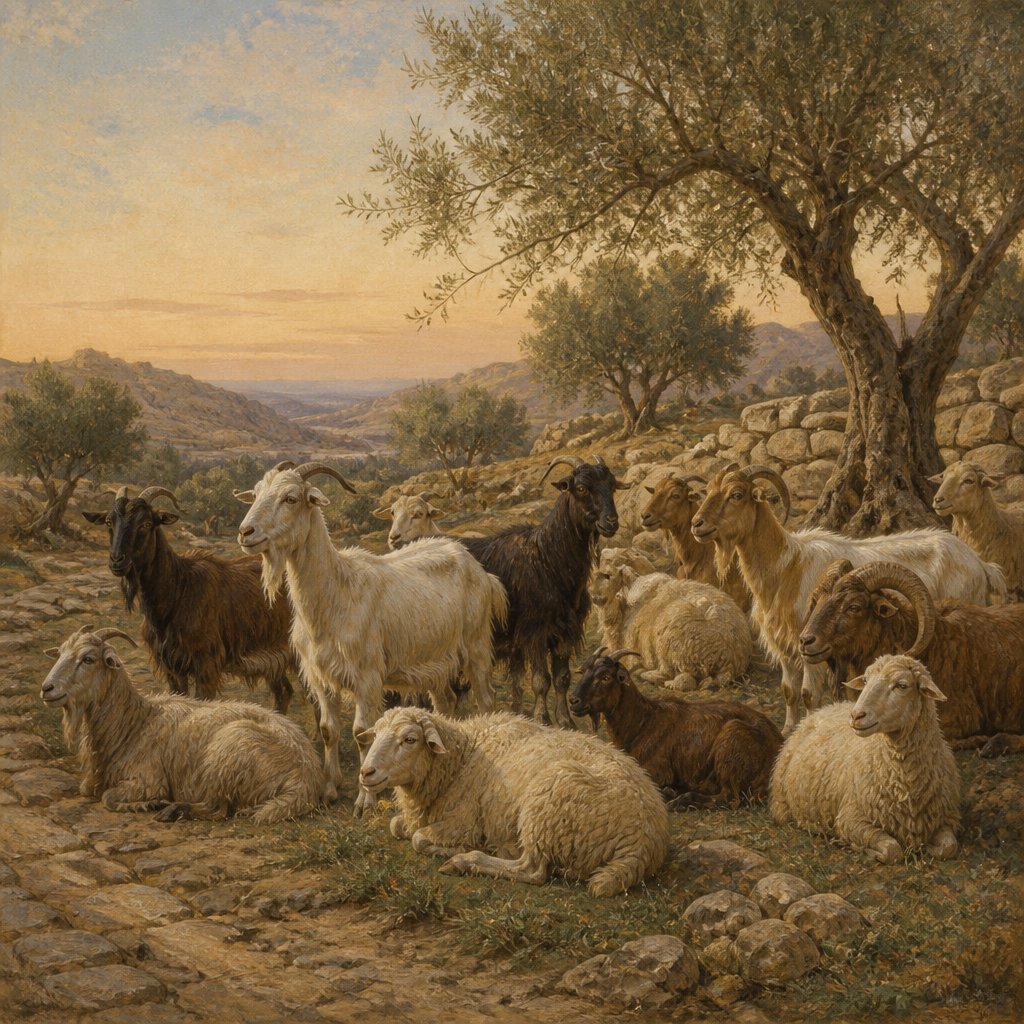
In Genesis 32:14, we find Jacob, a man who had experienced both deceit and divine intervention, preparing to encounter his estranged brother Esau after many years apart. The verse, "Two hundred she goats, and twenty he goats, two hundred ewes, and twenty rams," serves as a significant insight into Jacob’s act of stewardship, humility, and faith. As we delve into this passage, we will explore the themes of reconciliation, generosity, and the heart of worship through the lens of Jacob’s offering.
Jacob had just spent years in Haran, where he prospered greatly through God’s blessing and his hard work. Yet, despite his material wealth, he was haunted by the fear of his brother's wrath, stemming from the grievous wrongs he had committed in their past. The journey back home is not merely a physical transition for Jacob but a spiritual pilgrimage, one where he must confront his past and seek restoration in his relationship with Esau.
In preparing gifts for Esau, Jacob meticulously chooses a significant number of livestock: two hundred she goats, twenty he goats, two hundred ewes, and twenty rams – a total of four hundred animals. This isn’t just a gesture of goodwill; it is an extravagant offering that speaks volumes about the depth of his remorse and desire for reconciliation. In the ancient Near Eastern culture, wealth was often measured by livestock. By sending such a wealth of gifts, Jacob indicates that he is willing to humble himself before his brother, acknowledging his previous wrongs and the pain they caused.
The act of giving is often reflective of the state of one’s heart. In Jacob’s case, we see that his willingness to offer gifts is not just about appeasing his brother's anger; it’s an acknowledgment of his need for forgiveness and a desire for a renewed relationship. It reminds us that reconciliation often requires sacrifice. In our own relationships, how often are we willing to lay down our pride or possessions to mend fences? Jacob is a perfect lesson in selflessness; he puts others’ feelings before his own, especially in light of his previous deceit.
Furthermore, Jacob’s gifts can also represent God's abundance. The provision Jacob made illustrates a deep trust in God's faithfulness. He had left the land with nothing but a staff, and now he returns blessed beyond measure. In the same way, when we face daunting tasks or challenging relationships, we must remember to rely on and trust in God's provision. Jacob, despite his fears, acts in faith, believing that God would soften Esau’s heart. This reflects our call to trust in God’s promises, especially when we are unsure of the outcome.
In our spiritual journey, we may often find ourselves in places of conflict — with others, our past, or even within ourselves. Just as Jacob had to confront his past with Esau, we may need to confront the unresolved issues in our lives. Jacob's offering is more than a peace treaty; it is an act of worship, placing his trust in God while responding to the relational needs of his brother.
Moreover, we see the early inklings of God’s grace as Jacob recognizes that in spite of his flaws, God had still chosen to bless him. It is a reminder for us that despite our imperfections, God invites us into relationship with him, urging us to live a life of humility and generosity.
As we journey through our own lives, let us reflect on Jacob’s offering. May we be encouraged to approach our relationships with humility, willing to make sacrifices for the sake of reconciliation. Let us bring our offerings — whether they be acts of service, words of forgiveness, or even financial gifts — as a testament to our trust in God’s provision and a reflection of our heart’s desire to love others generously.
Get our apps


Artwork for Genesis 32:14

Genesis 32:14 - "Two hundred she goats, and twenty he goats, two hundred ewes, and twenty rams,"
"Two hundred she goats, and twenty he goats, two hundred ewes, and twenty rams," - Genesis 32:14

Genesis 19-32

Genesis 27:32

Genesis 24-32

Genesis 25-32

Genesis 18-32
Genesis 21-32

Genesis 49:32 - "The purchase of the field and of the cave that is therein was from the children of Heth."

1 Corinthians 14:32 - "And the spirits of the prophets are subject to the prophets."

Numbers 14:32 - "But as for you, your carcases, they shall fall in this wilderness."

Genesis 32:1 - "And Jacob went on his way, and the angels of God met him."

Matthew 14:32 - "And when they were come into the ship, the wind ceased."

Genesis 32:32 - "Therefore the children of Israel eat not of the sinew which shrank, which is upon the hollow of the thigh, unto this day: because he touched the hollow of Jacob's thigh in the sinew that shrank."

Genesis 36:32 - "And Bela the son of Beor reigned in Edom: and the name of his city was Dinhabah."

Genesis 32:24 - "¶ And Jacob was left alone; and there wrestled a man with him until the breaking of the day."

Genesis 11:32 - "And the days of Terah were two hundred and five years: and Terah died in Haran."

Genesis 32:27 - "And he said unto him, What is thy name? And he said, Jacob."

Genesis 5:32 - "And Noah was five hundred years old: and Noah begat Shem, Ham, and Japheth."

Genesis 32:21 - "So went the present over before him: and himself lodged that night in the company."

Genesis 32:23 - "And he took them, and sent them over the brook, and sent over that he had."

Genesis 10:32 - "These are the families of the sons of Noah, after their generations, in their nations: and by these were the nations divided in the earth after the flood."

Exodus 32:14 - "And the LORD repented of the evil which he thought to do unto his people."

Proverbs 14:32 - "The wicked is driven away in his wickedness: but the righteous hath hope in his death."

Genesis 32:8 - "And said, If Esau come to the one company, and smite it, then the other company which is left shall escape."

Genesis 41:32 - "And for that the dream was doubled unto Pharaoh twice; it is because the thing is established by God, and God will shortly bring it to pass."

Genesis 32:13 - "¶ And he lodged there that same night; and took of that which came to his hand a present for Esau his brother;"

Genesis 25:32 - "And Esau said, Behold, I am at the point to die: and what profit shall this birthright do to me?"

Genesis 46:32 - "And the men are shepherds, for their trade hath been to feed cattle; and they have brought their flocks, and their herds, and all that they have."

Genesis 32:31 - "And as he passed over Penuel the sun rose upon him, and he halted upon his thigh."