Crossing the Brook: Lessons in Faith and Wrestling with God
“And he took them, and sent them over the brook, and sent over that he had.” — Genesis 32:23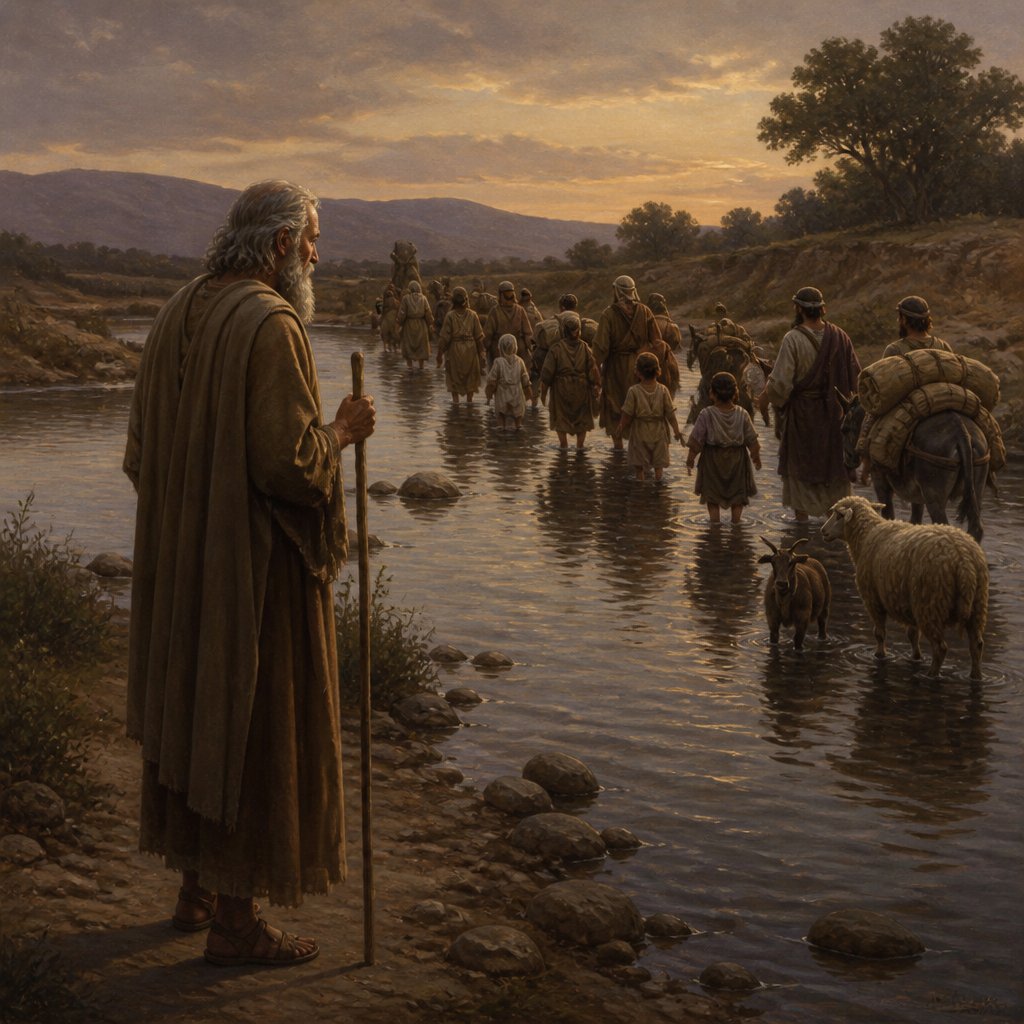
In the stillness of the night, under the vast expanse of a starry sky, we find Jacob at a pivotal moment in his life, portrayed vividly in Genesis 32:23: "And he took them, and sent them over the brook, and sent over that he had." This verse encapsulates a scene of deep significance, one that urges us to reflect on our own struggles, fears, and the necessity of divine encounter in our lives.
As we explore this passage further, we must first understand the context that surrounds Jacob's actions. Jacob, a patriarch of Israel, has just left his family behind as he prepares to meet Esau, the brother from whom he had stolen his birthright and blessing. The air is thick with anxiety; Jacob's past deeds loom over him like a dark cloud. He fears Esau's reaction, particularly the threat of violence as Esau had vowed revenge for the deception Jacob had enacted years earlier. Jacob finds himself at a crossroads—on the precipice of reconciliation or destruction.
In this moment, Jacob's decision to send his family and possessions across the brook signifies a deeper journey he is undertaking—a separation not just from his loved ones, but also from his past transgressions. In doing so, Jacob is compelled to face his innermost fears and, ultimately, seeks to connect with God in a way he hadn’t before. The brook represents a boundary—a point of no return; once crossed, Jacob would have to confront the reality of his life and the implications of his decisions.
Jacob's actions challenge us to reflect on our own instances of retreat and preparation before significant encounters in our lives. Are there aspects of our lives we need to "send over the brook"? Are there burdens, perhaps past mistakes and regrets, that we need to acknowledge, to let go of, as we approach a critical juncture in our spiritual journey?
In times of waiting and wrestling, we often find ourselves in a similar position to Jacob. Just as Jacob separated himself from the people he loved to face his own fears head-on, we too are called to create space for solitude and reflection. It is in the quiet moments that truth often surfaces—the truth about our identity, our relationships, and our need for God's intervention.
The beauty of this narrative unfolds not merely in the act of sending his loved ones across the brook, but in what follows. That night, Jacob wrestles with a mysterious figure—an experience that transcends the physical, manifesting in a spiritual conflict. This wrestling is not just about physical strength; it symbolizes the struggle of human existence—the battles we face within ourselves and our longing for divine clarity.
As Jacob wrestles until daybreak, it illustrates the perseverance required in our pursuit of God. The night symbolizes our dark seasons, filling us with doubt and fear, while the dawn represents hope, revelation, and breakthrough. Jacob’s wrestling leads to his transformation; he receives a new name, Israel, meaning "he struggles with God." This renaming is significant—Jacob moves forward not identified solely by his past mistakes but as one who has engaged with the divine.
So, what does this mean for us today? Wrestling with God can lead to profound transformation. It invites us to confront our identity in Christ, acknowledging both our weaknesses and strengths. As we engage with God, we may find ourselves changed, just as Jacob was. The act of sending our burdens "over the brook" cleanses us from the weight of our past and prepares us for the future.
Let us then be encouraged by Jacob’s story. As we face our own metaphorical brooks, may we not shy away from gathering the courage to cross over, shedding the baggage that hinders our walk with God. In solitude, may we glean strength from our wrestling until dawn, knowing that, through it all, we are being shaped into the images God intends for us.
Get our apps


Artwork for Genesis 32:23

Genesis 32:23 - "And he took them, and sent them over the brook, and sent over that he had."
"And he took them, and sent them over the brook, and sent over that he had." - Genesis 32:23

Genesis 19-32

Genesis 27:32

Genesis 25-32

Genesis 18-32

Genesis 24-32
Genesis 21-32

Matthew 23:32 - "Fill ye up then the measure of your fathers."

2 Samuel 23:32 - "Eliahba the Shaalbonite, of the sons of Jashen, Jonathan,"

Exodus 23:32 - "Thou shalt make no covenant with them, nor with their gods."

Proverbs 23:32 - "At the last it biteth like a serpent, and stingeth like an adder."

Acts 23:32 - "On the morrow they left the horsemen to go with him, and returned to the castle:"

Genesis 49:32 - "The purchase of the field and of the cave that is therein was from the children of Heth."

Luke 23:32 - "And there were also two other, malefactors, led with him to be put to death."

Genesis 32:1 - "And Jacob went on his way, and the angels of God met him."

Genesis 32:32 - "Therefore the children of Israel eat not of the sinew which shrank, which is upon the hollow of the thigh, unto this day: because he touched the hollow of Jacob's thigh in the sinew that shrank."

Deuteronomy 32:23 - "I will heap mischiefs upon them; I will spend mine arrows upon them."

Genesis 23-19

Genesis 23-3

Genesis 23-13

Genesis 23-17

Genesis 23:11

Genesis 23-9

Genesis 23:2

Genesis 23-18

Genesis 23-5

Genesis 23-12

Genesis 36:32 - "And Bela the son of Beor reigned in Edom: and the name of his city was Dinhabah."

Genesis 32:24 - "¶ And Jacob was left alone; and there wrestled a man with him until the breaking of the day."