Facing the Fear of Reconciliation
“And said, If Esau come to the one company, and smite it, then the other company which is left shall escape.” — Genesis 32:8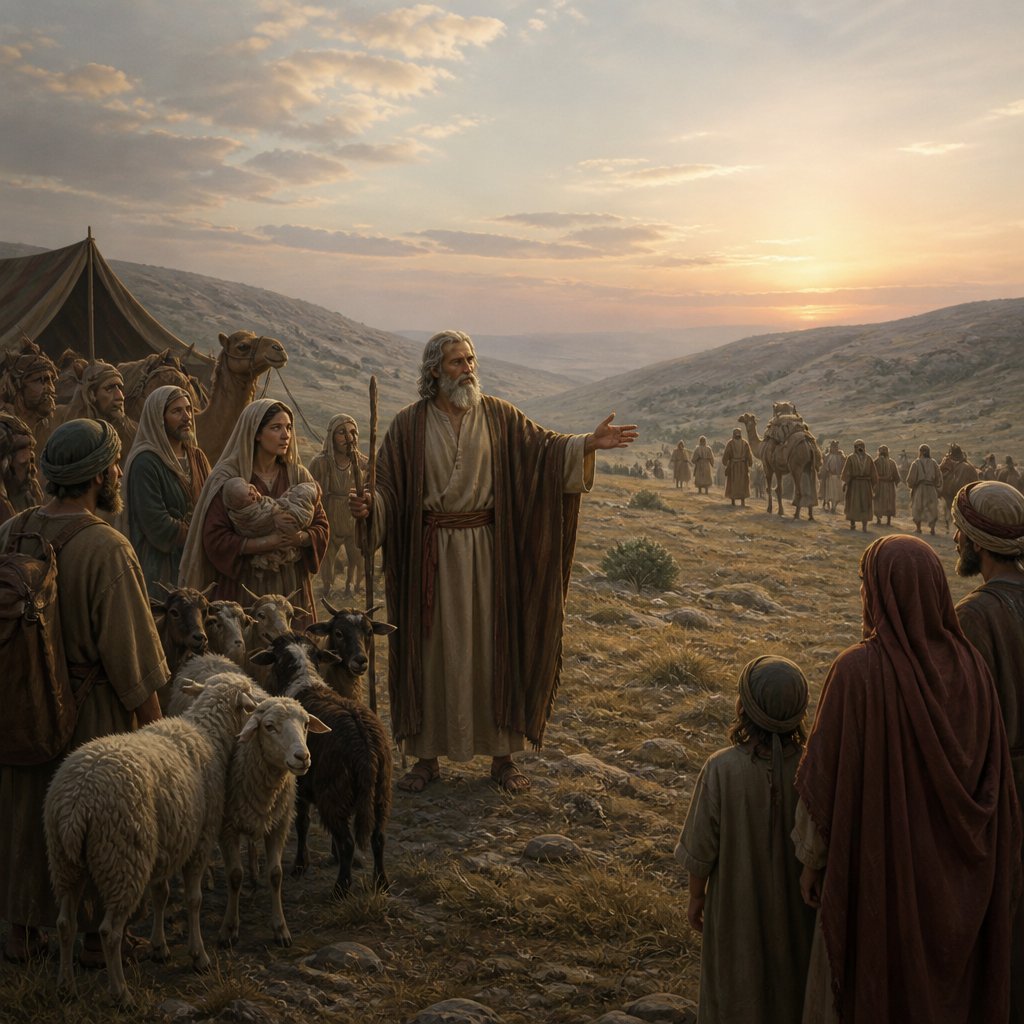
Genesis 32:8 (KJV) states, "And said, If Esau come to the one company, and smite it, then the other company which is left shall escape." This verse captures a pivotal moment in the life of Jacob, who is grappling with deep-seated fear, guilt, and the consequences of his past actions. As we delve into this scripture, it reveals profound truths about human relationships, the struggle for reconciliation, and ultimately, the hope found in God’s providential care.
Jacob's journey back to his homeland after years of exile paints a vivid picture of conflict and tension. He is returning to face the brother he deceived and stole from—Esau. The anticipation of meeting Esau stirs within Jacob an intense fear. He anticipates that Esau, after years of harboring resentment, may react violently. This fear is so palpable that Jacob divides his people into two camps. His strategy is not an act of cowardice but a show of desperation. He hopes that if Esau attacks one camp, the other might escape.
This moment encapsulates what many of us feel when we face the repercussions of our past mistakes. How often do we find ourselves trying to protect what little we have left, hedging our bets when faced with overwhelming odds? Just as Jacob divided his camps in fear, we often try to shield ourselves emotionally, psychologically, or spiritually from potential harm.
However, Jacob’s fear underscores a deeper spiritual reality. He is at a crossroads, caught between his past and his future. The weight of his actions—the deception of his father Isaac, the betrayal of his brother—rests heavily on him. In many ways, Jacob mirrors us as we grapple with the baggage of our own histories. The fear of confrontation or rejection can paralyze us, creating emotional barriers that hinder our relationships and our spiritual growth.
In this moment of deep fear, it’s important to notice that the narrative does not end with Jacob's panic. Instead, it continues to unfold, ultimately leading to an encounter of grace. Prior to this moment, Jacob had experienced an encounter with God (Genesis 32:24-30). That night, he wrestled with a divine being and emerged changed—a changed name signifying a transformed character. His new name, Israel, highlights his struggles with both God and humans. This pivotal experience prepares Jacob for the inevitable meeting with Esau.
When we find ourselves fearful and anxious like Jacob, we must remember to turn our gaze toward God. In those moments when we feel most vulnerable, we are invited to seek divine help and assurance. Jacob’s strategy to divide his company demonstrates an instinctual human response; however, we are called to lean into our faith more than our own understanding or plans. Jesus urges us in Matthew 6:34 (KJV), "Take therefore no thought for the morrow: for the morrow shall take thought for the things of itself. Sufficient unto the day is the evil thereof."
The reconciliation of Jacob and Esau is a powerful testimony of grace and forgiveness. When they eventually meet, it is not with retribution but with embraces and weeping. This teaches us that while we may strive to control outcomes, God can change hearts in ways we cannot imagine.
As we reflect on Genesis 32:8, we are reminded that reconciliation often comes after periods of turmoil and conflict. The way to healing is rarely straightforward, but God invites us to step out in faith amidst our fears—aware that He is capable of restoring relationships, transforming hearts, and guiding us through our most challenging encounters.
In conclusion, may we learn from Jacob’s experience. Let us face our fears with honesty, seek God's guidance, and trust Him with the outcomes. And as we do this, we can embrace the promise of reconciliation—not only with those we may have wronged but also with ourselves, moving forward into the new life God offers.
Get our apps


Artwork for Genesis 32:8

Genesis 32:8 - "And said, If Esau come to the one company, and smite it, then the other company which is left shall escape."
"And said, If Esau come to the one company, and smite it, then the other company which is left shall escape." - Genesis 32:8

Genesis 19-32

Genesis 27:32

Genesis 25-32

Genesis 18-32

Genesis 24-32
Genesis 21-32

Matthew 8:32

Matthew 8:32

Matthew 8:32

Psalm 32:8

Psalm 32:8

Psalm 32:8

Psalm 32:8

Psalm 32:8

Psalm 32:8

Genesis 49:32 - "The purchase of the field and of the cave that is therein was from the children of Heth."

Genesis 32:1 - "And Jacob went on his way, and the angels of God met him."

Genesis 32:32 - "Therefore the children of Israel eat not of the sinew which shrank, which is upon the hollow of the thigh, unto this day: because he touched the hollow of Jacob's thigh in the sinew that shrank."

Genesis 36:32 - "And Bela the son of Beor reigned in Edom: and the name of his city was Dinhabah."

Genesis 32:24 - "¶ And Jacob was left alone; and there wrestled a man with him until the breaking of the day."

Ezra 8:32 - "And we came to Jerusalem, and abode there three days."

Genesis 11:32 - "And the days of Terah were two hundred and five years: and Terah died in Haran."

Genesis 32:27 - "And he said unto him, What is thy name? And he said, Jacob."

Genesis 5:32 - "And Noah was five hundred years old: and Noah begat Shem, Ham, and Japheth."

Genesis 32:21 - "So went the present over before him: and himself lodged that night in the company."

Job 32:8 - "But there is a spirit in man: and the inspiration of the Almighty giveth them understanding."

Genesis 32:23 - "And he took them, and sent them over the brook, and sent over that he had."

The Plague of Flies - Exodus 8:20-32.