The Cost of Honor: Learning from Dinah's Story
“And they said, Should he deal with our sister as with an harlot?” — Genesis 34:31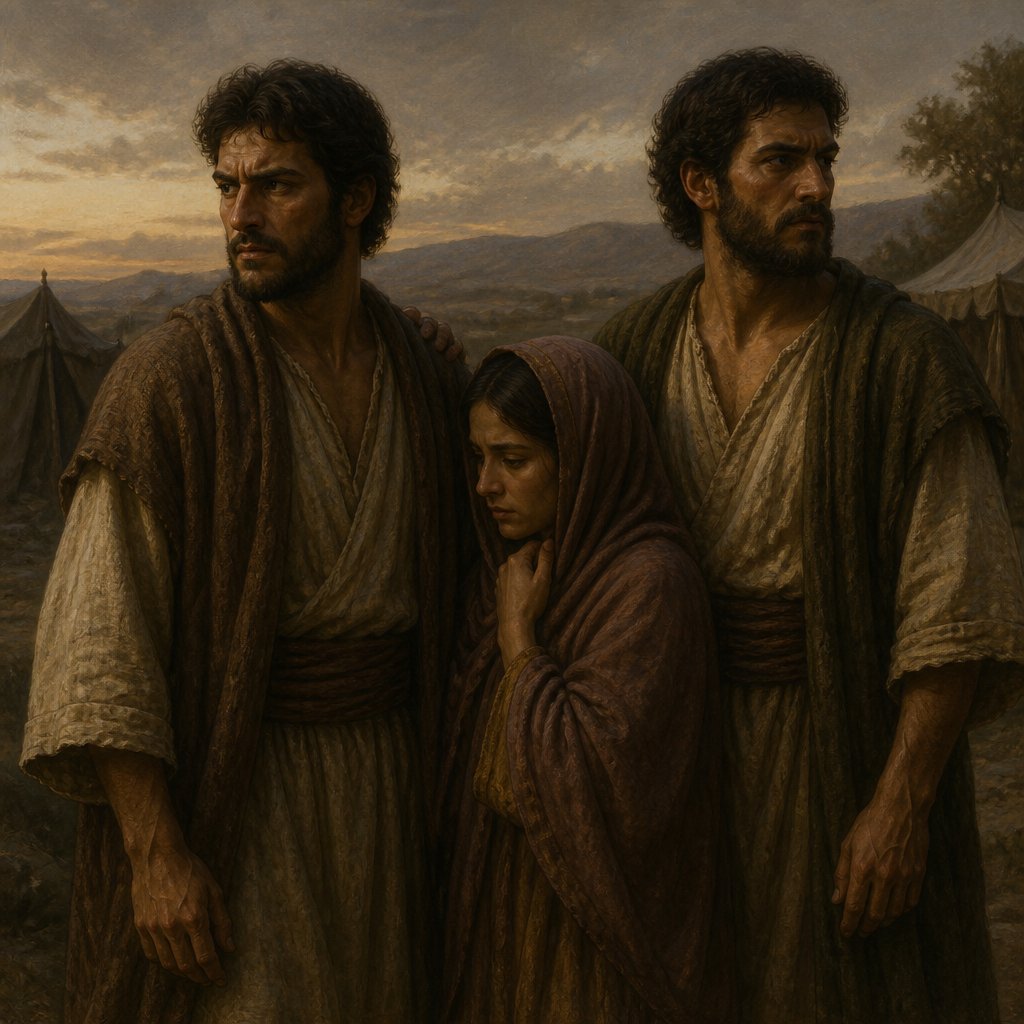
The story of Dinah in Genesis 34 exposes us to the complexities of honor, justice, and the consequences of our actions. The troubling event begins when Dinah, the daughter of Jacob and Leah, goes out to see the daughters of the land and encounters Shechem, the son of Hamor the Hivite. The aftermath of their interaction results in dire consequences that reverberate throughout Jacob's family, leading to a desperate cry for justice from her brothers, who question, "Should he deal with our sister as with an harlot?"
This powerful question encapsulates the righteous indignation of Dinah’s brothers. They wrestle with the disgrace that has befallen their sister, and rightfully so. In the context of their culture, Dinah’s honor was directly linked to her family's reputation and their standing in the community. The term "harlot" indicates not just an act of sexual indiscretion; it represents an utter devaluation of a woman’s honor and integrity. In a patriarchal society, where women were often seen as property rather than individuals with rights, Dinah’s violation is not only personal but a communal affront to the entire family.
As we unpack this verse, we are compelled to confront the deeper implications of Dinah’s experience. The first lesson is the importance of honor. In contemporary culture, the concept of honor may seem archaic, yet it remains an essential aspect of our identities. As Christians, our duty to uphold honor should embody both the defense of the vulnerable and the commitment to righteousness. Dinah’s story encourages us to recognize the sacredness of individuals—how our actions towards others reflect our character and values. When we see exploitation or injustice, we must be motivated to act.
Secondly, this passage leads us into a crucial discussion about community responsibility. Dinah's brothers take matters into their own hands, responding with violence and vengeance against Shechem and his father. They deceitfully negotiate with Shechem, demanding that he and all the men of his city be circumcised as a condition for marrying Dinah. While these actions stem from a desire to protect their sister's honor, they also highlight pitfalls of recklessness and rage. It prompts us to reflect on how in our own communities, a desire for justice can often lead down a path of revenge instead of reconciliation.
Moreover, let us consider the emotional landscape of Dinah herself. After a traumatic experience, her voice is conspicuously absent from this narrative. We are never privy to her thoughts or feelings, which is significant. In times of crisis within our lives or in the lives of others, often we rush to be the ones who advocate, forgetting to listen to the actual victims of circumstance. Dinah’s silence reminds us of the marginalized voices in society that sometimes go unheard.
Reflecting upon this story, what can we learn about justice? It is clear that Dinah’s brothers had legitimate grievances. Their protective anger reflects a devotion to their sister. But in their quest to reclaim honor, they resort to violence and cause additional suffering. Justice must be tempered with wisdom, compassion, and a desire for true restoration, not just retribution.
Therefore, the question "Should he deal with our sister as with an harlot?" serves as both a rallying cry for justice and a cautionary tale against uncontrolled vengeance. It calls us to be fervently devoted to righteousness while deeply rooted in grace. As we walk through our lives, let us stand firm in honor, advocate for those who have been wronged, and seek restoration through love and compassion. May we commit, not only to hastily avenging dishonor but to fostering a community centered on healing and truth.
In prayer, ask the Lord to help us to be champions of honor, to lift the voices of the vulnerable, and to walk the difficult path of justice marked by compassion. \"Lord, grant me the wisdom to act justly, love mercy, and walk humbly, knowing that true honor lies in reflecting Your love to the world.\"
Get our apps


Artwork for Genesis 34:31

Genesis 34:31 - "And they said, Should he deal with our sister as with an harlot?"
"And they said, Should he deal with our sister as with an harlot?" - Genesis 34:31

Genesis 31:34 - "Now Rachel had taken the images, and put them in the camel's furniture, and sat upon them. And Laban searched all the tent, but found them not."

Exodus 28:31-34

Mark 3:31-34

Exodus 28:31-34

Exodus 28:31-34
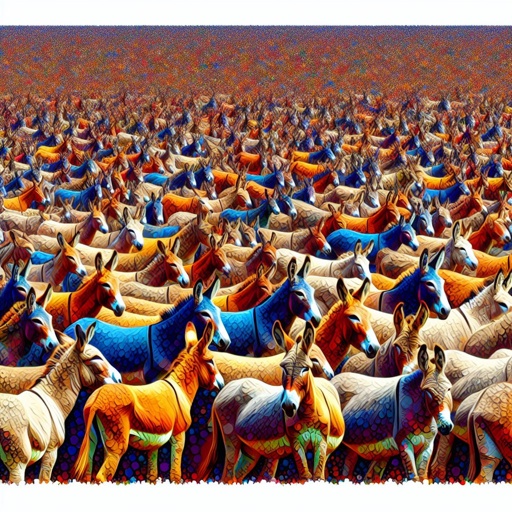
Numbers 31:34 - "And threescore and one thousand asses,"

Genesis 21-34

Genesis 19-34

Genesis 24-34
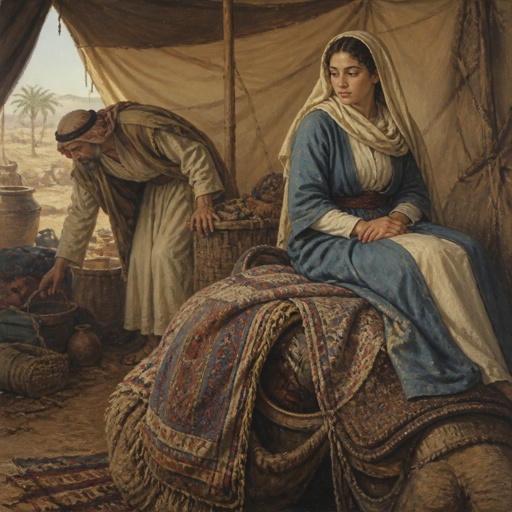
"Now Rachel had taken the images, and put them in the camel's furniture, and sat upon them. And Laban searched all the tent, but found them not." - Genesis 31:34

"And threescore and one thousand asses," - Numbers 31:34

Genesis 21-31

Genesis 18-31

Genesis 31:35

Genesis 19-31

Genesis 24-31

Job 34:31 - "Surely it is meet to be said unto God, I have borne chastisement, I will not offend any more:"

Exodus 34:31 - "And Moses called unto them; and Aaron and all the rulers of the congregation returned unto him: and Moses talked with them."

Genesis 21:34 - "And Abraham sojourned in the Philistines' land many days."

Ezekiel 34:31 - "And ye my flock, the flock of my pasture, are men, and I am your God, saith the Lord GOD."

Genesis 34:18 - "And their words pleased Hamor, and Shechem Hamor's son."

Genesis 24:34 - "And he said, I am Abraham's servant."

Genesis 36:34 - "And Jobab died, and Husham of the land of Temani reigned in his stead."

Genesis 34:28 - "They took their sheep, and their oxen, and their asses, and that which was in the city, and that which was in the field,"
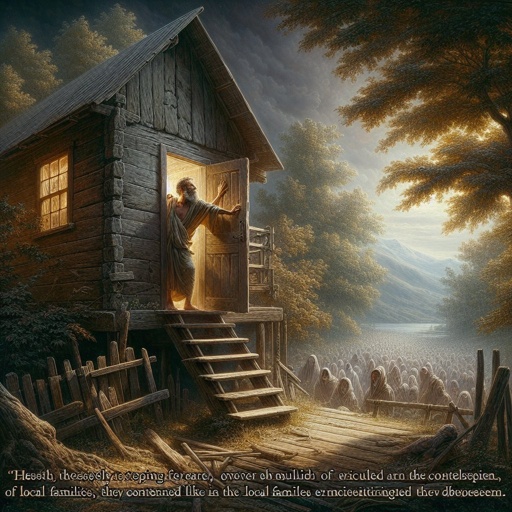
Job 31:34 - "Did I fear a great multitude, or did the contempt of families terrify me, that I kept silence, and went not out of the door?"

Genesis 31:22 - "And it was told Laban on the third day that Jacob was fled."

Genesis 31:45 - "And Jacob took a stone, and set it up for a pillar."

Genesis 31:47 - "And Laban called it Jegarsahadutha: but Jacob called it Galeed."