Dukes and Destiny: Unveiling God's Plan in the Lineage of Esau
“Duke Dishon, duke Ezer, duke Dishan: these are the dukes that came of Hori, among their dukes in the land of Seir.” — Genesis 36:30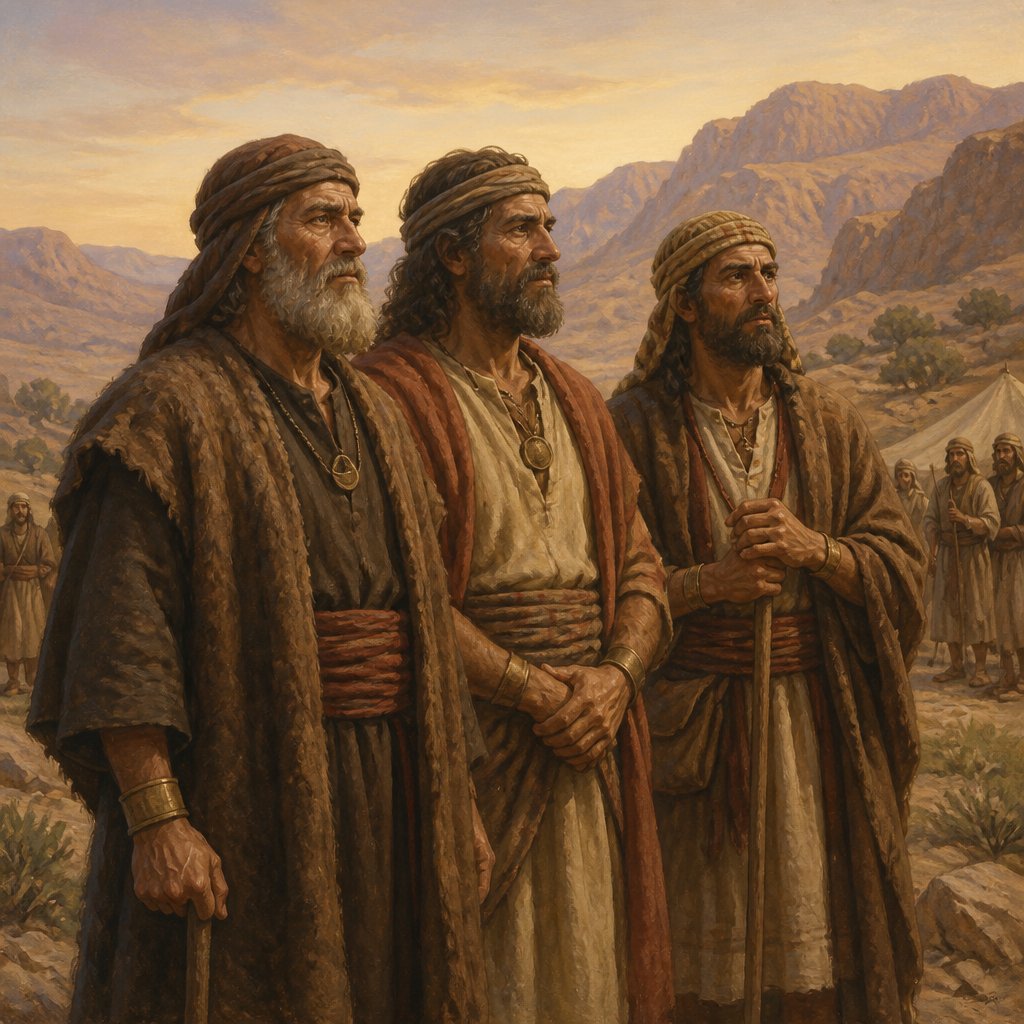
In the grand tapestry of the Scriptures, there are verses that seem to escape our immediate attention—verses that appear mundane or unremarkable within the larger narrative. Genesis 36:30 stands as one such verse: "Duke Dishon, duke Ezer, duke Dishan: these are the dukes that came of Hori, among their dukes in the land of Seir." At first glance, one may be tempted to skim over these names, entangled in genealogies and titles, viewing them merely as historical footnotes. However, a deeper reflection reveals profound truths about God's sovereignty, the unfolding of destiny, and our place within His divine plan.
### The Significance of Names
The names in Genesis 36:30 are not mere historical identifiers; they carry weight, reflecting the heritage and influence of the individuals that bore them. In biblical culture, names often signify character, destiny, and calling. The "dukedoms" or leaders listed here, such as Dishon, Ezer, and Dishan, represent entire clans and their respective territories. Each duke embodied the struggles, triumphs, and stories of their people. As believers, we are invited to recognize that our names, too, carry significance in the Kingdom of God. Every person's life is a chapter in the grand story of redemption that God is weaving throughout human history.
### The Lineage of Esau
Understanding the broader context of Genesis 36 is essential. It details the descendants of Esau, who was also known as Edom, and describes how they settled in the land of Seir. The lineage bifurcates from the chosen path of Jacob (Israel), displaying even the tensions inherent in God's sovereignty. Esau is often depicted as a figure of worldly pursuits, a man of the soil, who sold his birthright for a bowl of stew (Genesis 25:29-34). Yet, his line also bears dukes—albeit outside the covenant promises made to Abraham and Isaac.
The presence of these dukes in the land of Seir should encourage us to consider God's inclusive and expansive intentions for creation. Though Esau might seem forsaken in favor of Jacob's legacy, God’s plans are never limited to a single lineage. The fact that such notable leaders emerged from Esau’s line suggests that God's blessing and providence surpassed human understanding. This is a reminder that even when circumstances suggest abandonment or lack of purpose, God’s grace can still bring forth leadership and influence from unexpected places.
### God's Sovereignty and Our Path
The mentioning of these dukes invites us to reflect on God’s sovereignty over our lives. Just as He purposefully ordained the lineage of Esau, He has a distinct plan for each of our narratives. Each of us comes from a backdrop that may differ greatly from the next; we are products of our heritage and yet called to forge our destinies in alignment with God’s promise. Are we aware of the call on our lives? How might God be inviting us to rise as “dukedoms” in our spheres of influence, representing Him and His Kingdom?
### Embracing Our Legacy
In your quiet moments, ask yourself, what is the legacy you wish to leave behind? What influence are you wielding in your community, family, workplace, or church? Just as the dukes of Esau were leaders in their land, we too are called to be leaders in faith—reflecting God’s glory.
Let us not refrain from owning our stories, however seemingly humble or modest they may appear. Instead, let us embrace our spiritual inheritance through Christ, who enables us to rise based on grace rather than pedigree. The legacy of faith transcends biological lineage—it's anchored in our relationship with God and our response to His call.
### Conclusion
In conclusion, Genesis 36:30 isn't merely a list of names; it serves as a powerful reminder of God's intentionality throughout history. We are each invited into His narrative of hope, influence, and kingdom-building. May we inspire others in our lives to recognize this divine calling, transforming not just our legacy but also the legacies of those around us as we bring glory to His Name.
Get our apps


Artwork for Genesis 36:30

Genesis 36:30 - "Duke Dishon, duke Ezer, duke Dishan: these are the dukes that came of Hori, among their dukes in the land of Seir."
"Duke Dishon, duke Ezer, duke Dishan: these are the dukes that came of Hori, among their dukes in the land of Seir." - Genesis 36:30

Genesis 30:36 - "And he set three days' journey betwixt himself and Jacob: and Jacob fed the rest of Laban's flocks."
"And he set three days' journey betwixt himself and Jacob: and Jacob fed the rest of Laban's flocks." - Genesis 30:36

Genesis 36:36 - "And Hadad died, and Samlah of Masrekah reigned in his stead."

Genesis 24:36

Genesis 19-36

Job 36:30 - "Behold, he spreadeth his light upon it, and covereth the bottom of the sea."

Genesis 36:28 - "The children of Dishan are these; Uz, and Aran."

"And Hadad died, and Samlah of Masrekah reigned in his stead." - Genesis 36:36

Genesis 36:27 - "The children of Ezer are these; Bilhan, and Zaavan, and Akan."

Genesis 36:19 - "These are the sons of Esau, who is Edom, and these are their dukes."

Genesis 36:3 - "And Bashemath Ishmael's daughter, sister of Nebajoth."

Genesis 36:1 - "Now these are the generations of Esau, who is Edom."

Genesis 36:26 - "And these are the children of Dishon; Hemdan, and Eshban, and Ithran, and Cheran."

Genesis 36:42 - "Duke Kenaz, duke Teman, duke Mibzar,"

Genesis 36:9 - "¶ And these are the generations of Esau the father of the Edomites in mount Seir:"

Exodus 36:30 - "And there were eight boards; and their sockets were sixteen sockets of silver, under every board two sockets."

Genesis 36:41 - "Duke Aholibamah, duke Elah, duke Pinon,"

Genesis 19-30

Genesis 24-30

Genesis 18-30

Genesis 21-30

Genesis 19:36 - "Thus were both the daughters of Lot with child by their father."

Genesis 36:8 - "Thus dwelt Esau in mount Seir: Esau is Edom."

Ezekiel 36:30 - "And I will multiply the fruit of the tree, and the increase of the field, that ye shall receive no more reproach of famine among the heathen."

Genesis 36:25 - "And the children of Anah were these; Dishon, and Aholibamah the daughter of Anah."

Genesis 36:4 - "And Adah bare to Esau Eliphaz; and Bashemath bare Reuel;"

Genesis 36:11 - "And the sons of Eliphaz were Teman, Omar, Zepho, and Gatam, and Kenaz."

Genesis 36:23 - "And the children of Shobal were these; Alvan, and Manahath, and Ebal, Shepho, and Onam."