The Legacy of Leadership: Lessons from Saul and Baal-hanan
“And Saul died, and Baal-hanan the son of Achbor reigned in his stead.” — Genesis 36:38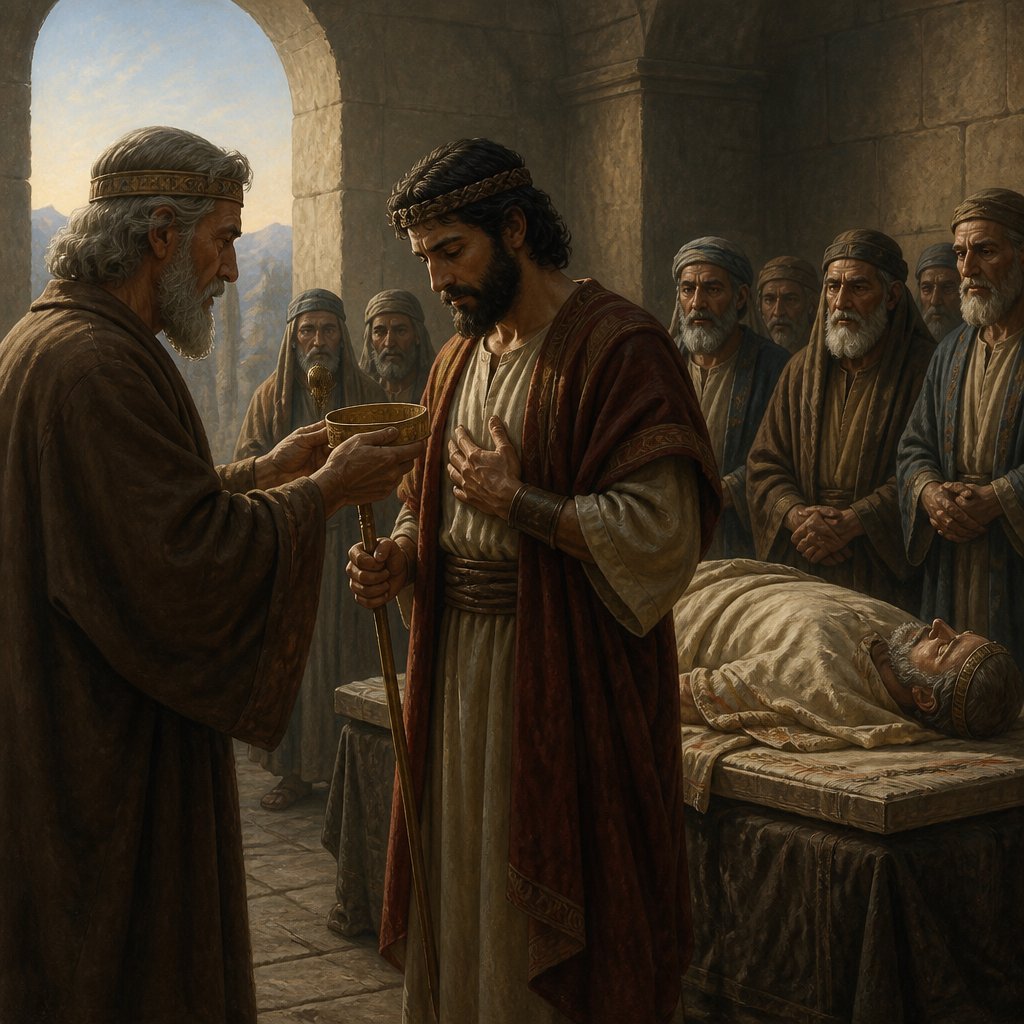
As we delve into the depths of Genesis 36:38—"And Saul died, and Baal-hanan the son of Achbor reigned in his stead,"—we are faced with profound implications about leadership, succession, and legacy. Though this verse is part of the genealogical account of the Edomite kings, it raises poignant questions about the nature of leadership and the weight of one's legacy. It invites us to reflect deeply on what it means to lead, the importance of our actions while we are in positions of influence, and what we leave behind for those who follow.
When we hear of Saul's death, we are reminded of the tumultuous reign of Israel’s first king. Chosen for his stature and charisma, Saul’s life was marked by divine appointment but also by disobedience, despair, and ultimately tragedy. His story is both inspirational and cautionary. Although God initially anointed Saul, his failure to heed God's commands resulted in the end of his reign. His death signified not just the end of an era but the consequences of a life that veered from God's purpose.
In contrast, Baal-hanan, son of Achbor, who took the throne after Saul, represents a new beginning. The scripture does not elucidate Baal-hanan’s character or reign, yet his significance lies in the act of succession. Saul's passing opened a door for a new leader; it highlights the never-ending cycle of leadership and the importance of readiness for those who come next. What do we learn from this transition? How do we prepare the next generation of leaders?
Baal-hanan's ascension can remind us of the importance of legacy in our own lives. In the world we inhabit today, legacy often seems to be associated with wealth, fame, or achievements. Yet, from a biblical perspective, what we leave behind is intrinsically tied to our relationship with God and how we have stewarded our influence. Are we intentionally cultivating a legacy wherein our children, friends, or colleagues can find a model of godly living?
As we reflect on the lives of Saul and Baal-hanan, we ought to recognize the truth that every leader's decisions impact not only their lives but also the lives of those who follow. In 1 Samuel 15, God recounts Saul’s disobedience and the withdrawal of His Spirit. A leader’s failure to act in accordance with God’s will can set off a chain reaction that impacts generations. Conversely, a new leader like Baal-hanan symbolizes hope—an opportunity for redemption and the possibility of a leadership that acknowledges God and seeks holiness.
Consider this: are we leaving behind a world where those who follow us know how to seek the Lord? Are we teaching them the principles of character, courage, humility, and faithfulness? As we journey through our lives, we should strive to be leaders akin to those described in Proverbs 11:30—“The fruit of the righteous is a tree of life; and he that winneth souls is wise.”
The transition from Saul to Baal-hanan reminds us that life and leadership are fragile and fleeting. We must not only strive to lead effectively but also to prepare others for leadership roles. Let us ensure our example is one that models godliness, reliance on God, and a heart for service.
In closing, may we be encouraged to seek God's wisdom in our roles—whether in our families, churches, workplaces, or society at large. Let us communicate values and truths that will empower the next generation to lead with integrity, compassion, and faith. As we meditate on Genesis 36:38, might we commit to being pillars of strength for those who will carry on our legacies, ultimately guiding them toward everlasting truth found in God.
Get our apps


Artwork for Genesis 36:38

Genesis 36:38 - "And Saul died, and Baal-hanan the son of Achbor reigned in his stead."
"And Saul died, and Baal-hanan the son of Achbor reigned in his stead." - Genesis 36:38

Job 38:36

Job 38:36

Job 38:36

Job 38:36

Elijah in the scene 1 Kings 18:36–38

Job 38:36 - "Who hath put wisdom in the inward parts? or who hath given understanding to the heart?"

Genesis 36:36 - "And Hadad died, and Samlah of Masrekah reigned in his stead."

Exodus 36:38 - "And the five pillars of it with their hooks: and he overlaid their chapiters and their fillets with gold: but their five sockets were of brass."

Genesis 19-38

Genesis 24-38

Genesis 24:36

Genesis 19-36

Genesis 36:28 - "The children of Dishan are these; Uz, and Aran."

"And Hadad died, and Samlah of Masrekah reigned in his stead." - Genesis 36:36

Genesis 36:27 - "The children of Ezer are these; Bilhan, and Zaavan, and Akan."

Genesis 36:3 - "And Bashemath Ishmael's daughter, sister of Nebajoth."

Genesis 36:19 - "These are the sons of Esau, who is Edom, and these are their dukes."

Genesis 36:1 - "Now these are the generations of Esau, who is Edom."

Ezekiel 36:38 - "As the holy flock, as the flock of Jerusalem in her solemn feasts; so shall the waste cities be filled with flocks of men: and they shall know that I am the LORD."

Genesis 36:26 - "And these are the children of Dishon; Hemdan, and Eshban, and Ithran, and Cheran."

Genesis 36:42 - "Duke Kenaz, duke Teman, duke Mibzar,"

Genesis 36:9 - "¶ And these are the generations of Esau the father of the Edomites in mount Seir:"

Genesis 36:41 - "Duke Aholibamah, duke Elah, duke Pinon,"

Job 38:36 (KJV) Who hath put wisdom in the inward parts? or who hath given understanding to the heart?

Genesis 36:8 - "Thus dwelt Esau in mount Seir: Esau is Edom."

Genesis 19:36 - "Thus were both the daughters of Lot with child by their father."

Genesis 36:25 - "And the children of Anah were these; Dishon, and Aholibamah the daughter of Anah."

Genesis 36:4 - "And Adah bare to Esau Eliphaz; and Bashemath bare Reuel;"