The Legacy of Esau: Lessons from Generational Choices
“And these are the names of the dukes that came of Esau, according to their families, after their places, by their names; duke Timnah, duke Alvah, duke Jetheth,” — Genesis 36:40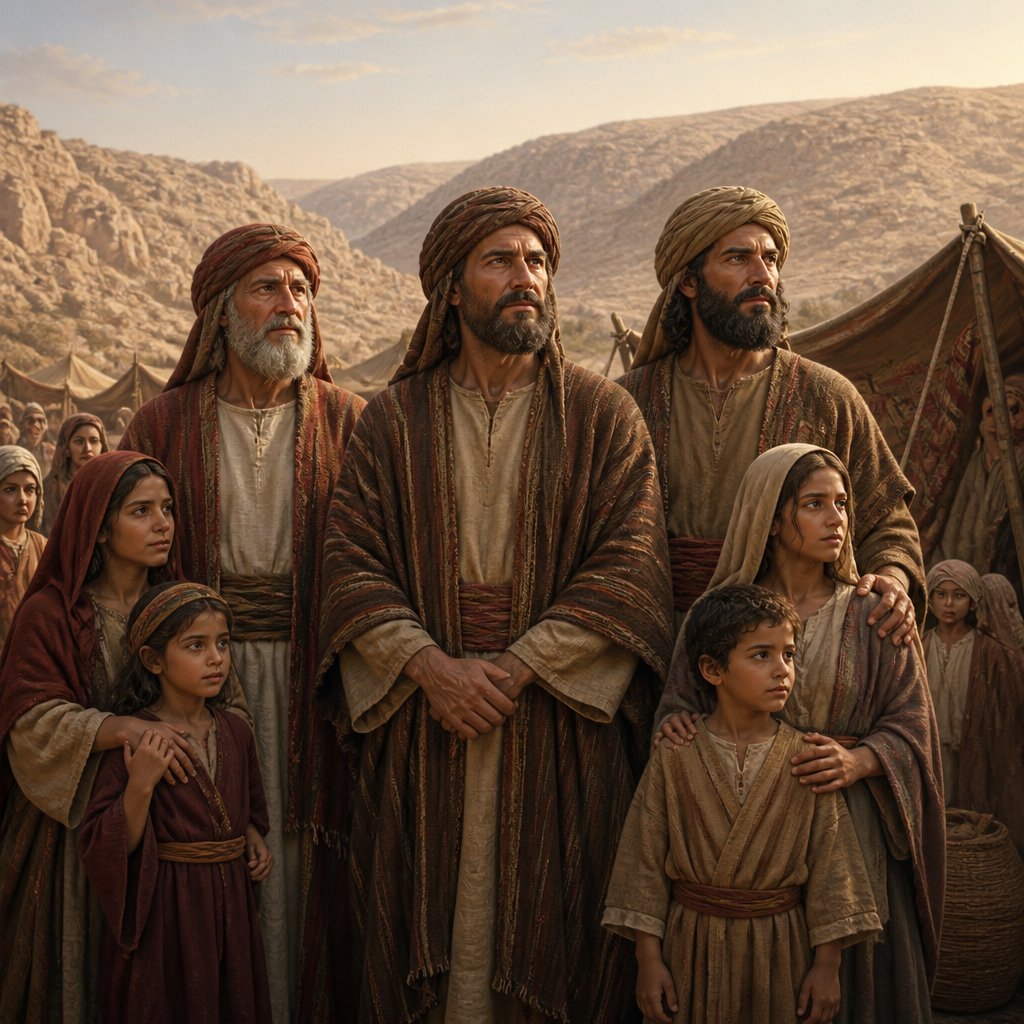
When we delve into Genesis 36:40, we encounter a seemingly straightforward list of names: “And these are the names of the dukes that came of Esau, according to their families, after their places, by their names; duke Timnah, duke Alvah, duke Jetheth.” At first glance, this verse might appear as an unremarkable genealogical record, but beneath its surface lies profound wisdom about legacy, identity, and the consequences of our choices.
Esau, the firstborn son of Isaac, is significant in biblical history. His story begins with promise but diverges sharply from his brother Jacob’s path. From the moment Jacob famously acquired Esau’s birthright for a bowl of stew (Genesis 25:29-34), the narrative of their lives showcases the long-reaching effects of decisions made in haste and emotional weakness. Esau’s legacy, reflected in his descendants – the dukes mentioned in today’s verse – provides a poignant exploration of generational identities shaped by individual choices.
Esau’s decision to trade his birthright for immediate satisfaction speaks volumes to us today. How often do we, like Esau, forfeit long-term blessings for short-lived gratification? In our modern context, such trade-offs manifest in numerous ways: prioritizing material success over spiritual growth, chasing temporary pleasures while neglecting our relationships, or refusing to endure discomfort for the sake of greater good. Esau’s choices not only altered his fate but also influenced his lineage.
As we ponder the names of these dukes – Timnah, Alvah, Jetheth – we are reminded that each name bears a legacy. Names are not just labels; they instead encapsulate the essence of individuals and families. They often carry significance, representing the hopes, struggles, and stories of those who have come before. In Esau's case, the dukes of Edom—his descendants—continuously illustrate the repercussions of their ancestor’s decisions. His life and choices became a foundational aspect of their identity and heritage.
The dukes of Edom reflect a lineage that thrived outside of the spiritual blessing intended for Isaac’s firstborn. Instead of becoming a patriarch of God’s covenant people, Esau’s descendants formed their own identity apart from Jacob’s line, leading to a distinct yet isolated Kingdom of Edom. This prompts reflection: are we cultivating a legacy rooted in faith, or are we perpetuating cycles of separation from God's promises due to our choices?
Further, as we examine the names of the dukes, let us also think about our surroundings. Just as Esau’s choices impacted his family, our decisions have the potential to affect those around us—our children, our friends, our communities. Are we nurturing environments filled with wisdom, love, and hope, or are we perpetuating negativity, indecision, or apathy? Every life is interwoven, and our legacy is either infused with life-giving attributes or barren of fruit.
As believers, we are called to reflect on our own legacy in light of the Gospels. We are reminded that through Christ, we inherit a more excellent legacy than that of Esau, as Jesus emphasizes the importance of spiritual inheritance over the temporal. Hebrews 12:16-17 warns us against being profane like Esau, who sold his birthright for a single meal. Instead, we should strive to live out our faith, building a legacy of commitment to God’s ways, passed down from one generation to the next.
In conclusion, Genesis 36:40 invites us to contemplate our legacy. As we consider the dukes of Esau, let us be inspired to live in a manner that honors the generations that will follow us. Our choices do not exist in a vacuum; rather, they echo through time. May we choose wisely and intentionally to foster a lineage of faith, conviction, and love.
Get our apps


Artwork for Genesis 36:40

Genesis 36:40 - "And these are the names of the dukes that came of Esau, according to their families, after their places, by their names; duke Timnah, duke Alvah, duke Jetheth,"
"And these are the names of the dukes that came of Esau, according to their families, after their places, by their names; duke Timnah, duke Alvah, duke Jetheth," - Genesis 36:40

1 Corinthians 14:36-40

Judges 6:36-40 – Gideon’s fleece test for dew.

Genesis 36:36 - "And Hadad died, and Samlah of Masrekah reigned in his stead."

Genesis 24:40

Exodus 40:36 - "And when the cloud was taken up from over the tabernacle, the children of Israel went onward in all their journeys:"

Genesis 24:36

Genesis 19-36

Ezekiel 40:36 - "The little chambers thereof, the posts thereof, and the arches thereof, and the windows to it round about: the length was fifty cubits, and the breadth five and twenty cubits."

Genesis 36:28 - "The children of Dishan are these; Uz, and Aran."

"And Hadad died, and Samlah of Masrekah reigned in his stead." - Genesis 36:36

Genesis 36:27 - "The children of Ezer are these; Bilhan, and Zaavan, and Akan."

Genesis 36:19 - "These are the sons of Esau, who is Edom, and these are their dukes."

Genesis 36:3 - "And Bashemath Ishmael's daughter, sister of Nebajoth."

Genesis 36:1 - "Now these are the generations of Esau, who is Edom."

Genesis 36:26 - "And these are the children of Dishon; Hemdan, and Eshban, and Ithran, and Cheran."

Genesis 36:42 - "Duke Kenaz, duke Teman, duke Mibzar,"

Genesis 36:9 - "¶ And these are the generations of Esau the father of the Edomites in mount Seir:"

Genesis 40:22 - "But he hanged the chief baker: as Joseph had interpreted to them."

Genesis 40:23 - "Yet did not the chief butler remember Joseph, but forgat him."

Genesis 36:41 - "Duke Aholibamah, duke Elah, duke Pinon,"

Genesis 19:36 - "Thus were both the daughters of Lot with child by their father."

Genesis 36:8 - "Thus dwelt Esau in mount Seir: Esau is Edom."

Genesis 40:12 - "And Joseph said unto him, This is the interpretation of it: The three branches are three days:"

Genesis 40:18 - "And Joseph answered and said, This is the interpretation thereof: The three baskets are three days:"

Genesis 36:25 - "And the children of Anah were these; Dishon, and Aholibamah the daughter of Anah."

Genesis 36:4 - "And Adah bare to Esau Eliphaz; and Bashemath bare Reuel;"

Genesis 36:11 - "And the sons of Eliphaz were Teman, Omar, Zepho, and Gatam, and Kenaz."

Genesis 36:23 - "And the children of Shobal were these; Alvan, and Manahath, and Ebal, Shepho, and Onam."