Building a Legacy: Lessons from Cain's City
"And Cain knew his wife; and she conceived, and bare Enoch: and he builded a city, and called the name of the city, after the name of his son, Enoch." - Genesis 4:17
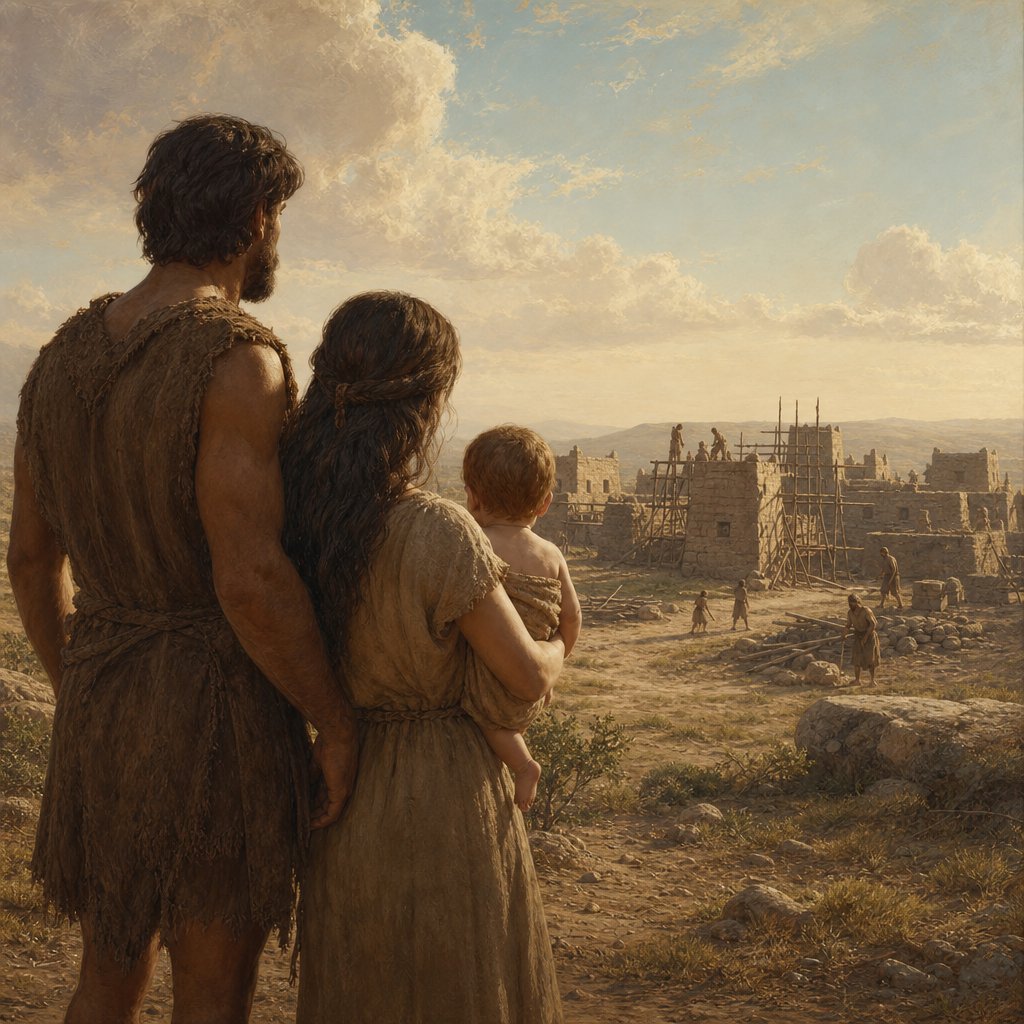
The Bible in Genesis 4:17 tells us, "And Cain knew his wife; and she conceived, and bare Enoch: and he builded a city, and called the name of the city, after the name of his son, Enoch." At first glance, we may not find much depth in this historical account of Cain, the first murderer, and his subsequent actions. However, a closer examination reveals profound themes that resonate deeply in our spiritual journey: the struggle with legacy, the search for belonging, and the implications of our choices.
Cain, after committing an act that irrevocably altered his life, is marked by God and cast away. He becomes a wanderer—an outsider who has lost the familial connections and rootedness that stabilize the human experience. Yet, even in the face of his sin and punishment, Cain continues to aspire. He marries, raises a family, and, notably, builds a city named after his son, Enoch. This act of urban development speaks to Cain's desire to create, to establish, and to leave a mark on the world—despite the sin that defines him.
### The Complexity of Legacy
Legacy is a word that evokes images of greatness, influence, and continuity. For many, it is the sum of their accomplishments, the footprints they leave behind. Cain’s decision to build a city was an attempt to craft a legacy, not just for himself but for his descendants. Naming the city after his son Enoch serves as a testament to his hopes for redemption through kinship. However, we must wrestle with the implication that this legacy comes from a man whose initial act was one of violence and rejection.
In our pursuit of legacy, the question we must ask ourselves is: what kind of legacy are we building? Cain built a physical city, a place meant for habitation, security, and life. Yet his foundation was rooted in a life marked by sin. The challenge lies in our ability to recognize how our actions shape the legacies we pass on. As followers of Christ, our legacies should reflect His love, grace, and mercy. We are encouraged throughout Scripture to build upon the solid foundation of faith, as written in Matthew 7:24, "Therefore whosoever heareth these sayings of mine, and doeth them, I will liken him unto a wise man, which built his house upon a rock."
### The City of Enoch: A Reflection of Humanity
Cain's city can be seen as a metaphor for humanity’s collective endeavor. In many ways, every city is a manifestation of the human experience—an amalgamation of dreams, aspirations, trials, and triumphs. However, the question remains, are our cities, both literal and metaphorical, built on the values of love and righteousness? Or do they reflect the darkness and despair of a fallen world?
As we reflect on our environments, whether that be our homes, communities, or workplaces, we must examine the foundational principles guiding these spaces. Is our work marked by integrity? Are our relationships characterized by love and respect? Does our community embrace forgiveness and empathy? In building our ‘cities'—the environments we cultivate—let us lay down a foundation of godly principles, ensuring that we create places of peace, rather than replication of Cain’s legacy.
### Redemption and Hope
Though Cain’s story seems to culminate in a new beginning of sorts, it is inherently tinged with loss and sorrow. Yet, as we read further into God’s redemptive narrative throughout Scripture, we see a God who continuously offers opportunities for restoration and hope. Each one of us, like Cain, is a work in progress. We may feel marked by our past, yet God invites us to build anew. With each new ‘city’ we construct—whether in our personal relationships or community outreach—we are given a chance to reflect His love and move toward healing.
Ultimately, the story of Cain serves as a cautionary tale intertwined with hope. As we pursue the legacy we will leave behind, let us remember that more than buildings or accomplishments, it is love, grace, and kindness that truly build eternal legacies. Let us aim to build not just cities, but communities where the presence of God reigns and His love is freely shared.
In your daily journey, may you strive not only for achievement but for the eternal impact of loving others as Christ loves us. Amen.
Want to reflect more on Genesis 4:17?
Continue your spiritual journey with Bible Chat — an AI-powered tool for exploring God's Word through conversation. Ask questions, discover connections, and deepen your understanding.
Get Our Apps


Genesis 4:17 Artwork

Genesis 4:17 - "And Cain knew his wife; and she conceived, and bare Enoch: and he builded a city, and called the name of the city, after the name of his son, Enoch."
"And Cain knew his wife; and she conceived, and bare Enoch: and he builded a city, and called the name of the city, after the name of his son, Enoch." - Genesis 4:17

Genesis 17:4

Genesis 17:4 - "As for me, behold, my covenant is with thee, and thou shalt be a father of many nations."

Genesis 17-17

"As for me, behold, my covenant is with thee, and thou shalt be a father of many nations." - Genesis 17:4

Genesis 17-15

Genesis 17-23

Genesis 18-17

Genesis 17-27

Genesis 17-21

Genesis 17:2

Genesis 17:6

Genesis 20-17

Genesis 17:8

Genesis 28-17

Genesis 17-19

Genesis 21-17

Genesis 24-17

Genesis 17-22

Genesis 17:10

Genesis 17-12

Genesis 17:1

Genesis 17-14

Genesis 22-17

Genesis 17:7

Genesis 17:5

Genesis 17-18

Genesis 19-17

Genesis 23-17