In the Shadows of Unjust Anger: A Reflection on Genesis 40:2
“And Pharaoh was wroth against two of his officers, against the chief of the butlers, and against the chief of the bakers.” — Genesis 40:2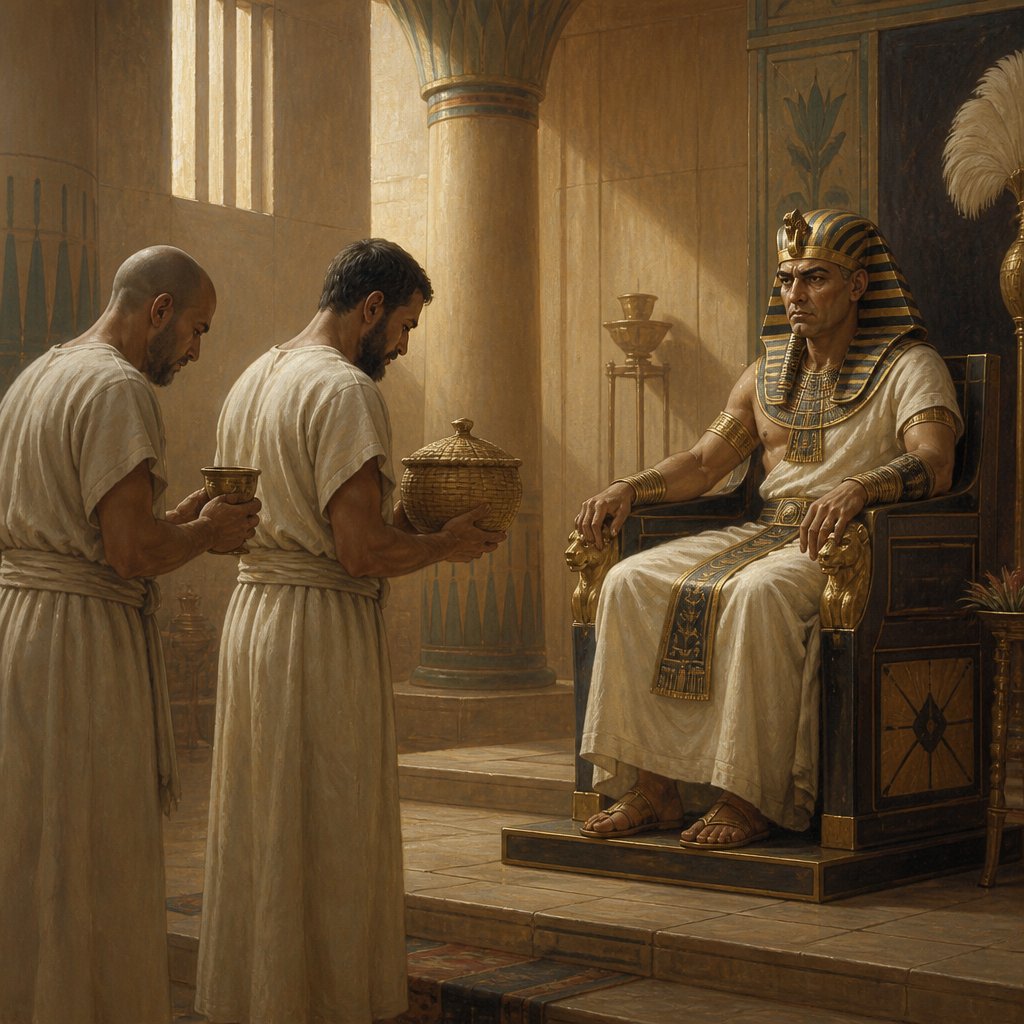
In Genesis 40:2, we encounter a pivotal moment in the life of Joseph, a servant who was unjustly imprisoned. The verse states, "And Pharaoh was wroth against two of his officers, against the chief of the butlers, and against the chief of the bakers." This seemingly simple statement reveals profound truths about authority, human emotion, and God’s sovereign plan for His children.
Pharaoh’s anger reflects the volatile nature of power. Anger can arise quickly, often without just cause, and can lead to severe consequences. Pharaoh, the mightiest ruler of the day, decides to imprison two of his highest-ranking officials, the chief butler and the chief baker. This shows us that even those in positions of great authority are susceptible to rash judgments driven by emotion. The swift swing from favor to disfavor reveals the precariousness of our human experience under power dynamics.
Moreover, consider the nature of the offenses that provoked Pharaoh's wrath. The text does not detail the specific reasons for his anger, thus leaving us to ponder the state of his spirit as well as the circumstances that led to this moment. Anger often arises from feelings of betrayal or incompetence, and in this case, it is worth recognizing that Pharaoh's reaction was not only extreme but also misplaced. Just as we find ourselves in our daily lives, those in power can make decisions that affect the lives of others based on fleeting emotions, not always on the merit of the situation.
For Joseph, this moment would signal a change in his life journey. Imprisoned, he may have questioned God's purpose in allowing such circumstances. We can learn from Joseph that being in a season of adversity does not negate God’s plans for us. Instead, it often positions us precisely at the place where God wants us to be for His greater purpose. God had a significant plan to elevate Joseph from the prison to the palace, which would ultimately lead him to save not only Egypt but also his own family from famine.
When we confront anger or injustice, whether in our personal lives or observed in the world around us, we should remember that God is sovereign and that He works through all situations. Thomas Brooks said, "Afflictions are often gifts from God, and they often lead to deeper faith, hope, and the miraculous.” In Joseph’s life, the anger of Pharaoh was a catalyst that placed him in a position to interpret dreams and, through God’s guidance, save nations.
Perhaps we can take this time to reflect on our responses to unjust anger—either as those who are affected or, sometimes, as those who display anger ourselves. In Ephesians 4:26-27 (KJV), we are reminded, "Be ye angry, and sin not: let not the sun go down upon your wrath: Neither give place to the devil." Our reactions in moments of anger must be measured and seeking of peace.
When facing our personal prisons of heartache, anger, or despair, we must cultivate patience and trust in God’s divine timetable. Let us be encouraged by Joseph, who did not lose faith during his trials, which ultimately prepared him for great leadership. We should also remember that the anger we see around us does not escape God's notice. Instead of perpetuating cycles of wrath, may we be conduits of His grace, looking forward in faith to what God can accomplish even in what appears to be despair.
In conclusion, Genesis 40:2 offers a stark reminder of the human condition and the mysterious workings of God through every situation in our lives. May we approach each day with a heart open to learning, trusting that God is orchestrating events for our good, even in the face of anger and uncertainty.
Get our apps


Artwork for Genesis 40:2

Genesis 40:2 - "And Pharaoh was wroth against two of his officers, against the chief of the butlers, and against the chief of the bakers."
"And Pharaoh was wroth against two of his officers, against the chief of the butlers, and against the chief of the bakers." - Genesis 40:2

Genesis 24:40

Genesis 40:22 - "But he hanged the chief baker: as Joseph had interpreted to them."

Genesis 40:23 - "Yet did not the chief butler remember Joseph, but forgat him."

Genesis 40:12 - "And Joseph said unto him, This is the interpretation of it: The three branches are three days:"

Genesis 40:18 - "And Joseph answered and said, This is the interpretation thereof: The three baskets are three days:"

Genesis 40:6 - "And Joseph came in unto them in the morning, and looked upon them, and, behold, they were sad."

Genesis 40:4 - "And the captain of the guard charged Joseph with them, and he served them: and they continued a season in ward."

Genesis 40:3 - "And he put them in ward in the house of the captain of the guard, into the prison, the place where Joseph was bound."

Genesis 40:21 - "And he restored the chief butler unto his butlership again; and he gave the cup into Pharaoh's hand:"

Genesis 31:40 - "Thus I was; in the day the drought consumed me, and the frost by night; and my sleep departed from mine eyes."

Genesis 40:9 - "And the chief butler told his dream to Joseph, and said to him, In my dream, behold, a vine was before me;"

Genesis 40:1 - "And it came to pass after these things, that the butler of the king of Egypt and his baker had offended their lord the king of Egypt."

Genesis 36:40 - "And these are the names of the dukes that came of Esau, according to their families, after their places, by their names; duke Timnah, duke Alvah, duke Jetheth,"

Genesis 40:17 - "And in the uppermost basket there was of all manner of bakemeats for Pharaoh; and the birds did eat them out of the basket upon my head."

Genesis 40:10 - "And in the vine were three branches: and it was as though it budded, and her blossoms shot forth; and the clusters thereof brought forth ripe grapes:"

Genesis 40:11 - "And Pharaoh's cup was in my hand: and I took the grapes, and pressed them into Pharaoh's cup, and I gave the cup into Pharaoh's hand."

Genesis 40:15 - "For indeed I was stolen away out of the land of the Hebrews: and here also have I done nothing that they should put me into the dungeon."

Genesis 40:7 - "And he asked Pharaoh's officers that were with him in the ward of his lord's house, saying, Wherefore look ye so sadly to day?"
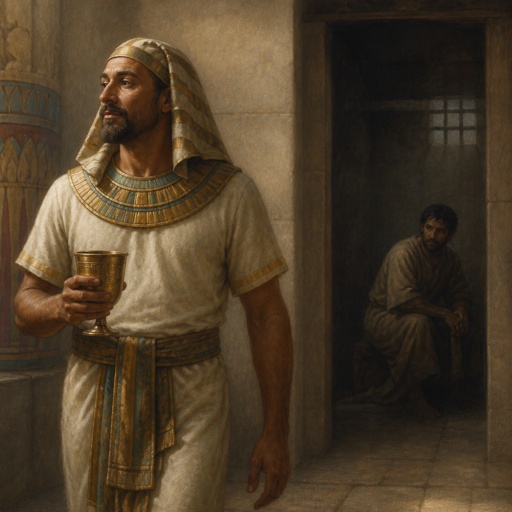
"Yet did not the chief butler remember Joseph, but forgat him." - Genesis 40:23

"But he hanged the chief baker: as Joseph had interpreted to them." - Genesis 40:22

1 Chronicles 2:40 - "And Eleasah begat Sisamai, and Sisamai begat Shallum,"

Genesis 41:40 - "Thou shalt be over my house, and according unto thy word shall all my people be ruled: only in the throne will I be greater than thou."
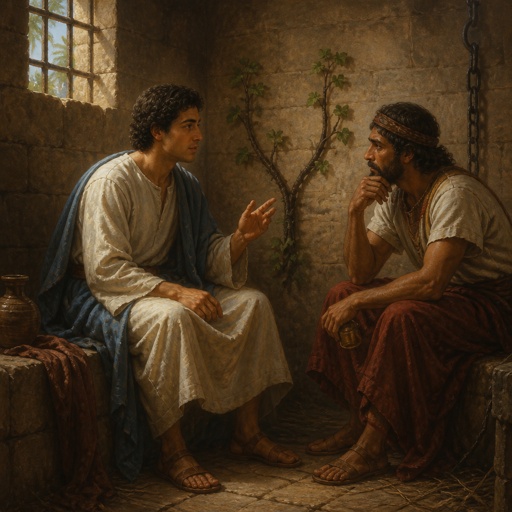
"And Joseph said unto him, This is the interpretation of it: The three branches are three days:" - Genesis 40:12
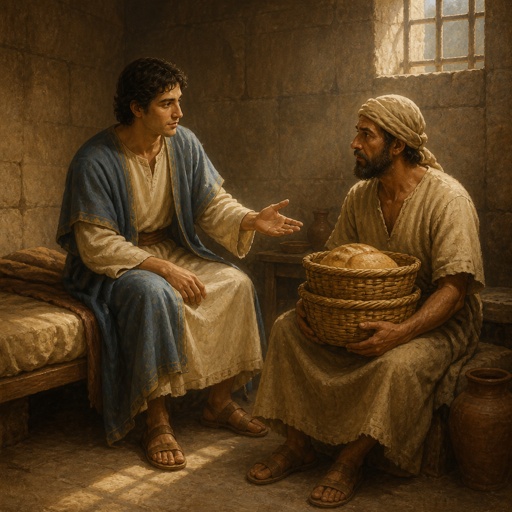
"And Joseph answered and said, This is the interpretation thereof: The three baskets are three days:" - Genesis 40:18

2 Kings 17:40 - "Howbeit they did not hearken, but they did after their former manner."

Ezra 2:40 - "¶ The Levites: the children of Jeshua and Kadmiel, of the children of Hodaviah, seventy and four."

Genesis 40:8 - "And they said unto him, We have dreamed a dream, and there is no interpreter of it. And Joseph said unto them, Do not interpretations belong to God? tell me them, I pray you."

Genesis 40:14 - "But think on me when it shall be well with thee, and shew kindness, I pray thee, unto me, and make mention of me unto Pharaoh, and bring me out of this house:"