A Legacy of Faith: The Final Request of Jacob
"And the time drew nigh that Israel must die: and he called his son Joseph, and said unto him, If now I have found grace in thy sight, put, I pray thee, thy hand under my thigh, and deal kindly and truly with me; bury me not, I pray thee, in Egypt:" - Genesis 47:29
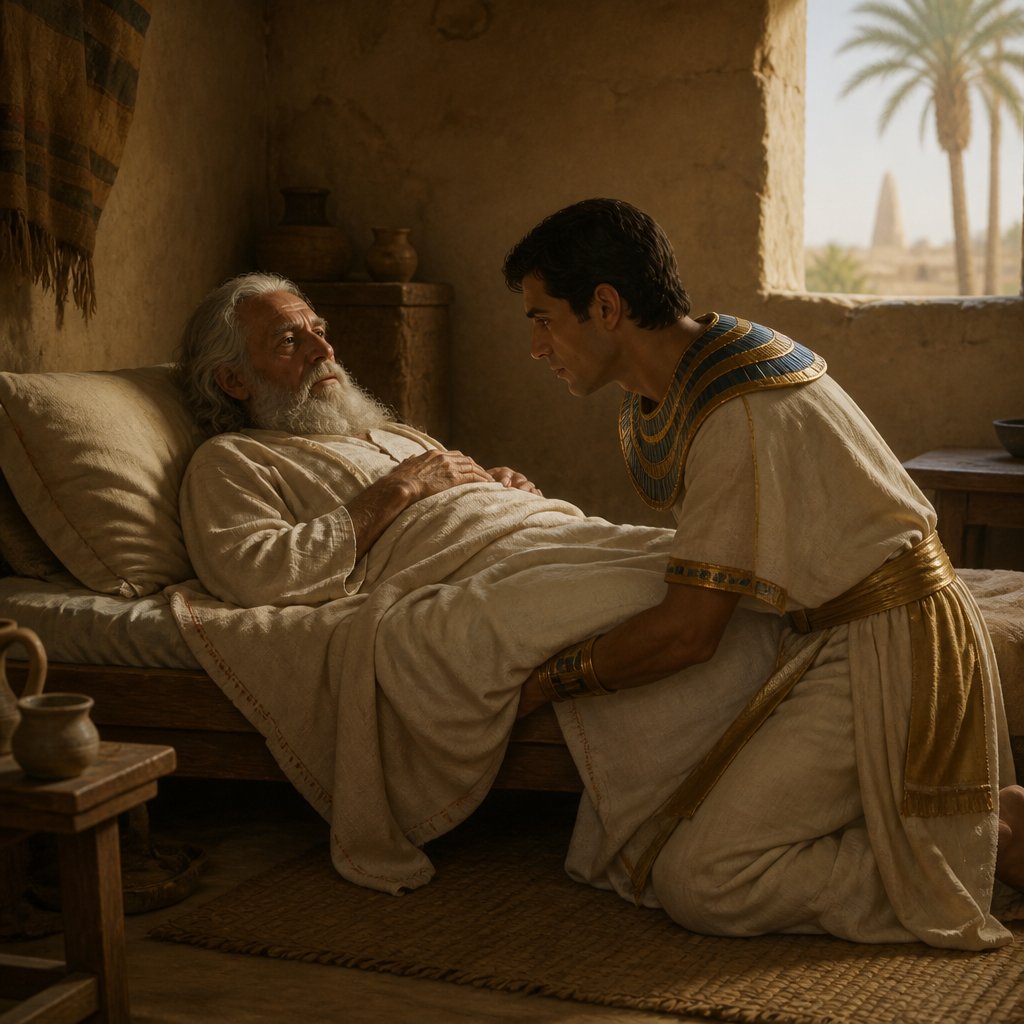
In Genesis 47:29, we witness a poignant moment in the life of Jacob, also known as Israel, as he approaches the end of his earthly journey. The scriptures state, "And the time drew nigh that Israel must die: and he called his son Joseph, and said unto him, If now I have found grace in thy sight, put, I pray thee, thy hand under my thigh, and deal kindly and truly with me; bury me not, I pray thee, in Egypt." This passage offers rich insights into the nature of legacy, faith, and the deep bonds of family.
Jacob's life was filled with trials, transformations, and triumphs. Named "supplanter" at birth, he spent much of his early life wrestling with his identity, even contending with God. Yet, he emerged as Israel, a man who struggled with God and won, establishing the foundation of a nation. As he nears his death, Jacob's thoughts turn to his legacy, emphasizing the importance of one's final wishes and the continuity of faith across generations.
In this verse, Jacob calls upon his beloved son Joseph, an act that symbolizes trust and intimacy. For a father to summon his son during his final moments signifies a profound connection. Jacob's plea to Joseph reflects not just a personal wish but a communal understanding of identity and belonging. He requests that Joseph place his hand under Jacob's thigh, an ancient gesture that signifies solemn oaths and serious promises. He is asking Joseph to honor him and God's covenant by ensuring that he is not buried in a foreign land, symbolizing Egypt's separation from the Promised Land.
Jacob's wish echoes a deeper significance — it is a reminder of God's faithfulness and the promises made to Abraham, Isaac, and now to him. By requesting to be buried in Canaan, Jacob expresses his unwavering faith in God’s word. He is, in essence, reminding Joseph and future generations that Egypt is not their final destination. He points to a hope that transcends their current circumstances, reinforcing that identity as God's chosen people lies in the land promised to their ancestors.
This moment challenges us to reflect on our own lives. How often do we consider the legacy we are leaving behind? The values, beliefs, and traditions we pass down can significantly shape the faith and character of our children and their children. In a world that continually tries to define our identities through transient things, Jacob’s legacy of faith calls us to anchor ourselves in eternal truths grounded in God’s promise.
Moreover, Jacob’s request to Joseph illuminates the importance of kindness and truth in relationships. “Deal kindly and truly with me” — these words should resonate with us today. The world often leans towards self-interest and deceit; however, we are called to be beacons of hope and integrity. As Jacob’s family continues the journey of faith, we too are called to walk alongside our loved ones with kindness, ensuring we treat them with the love and respect that God shows us.
As we meditate on Jacob's final moments, let us consider our approach to our own legacies. What do we wish to communicate to our family? How do we want them to remember us? May we strive to emulate Jacob's faith, reminding them of the promises of God, instilling in them the values of loyalty, and encouraging them towards a life lived for Him.
In conclusion, Jacob’s dying request is not just about a grave; it is about a testimony of faith that should motivate us to store up treasures of faith in the hearts of those we love. May we work diligently to ensure that our lives echo Jacob’s profound trust in God and a commitment to nurturing our family's spiritual legacy.
Want to reflect more on Genesis 47:29?
Continue your spiritual journey with Bible Chat — an AI-powered tool for exploring God's Word through conversation. Ask questions, discover connections, and deepen your understanding.
Get Our Apps


Genesis 47:29 Artwork

Genesis 47:29 - "And the time drew nigh that Israel must die: and he called his son Joseph, and said unto him, If now I have found grace in thy sight, put, I pray thee, thy hand under my thigh, and deal kindly and truly with me; bury me not, I pray thee, in Egypt:"
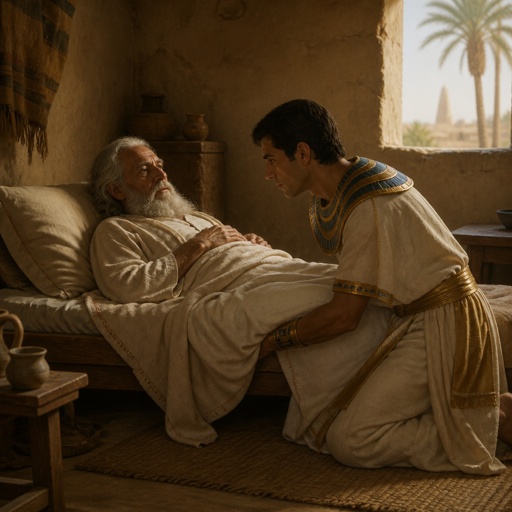
"And the time drew nigh that Israel must die: and he called his son Joseph, and said unto him, If now I have found grace in thy sight, put, I pray thee, thy hand under my thigh, and deal kindly and truly with me; bury me not, I pray thee, in Egypt:" - Genesis 47:29

Genesis 24-47

Genesis 31:47 - "And Laban called it Jegarsahadutha: but Jacob called it Galeed."

Genesis 41:47 - "And in the seven plenteous years the earth brought forth by handfuls."

Genesis 47:10 - "And Jacob blessed Pharaoh, and went out from before Pharaoh."

Genesis 47:8 - "And Pharaoh said unto Jacob, How old art thou?"

Genesis 47:2 - "And he took some of his brethren, even five men, and presented them unto Pharaoh."

Genesis 47:16 - "And Joseph said, Give your cattle; and I will give you for your cattle, if money fail."

Genesis 47:27 - "¶ And Israel dwelt in the land of Egypt, in the country of Goshen; and they had possessions therein, and grew, and multiplied exceedingly."

Genesis 47:7 - "And Joseph brought in Jacob his father, and set him before Pharaoh: and Jacob blessed Pharaoh."

Genesis 47:5 - "And Pharaoh spake unto Joseph, saying, Thy father and thy brethren are come unto thee:"

Genesis 47:12 - "And Joseph nourished his father, and his brethren, and all his father's household, with bread, according to their families."

"And Laban called it Jegarsahadutha: but Jacob called it Galeed." - Genesis 31:47

Genesis 47:28 - "And Jacob lived in the land of Egypt seventeen years: so the whole age of Jacob was an hundred forty and seven years."

Genesis 47:21 - "And as for the people, he removed them to cities from one end of the borders of Egypt even to the other end thereof."

Genesis 47:13 - "¶ And there was no bread in all the land; for the famine was very sore, so that the land of Egypt and all the land of Canaan fainted by reason of the famine."

Genesis 47:31 - "And he said, Swear unto me. And he sware unto him. And Israel bowed himself upon the bed's head."

Genesis 47:25 - "And they said, Thou hast saved our lives: let us find grace in the sight of my lord, and we will be Pharaoh's servants."

"And in the seven plenteous years the earth brought forth by handfuls." - Genesis 41:47

Genesis 29:29 - "And Laban gave to Rachel his daughter Bilhah his handmaid to be her maid."

Genesis 29-2

Genesis 29-6

Genesis 29-5

Genesis 42:29

Genesis 29-7

Genesis 29:1

Genesis 18-29

Genesis 26:29

Genesis 29-3