Surrender in the Midst of Scarcity: The Ownership of Souls
“And Joseph bought all the land of Egypt for Pharaoh; for the Egyptians sold every man his field, because the famine prevailed over them: so the land became Pharaoh’s.” — Genesis 47:20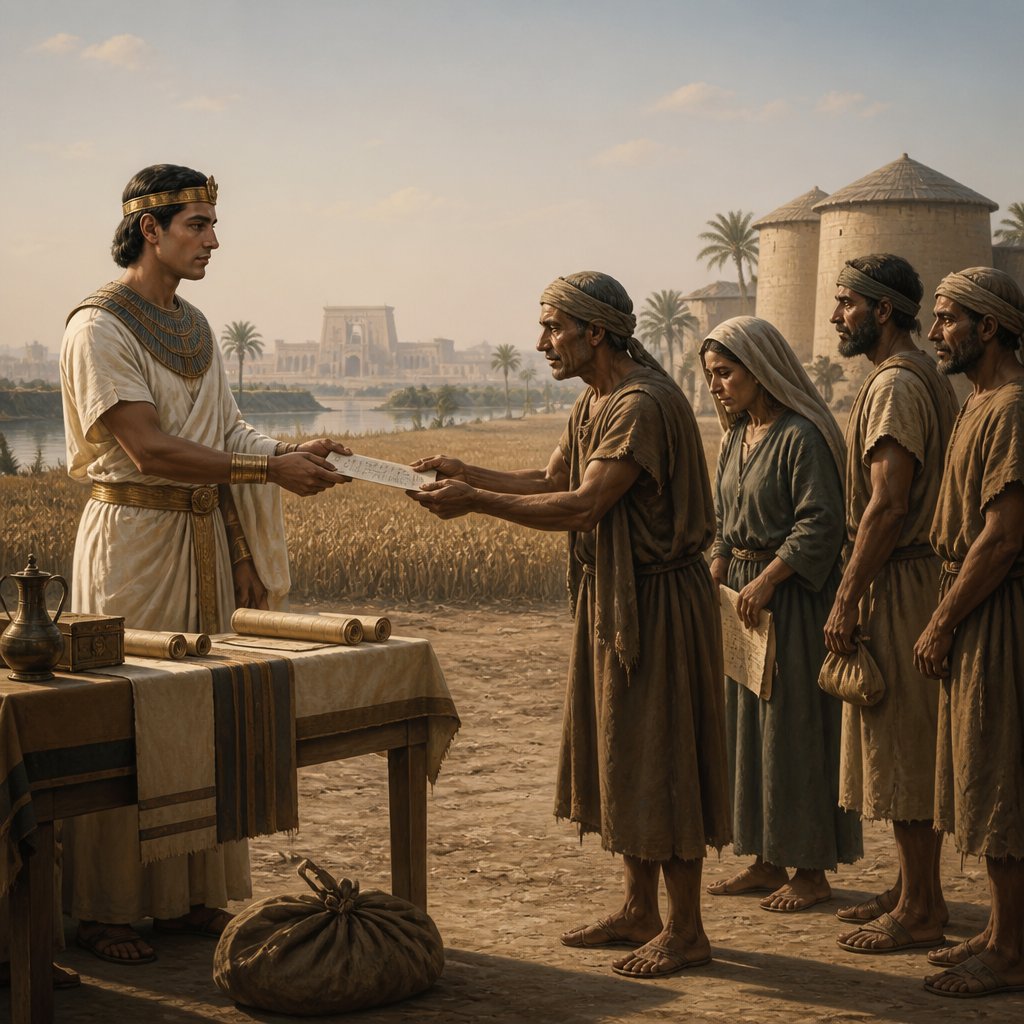
The narrative of Joseph and the famine in Egypt unfolds in Genesis 47, as Joseph, having risen to prominence as Pharaoh's second-in-command, manages the devastating consequences of a severe famine that plagues the land. Verse 20 encapsulates both a moment of desperation and a profound lesson about stewardship and surrender in times of crisis: "And Joseph bought all the land of Egypt for Pharaoh; for the Egyptians sold every man his field, because the famine prevailed over them: so the land became Pharaoh's" (KJV).
In this verse, we see a transformation driven by urgent need. The famine holds sway over the people, forcing them to make the unimaginable choice of selling their land, their livelihood, and ultimately their autonomy. Each Egyptian, as the verse tells us, sold his field "because the famine prevailed over them." The oppressive nature of the famine illustrates that scarcity not only affects physical sustenance but also begins to erode the very fabric of society, as people relinquish their possessions and their identity in the face of life-threatening hardship.
Joseph’s transaction is pivotal; he buys all the land for Pharaoh. While on the surface this may read like a mere economic transaction, it carries deeper theological implications. Joseph’s actions compel us to analyze our relationship with possessions and power. In the times of abundance, we tend to forget that everything we possess ultimately belongs to God. It is He who blesses us with land, resources, and the ability to cultivate them. Yet, when scarcity strikes, it often realigns our priorities.
The Egyptians, desperate for survival, turn over their land to Pharaoh, showing us that in moments of desperation, the heart’s true affections are revealed. This hearkens back to Matthew 6:21, where it states, "For where your treasure is, there will your heart be also" (KJV). The Egyptians surrendered their fields, but what they actually surrendered was their hope and their means of life. In choosing survival, they also chose submission to a system that would ultimately benefit Pharaoh; they became tenants on land they once owned, illustrating the transformative power of crisis.
Consider the role that Joseph plays here. He’s not merely a facilitator of transactions; he embodies the principles of wisdom and stewardship. In the face of dire conditions, Joseph remains grounded in his relationship with God and recognizes the opportunity to not only save a nation but to prepare it for a future guided by divine providence. Joseph’s discernment to manage the resources and the populace under Pharaoh’s authority teaches us that leadership, especially in tough times, requires wisdom, compassion, and an overarching commitment to stewardship of what truly belongs to God.
As we reflect on this passage, we are beckoned to understand our own lives. How do we respond when faced with scarcity? Do we hoard our resources out of fear, clinging to what little we have left, or do we see opportunity through the lens of stewardship? Like the Egyptians, do we become prisoners of our circumstances, or do we follow Joseph’s lead and seek to trust in God’s provision?
Ultimately, this verse addresses the sovereignty of God amidst human plans and struggles. It reminds us that in every transaction of life—be it physical, emotional, or spiritual—there is a deeper dance of surrender taking place. Each act of giving up may just be the step toward a fuller possession of that which truly matters: a relationship with God.
In our own lives, may we surrender fully to the One who provides and sustains, remembering that in our relinquishments—be it possessions, control, or expectations—there exists the potential for divine ownership and care. Just as Joseph brought stability to Egypt through his leadership, may we cultivate a spirit of surrender that entrusts our lives to God, recognizing that He holds the ultimate claim on all that we are and all that we have.
Get our apps


Artwork for Genesis 47:20

Genesis 47:20 - "And Joseph bought all the land of Egypt for Pharaoh; for the Egyptians sold every man his field, because the famine prevailed over them: so the land became Pharaoh's."
"And Joseph bought all the land of Egypt for Pharaoh; for the Egyptians sold every man his field, because the famine prevailed over them: so the land became Pharaoh's." - Genesis 47:20

Genesis 24-47

Genesis 31:47 - "And Laban called it Jegarsahadutha: but Jacob called it Galeed."

Genesis 41:47 - "And in the seven plenteous years the earth brought forth by handfuls."

Genesis 47:10 - "And Jacob blessed Pharaoh, and went out from before Pharaoh."

Genesis 47:8 - "And Pharaoh said unto Jacob, How old art thou?"

Genesis 47:2 - "And he took some of his brethren, even five men, and presented them unto Pharaoh."

Genesis 47:12 - "And Joseph nourished his father, and his brethren, and all his father's household, with bread, according to their families."

Genesis 47:16 - "And Joseph said, Give your cattle; and I will give you for your cattle, if money fail."

Genesis 47:27 - "¶ And Israel dwelt in the land of Egypt, in the country of Goshen; and they had possessions therein, and grew, and multiplied exceedingly."

Genesis 47:7 - "And Joseph brought in Jacob his father, and set him before Pharaoh: and Jacob blessed Pharaoh."

Genesis 47:5 - "And Pharaoh spake unto Joseph, saying, Thy father and thy brethren are come unto thee:"

Judges 20:47 - "But six hundred men turned and fled to the wilderness unto the rock Rimmon, and abode in the rock Rimmon four months."

"And Laban called it Jegarsahadutha: but Jacob called it Galeed." - Genesis 31:47

Genesis 47:28 - "And Jacob lived in the land of Egypt seventeen years: so the whole age of Jacob was an hundred forty and seven years."

Genesis 47:21 - "And as for the people, he removed them to cities from one end of the borders of Egypt even to the other end thereof."

Genesis 47:13 - "¶ And there was no bread in all the land; for the famine was very sore, so that the land of Egypt and all the land of Canaan fainted by reason of the famine."

Genesis 47:31 - "And he said, Swear unto me. And he sware unto him. And Israel bowed himself upon the bed's head."

Genesis 47:25 - "And they said, Thou hast saved our lives: let us find grace in the sight of my lord, and we will be Pharaoh's servants."

Ezekiel 47:20 - "The west side also shall be the great sea from the border, till a man come over against Hamath. This is the west side."

"And in the seven plenteous years the earth brought forth by handfuls." - Genesis 41:47

Genesis 47:14 - "And Joseph gathered up all the money that was found in the land of Egypt, and in the land of Canaan, for the corn which they bought: and Joseph brought the money into Pharaoh's house."

Genesis 47:11 - "¶ And Joseph placed his father and his brethren, and gave them a possession in the land of Egypt, in the best of the land, in the land of Rameses, as Pharaoh had commanded."

"And Jacob blessed Pharaoh, and went out from before Pharaoh." - Genesis 47:10

Genesis 47:3 - "And Pharaoh said unto his brethren, What is your occupation? And they said unto Pharaoh, Thy servants are shepherds, both we, and also our fathers."

"And Pharaoh said unto Jacob, How old art thou?" - Genesis 47:8

Genesis 47:30 - "But I will lie with my fathers, and thou shalt carry me out of Egypt, and bury me in their buryingplace. And he said, I will do as thou hast said."

Genesis 47:23 - "Then Joseph said unto the people, Behold, I have bought you this day and your land for Pharaoh: lo, here is seed for you, and ye shall sow the land."

Genesis 47:17 - "And they brought their cattle unto Joseph: and Joseph gave them bread in exchange for horses, and for the flocks, and for the cattle of the herds, and for the asses: and he fed them with bread for all their cattle for that year."