Stewards of God's Abundance
“Only the land of the priests bought he not; for the priests had a portion assigned them of Pharaoh, and did eat their portion which Pharaoh gave them: wherefore they sold not their lands.” — Genesis 47:22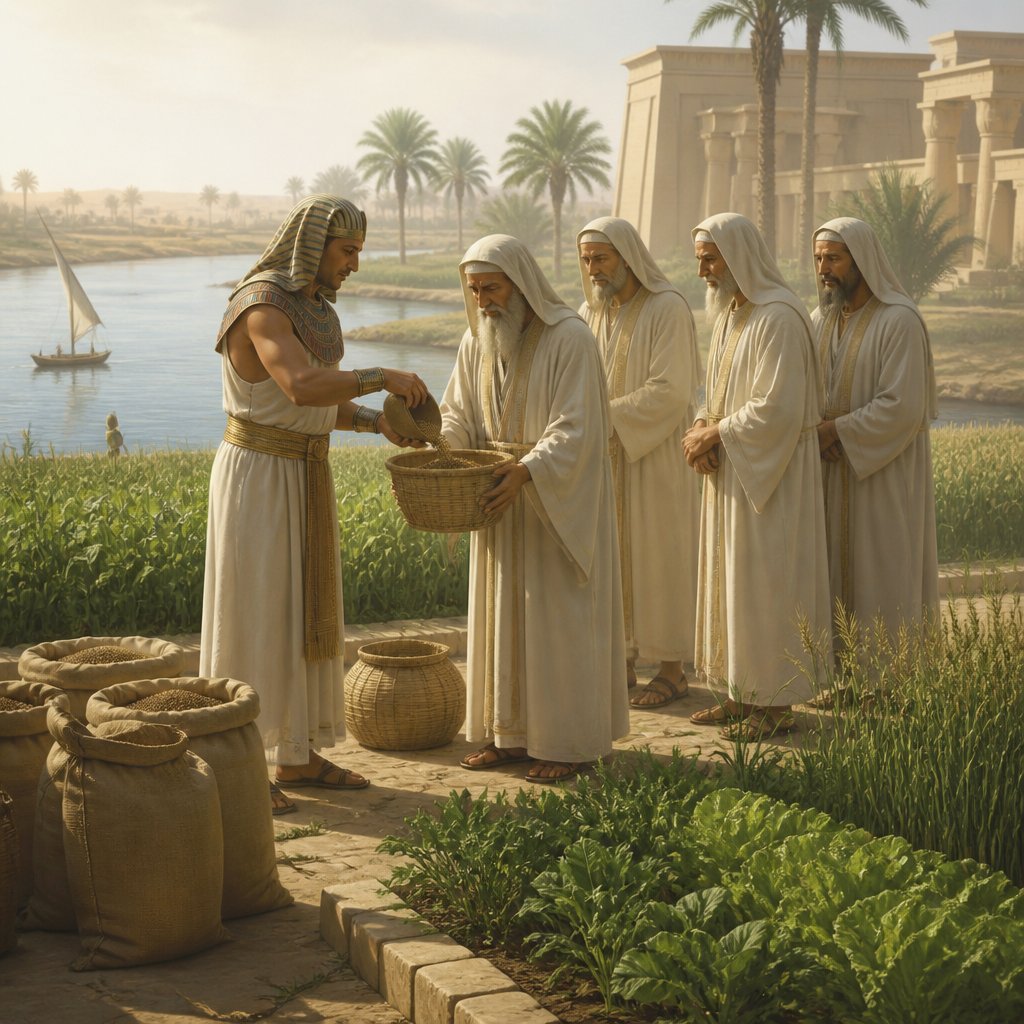
As we delve into Genesis 47:22, we encounter a pivotal point in the narrative of Joseph’s governance during the years of famine in Egypt. This verse states, "Only the land of the priests bought he not; for the priests had a portion assigned them of Pharaoh, and did eat their portion which Pharaoh gave them: wherefore they sold not their lands." (KJV) At first glance, this passage may seem merely historical, but upon closer examination, it reveals profound truths about stewardship, divine provision, and the role of the faithful in God's economy.
In the context of Genesis 47, Joseph is mandated with the responsibility of saving Egypt from the catastrophic famine that has befallen the land. Amidst the desperate state of the people who are forced to sell their possessions, including their lands, to survive, the priests stand out as a unique group. They do not sell their lands to Joseph because they have been provided for by Pharaoh, who grants them a portion.
The priests, as described, were not just religious leaders but functioned within a system that recognized their contribution to society’s spiritual and moral fabric. Their sustenance came from Pharaoh’s provision, which aligns intriguingly with God’s ordained design for societal structure. As stewards of God's resources, they relied on God’s blessings through Pharaoh, thereby intertwining the sacred and the secular in their lives.
This leads us to reflect on the theme of stewardship. In our lives today, as believers, we are called to be stewards of what God has entrusted to us, whether it be financial resources, time, talents, or even our bodies. Just as the priests had to recognize their portion assigned to them, we too must discern that our resources come from God and are meant for His glory. Often, we find ourselves caught in the struggles of scarcity, yet God’s provision is always present, often in unconventional ways. The priests could have sold their lands like others, yet they chose to stand firm in their assigned portion, demonstrating their trust in God’s provision.
The act of not selling their land is significant. Through this decision, they exemplified faithfulness, demonstrating a belief that what they possessed as representatives of God’s people was secure in the hands of their Provider. Their refusal to sell also denotes a commitment to their identity and mission. We are reminded through this example that our identity in Christ should anchor our decisions in times of need; we belong to Him, and He cares for us. This in itself is a testament to our faithfulness amidst trials.
Moreover, it illustrates God’s desire for us to seek first His Kingdom and His righteousness (Matthew 6:33) even when circumstances seem dire. In doing so, we find assurances that everything else shall be added unto us. The priests became a symbol of unwavering faith and divine provision, sustaining not only their lives but also their pivotal roles in society. They were not merely passive benefactors; they were active participants in the spiritual life of the nation of Egypt.
As we meditate upon Genesis 47:22, let us consider our own stewardship. Are we recognizing the earthly and spiritual provisions that God has assigned to us? How can we align our lives to reflect gratitude for His abundant blessings in a way that serves others?
In closing, may we be encouraged to follow the priests' example of trust and faithfulness. They remind us of the delicate balance between maintaining our responsibilities and relying on God's provision. We are stewards of His kingdom, and in every aspect of our lives, we have the opportunity to reflect His glory and provision to the world around us. Let us not sell our inheritance for a temporary solution but stand firm in our faith, trusting in the One who sustains us.
Get our apps


Artwork for Genesis 47:22
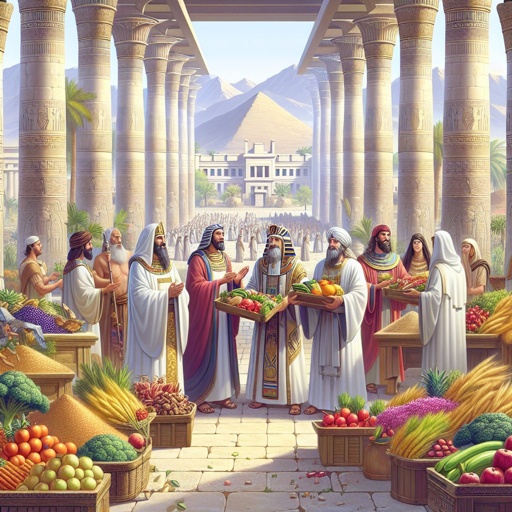
Genesis 47:22 - "Only the land of the priests bought he not; for the priests had a portion assigned them of Pharaoh, and did eat their portion which Pharaoh gave them: wherefore they sold not their lands."
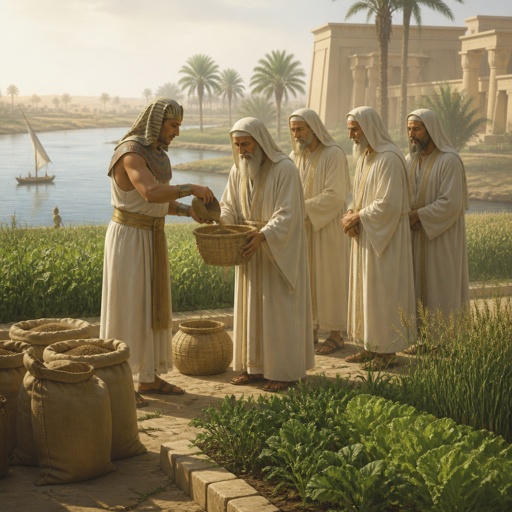
"Only the land of the priests bought he not; for the priests had a portion assigned them of Pharaoh, and did eat their portion which Pharaoh gave them: wherefore they sold not their lands." - Genesis 47:22

Genesis 24-47

1 Kings 22:47 - "There was then no king in Edom: a deputy was king."

Genesis 31:47 - "And Laban called it Jegarsahadutha: but Jacob called it Galeed."

Genesis 41:47 - "And in the seven plenteous years the earth brought forth by handfuls."

Genesis 47:10 - "And Jacob blessed Pharaoh, and went out from before Pharaoh."

Genesis 47:8 - "And Pharaoh said unto Jacob, How old art thou?"

2 Samuel 22:47 - "The LORD liveth; and blessed be my rock; and exalted be the God of the rock of my salvation."

"There was then no king in Edom: a deputy was king." - 1 Kings 22:47

Genesis 47:2 - "And he took some of his brethren, even five men, and presented them unto Pharaoh."

Genesis 47:12 - "And Joseph nourished his father, and his brethren, and all his father's household, with bread, according to their families."

Genesis 47:16 - "And Joseph said, Give your cattle; and I will give you for your cattle, if money fail."

Genesis 47:27 - "¶ And Israel dwelt in the land of Egypt, in the country of Goshen; and they had possessions therein, and grew, and multiplied exceedingly."

Genesis 47:7 - "And Joseph brought in Jacob his father, and set him before Pharaoh: and Jacob blessed Pharaoh."

Genesis 47:5 - "And Pharaoh spake unto Joseph, saying, Thy father and thy brethren are come unto thee:"

"And Laban called it Jegarsahadutha: but Jacob called it Galeed." - Genesis 31:47

Genesis 47:28 - "And Jacob lived in the land of Egypt seventeen years: so the whole age of Jacob was an hundred forty and seven years."

Genesis 47:21 - "And as for the people, he removed them to cities from one end of the borders of Egypt even to the other end thereof."

Genesis 47:13 - "¶ And there was no bread in all the land; for the famine was very sore, so that the land of Egypt and all the land of Canaan fainted by reason of the famine."

Genesis 47:31 - "And he said, Swear unto me. And he sware unto him. And Israel bowed himself upon the bed's head."

Genesis 47:25 - "And they said, Thou hast saved our lives: let us find grace in the sight of my lord, and we will be Pharaoh's servants."

"And in the seven plenteous years the earth brought forth by handfuls." - Genesis 41:47

Genesis 22-22

Genesis 47:11 - "¶ And Joseph placed his father and his brethren, and gave them a possession in the land of Egypt, in the best of the land, in the land of Rameses, as Pharaoh had commanded."

Genesis 47:14 - "And Joseph gathered up all the money that was found in the land of Egypt, and in the land of Canaan, for the corn which they bought: and Joseph brought the money into Pharaoh's house."

"And Jacob blessed Pharaoh, and went out from before Pharaoh." - Genesis 47:10

Genesis 47:3 - "And Pharaoh said unto his brethren, What is your occupation? And they said unto Pharaoh, Thy servants are shepherds, both we, and also our fathers."

Luke 22:47 - "¶ And while he yet spake, behold a multitude, and he that was called Judas, one of the twelve, went before them, and drew near unto Jesus to kiss him."

"And Pharaoh said unto Jacob, How old art thou?" - Genesis 47:8