The Shepherd’s Calling: Embracing Our Vocations for God’s Glory
“And Pharaoh said unto his brethren, What is your occupation? And they said unto Pharaoh, Thy servants are shepherds, both we, and also our fathers.” — Genesis 47:3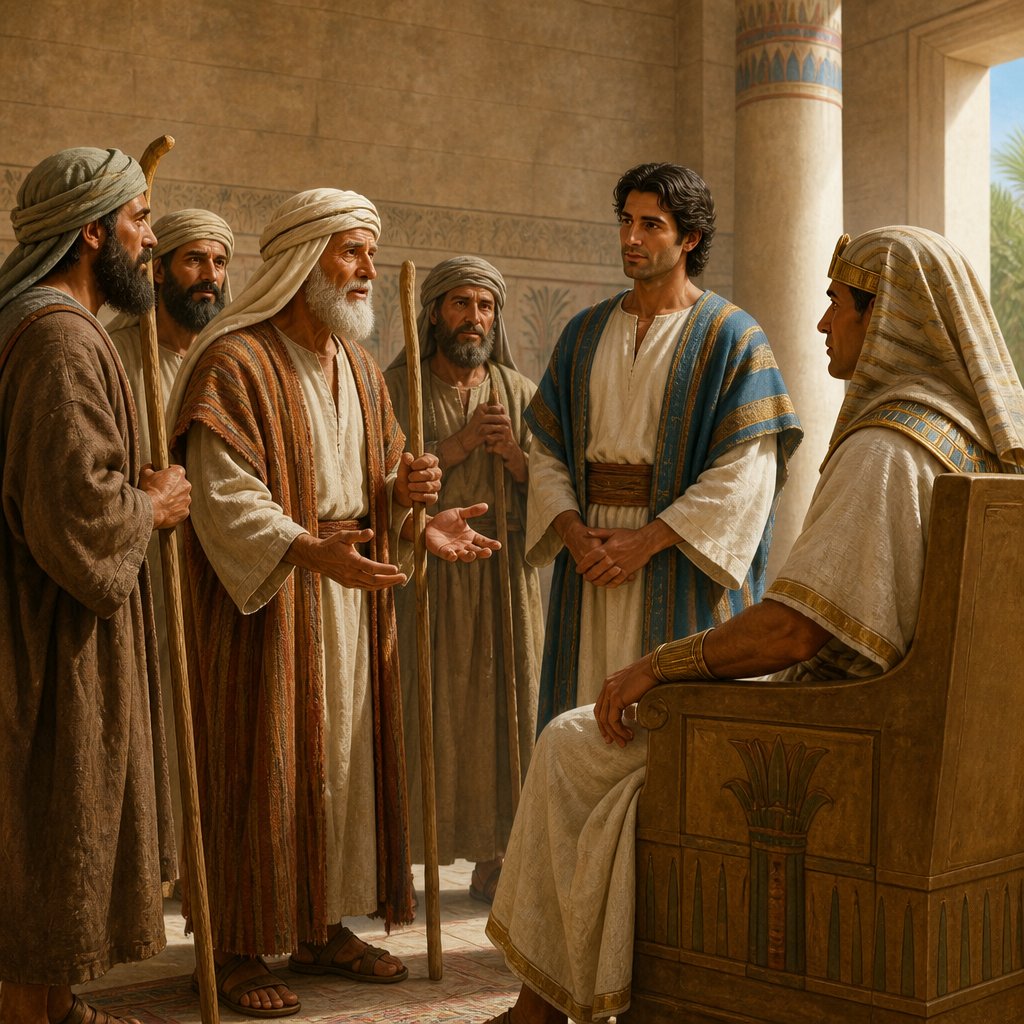
In Genesis 47:3, we find a pivotal conversation between Pharaoh and Joseph’s brothers, captured succinctly in the King James Version: "And Pharaoh said unto his brethren, What is your occupation? And they said unto Pharaoh, Thy servants are shepherds, both we, and also our fathers." This exchange may seem straightforward at first glance, yet it carries profound implications for how we view our work and our identity as children of God.
The context of this moment is essential. Joseph’s brothers, having come to Egypt seeking sustenance during a fierce famine, stand before Pharaoh, known as a mighty ruler who symbolizes power and authority. However, their response to his inquiry reveals their deep-rooted identity and life’s work. They respond with humble pride, recognizing and declaring, “Thy servants are shepherds.” It’s important to pause here and consider what being a shepherd entails in the biblical context.
Shepherding was not merely a profession; it was a vocation steeped in spirituality, responsibility, and care. In the ancient Near Eastern culture, shepherds were seen as protectors and nurturers, guiding their flocks not only to green pastures but also safeguarding them against lurking dangers. Similarly, we, as followers of Christ, are called to be shepherds in our own rights—whether in our homes, workplaces, or communities. God’s commission to tend, guide, and nurture extends beyond traditional roles; it encompasses every sphere of life.
The term "servants" that the brothers use signifies more than just a title; it represents an attitude of humility and stewardship. They understood that, despite their royal connection through Joseph, their calling was rooted in a service that honors God. This is a powerful reminder for us: our occupations, whatever they may be, can be platforms for glorifying God. Whether you identify as a teacher, a doctor, a stay-at-home parent, a laborer, or any other role, you too are called to shepherd in ways that reflect God’s character and love.
Moreover, in recognizing their common lineage and heritage—being shepherds "both we, and also our fathers"—they affirmed a tradition that was honoring to God. It is an invitation for us to reflect on our own calling, the legacy that we carry, and what we should cultivate in future generations. Our work can become a testimony of faith, echoing the values and practices that were passed down to us. By doing so, we train those who come after us not only through our words but through our actions.
We can think of Jesus as the Good Shepherd in John 10:11, who lays down His life for the sheep. This divine shepherding illustrates the ultimate service we are called to emulate. As His followers, we are invited to become like Him—serving others, laying down our lives for one another, and faithfully tending to the needs of those around us. In our choices and conduct, we have the privilege and responsibility to influence our colleagues, friends, and families towards grace and hope.
Additionally, the brothers’ admission of their occupation to Pharaoh opens up the possibility of embracing our work not merely as a means to an end but as an integral part of our worship. Colossians 3:23-24 reminds us, "And whatsoever ye do, do it heartily, as to the Lord, and not unto men; knowing that of the Lord ye shall receive the reward of the inheritance: for ye serve the Lord Christ." This heavenly perspective transforms our daily responsibilities into acts of worship.
As we meditate on Genesis 47:3, let us commit to seeing our professions and roles as shepherds of sorts. Let us embrace our callings with joy and purpose, recognizing that, like Joseph's brothers, we are given the opportunity to honor God through our work. May we be diligent in our stewardship—tending to our families, supporting our communities, and reflecting Christ’s love in everything we do. In this, we fulfill our divine purpose and position ourselves as light-bearers in a world that desperately needs the true Shepherd.
Get our apps


Artwork for Genesis 47:3

Genesis 47:3 - "And Pharaoh said unto his brethren, What is your occupation? And they said unto Pharaoh, Thy servants are shepherds, both we, and also our fathers."
"And Pharaoh said unto his brethren, What is your occupation? And they said unto Pharaoh, Thy servants are shepherds, both we, and also our fathers." - Genesis 47:3

Genesis 24-47

Genesis 31:47 - "And Laban called it Jegarsahadutha: but Jacob called it Galeed."

Genesis 41:47 - "And in the seven plenteous years the earth brought forth by handfuls."

Genesis 47:10 - "And Jacob blessed Pharaoh, and went out from before Pharaoh."

Genesis 47:8 - "And Pharaoh said unto Jacob, How old art thou?"

Genesis 47:2 - "And he took some of his brethren, even five men, and presented them unto Pharaoh."

Lamentations 3:47 - "Fear and a snare is come upon us, desolation and destruction."

Genesis 47:16 - "And Joseph said, Give your cattle; and I will give you for your cattle, if money fail."

Genesis 47:27 - "¶ And Israel dwelt in the land of Egypt, in the country of Goshen; and they had possessions therein, and grew, and multiplied exceedingly."

Genesis 47:7 - "And Joseph brought in Jacob his father, and set him before Pharaoh: and Jacob blessed Pharaoh."

Genesis 47:5 - "And Pharaoh spake unto Joseph, saying, Thy father and thy brethren are come unto thee:"

Genesis 47:12 - "And Joseph nourished his father, and his brethren, and all his father's household, with bread, according to their families."

"And Laban called it Jegarsahadutha: but Jacob called it Galeed." - Genesis 31:47

Genesis 47:28 - "And Jacob lived in the land of Egypt seventeen years: so the whole age of Jacob was an hundred forty and seven years."

Genesis 47:21 - "And as for the people, he removed them to cities from one end of the borders of Egypt even to the other end thereof."

Genesis 47:13 - "¶ And there was no bread in all the land; for the famine was very sore, so that the land of Egypt and all the land of Canaan fainted by reason of the famine."

Genesis 47:31 - "And he said, Swear unto me. And he sware unto him. And Israel bowed himself upon the bed's head."

Psalms 47:3 - "He shall subdue the people under us, and the nations under our feet."

Genesis 47:25 - "And they said, Thou hast saved our lives: let us find grace in the sight of my lord, and we will be Pharaoh's servants."

"And in the seven plenteous years the earth brought forth by handfuls." - Genesis 41:47

Genesis 47:14 - "And Joseph gathered up all the money that was found in the land of Egypt, and in the land of Canaan, for the corn which they bought: and Joseph brought the money into Pharaoh's house."

Genesis 47:11 - "¶ And Joseph placed his father and his brethren, and gave them a possession in the land of Egypt, in the best of the land, in the land of Rameses, as Pharaoh had commanded."

"And Jacob blessed Pharaoh, and went out from before Pharaoh." - Genesis 47:10

"And Pharaoh said unto Jacob, How old art thou?" - Genesis 47:8

Genesis 47:30 - "But I will lie with my fathers, and thou shalt carry me out of Egypt, and bury me in their buryingplace. And he said, I will do as thou hast said."

Genesis 47:23 - "Then Joseph said unto the people, Behold, I have bought you this day and your land for Pharaoh: lo, here is seed for you, and ye shall sow the land."

Genesis 47:17 - "And they brought their cattle unto Joseph: and Joseph gave them bread in exchange for horses, and for the flocks, and for the cattle of the herds, and for the asses: and he fed them with bread for all their cattle for that year."

ezekiel 47:8-10