Burial and Blessing: A Journey of Faith and Memory
“And as for me, when I came from Padan, Rachel died by me in the land of Canaan in the way, when yet there was but a little way to come unto Ephrath: and I buried her there in the way of Ephrath; the same is Beth-lehem.” — Genesis 48:7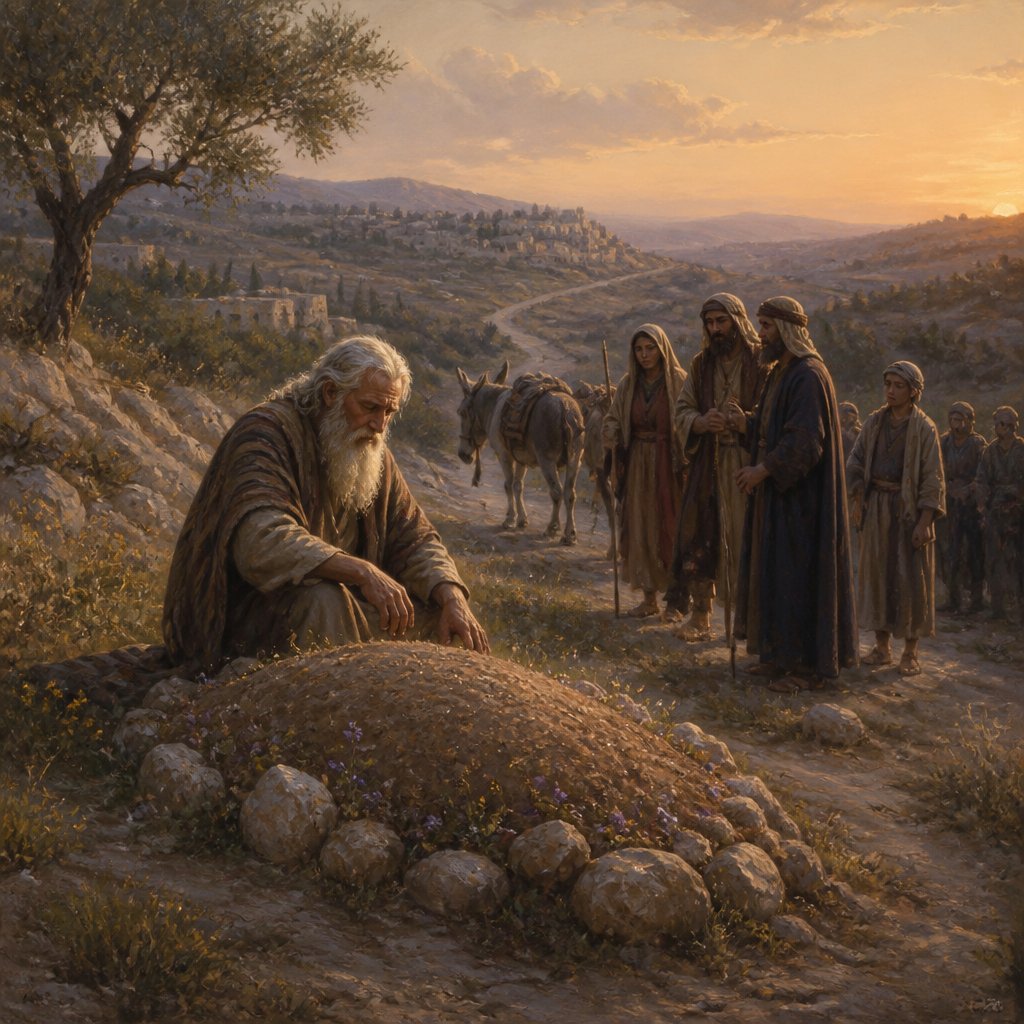
The story recorded in Genesis 48:7 captures a profoundly poignant moment in Jacob's life that is saturated with layers of sorrow, remembrance, and ultimately, faith. The verse states: "And as for me, when I came from Padan, Rachel died by me in the land of Canaan in the way, when yet there was but a little way to come unto Ephrath: and I buried her there in the way of Ephrath; the same is Beth-lehem."
To fully appreciate the implications of this verse, we must delve into the context surrounding it. Jacob, who had endured a lifetime of trials, had just reunited with his son Joseph after years of separation due to presumed death. His heart was filled with joy over this reunion, but it was intermingled with the bittersweet memories of his beloved wife, Rachel, who passed away during childbirth in a moment of vulnerability and pain. In this referencing of Rachel’s death, Jacob not only reflects on the grief he experienced but also underscores the significance of the choices we make in sorrowful times.
Jacob had left his homeland in search of a better life for his family, fleeing from the hostility in Canaan. Yet, during the journey, tragedy struck as Rachel gave birth to her second son, Benjamin. In the throes of giving birth, Rachel died, a significant blow to Jacob, who had cherished her deeply. The act of burying her "in the way of Ephrath," signifying the area near Bethlehem, serves as a tangible expression of Jacob’s deep love for Rachel and the pain that came with her loss. It reminds us, too, of how our journeys through life can often be shadowed by grief, yet it is through these very experiences that God shapes us.
Jacob’s recollection of Rachel reminds the reader of the fragility of life and the inevitability of loss. Rachel was more than just a wife to him; she was a beloved partner amidst the complexities of familial strife. Even as Jacob continued with his life, raising his children and tackling the responsibilities that lay before him, the memory of Rachel lingered, influencing his fathering, his dreams, and even his plans for the future. This speaks volumes about how our experiences and the people we love leave indelible marks on our hearts.
Moreover, the placement of Rachel's grave served a dual purpose: it was a farewell and an anchor. In biblical times, burial sites were considered significant places of remembrance and a testament to God's promises. Jacob's decision to bury Rachel in Canaan, specifically in Bethlehem, later becomes part of a larger narrative, entwining Rachel with the story of redemption that flows through the line of King David and ultimately, Jesus Christ. This intertwining of death within the story of life highlights a core Christian understanding: God can bring forth life and purpose even out of our deepest sorrows.
This verse invites us to consider how we honor the memories of those we have lost. The graves we tend to are not just markers of sadness; they can also serve as memorials of hope, blessings of the love they left behind, and reminders of the divine actions of God in our lives. Just as Jacob remembered the sorrow of Rachel’s death at a moment of blessing, we can carry the memories of those we've lost into new seasons of life. Every tear is a reminder of love; every memory, a thread connecting us to God's greater plan.
In moments of grief, we can also reflect on Jacob’s faithfulness to God amidst his pain. There in the land of Canaan, Jacob faced the crossroads of his life – mourning but also celebrating. He was resolute in encountering both the joy of reunion with his son and the sadness of loss. May we be inspired to embrace joy and sorrow as Jacob did, recognizing that they coexist and shape our journey of faith.
The burial of Rachel teaches us that loss is a part of life’s tapestry, intricately woven with threads of love, remembrance, and promises yet to unfold. Let us carry on with hope, confident that beneath every grief, God is crafting a story of redemption, revealing His faithfulness through every chapter.
Get our apps


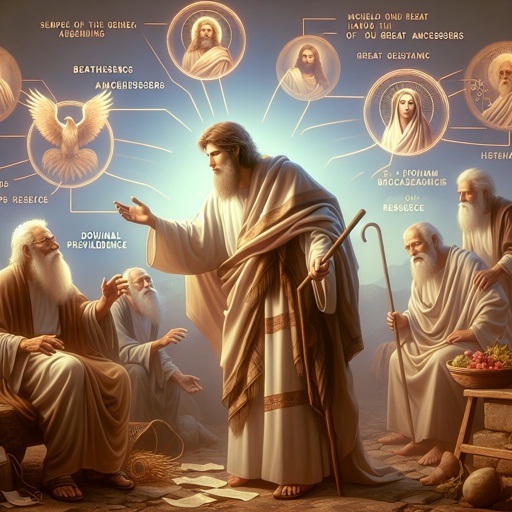
Artwork for Genesis 48:7
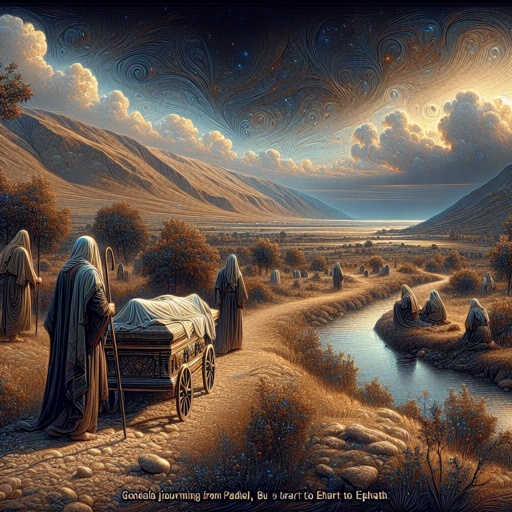
Genesis 48:7 - "And as for me, when I came from Padan, Rachel died by me in the land of Canaan in the way, when yet there was but a little way to come unto Ephrath: and I buried her there in the way of Ephrath; the same is Beth-lehem."
"And as for me, when I came from Padan, Rachel died by me in the land of Canaan in the way, when yet there was but a little way to come unto Ephrath: and I buried her there in the way of Ephrath; the same is Beth-lehem." - Genesis 48:7

Genesis 24-48

Genesis 48:8 - "And Israel beheld Joseph's sons, and said, Who are these?"

Nehemiah 7:48 - "The children of Lebana, the children of Hagaba, the children of Shalmai,"

John 7:48 - "Have any of the rulers or of the Pharisees believed on him?"

Psalms 48:7 - "Thou breakest the ships of Tarshish with an east wind."

Luke 7:48 - "And he said unto her, Thy sins are forgiven."

Genesis 31:48 - "And Laban said, This heap is a witness between me and thee this day. Therefore was the name of it called Galeed;"

Acts 7:48 - "Howbeit the most High dwelleth not in temples made with hands; as saith the prophet,"

Numbers 7:48 - "¶ On the seventh day Elishama the son of Ammihud, prince of the children of Ephraim, offered:"

Genesis 48:3 - "And Jacob said unto Joseph, God Almighty appeared unto me at Luz in the land of Canaan, and blessed me,"

Genesis 48:12 - "And Joseph brought them out from between his knees, and he bowed himself with his face to the earth."
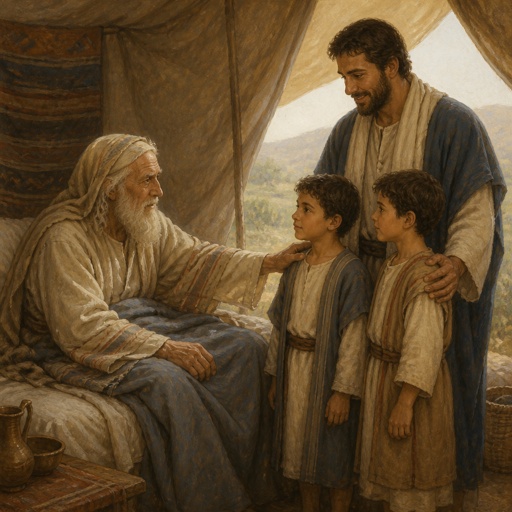
"And Israel beheld Joseph's sons, and said, Who are these?" - Genesis 48:8

Ezekiel 48:7 - "And by the border of Reuben, from the east side unto the west side, a portion for Judah."
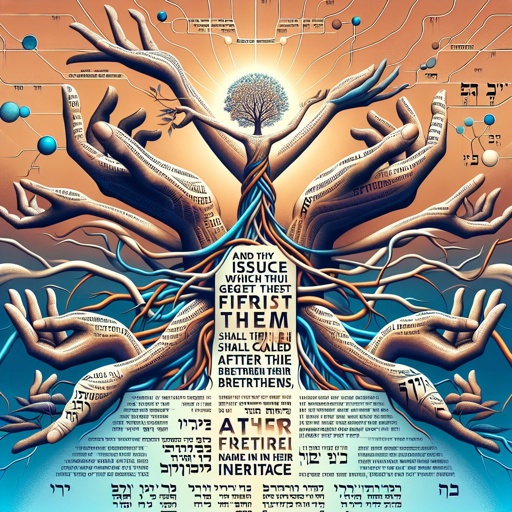
Genesis 48:6 - "And thy issue, which thou begettest after them, shall be thine, and shall be called after the name of their brethren in their inheritance."

Genesis 48:18 - "And Joseph said unto his father, Not so, my father: for this is the firstborn; put thy right hand upon his head."
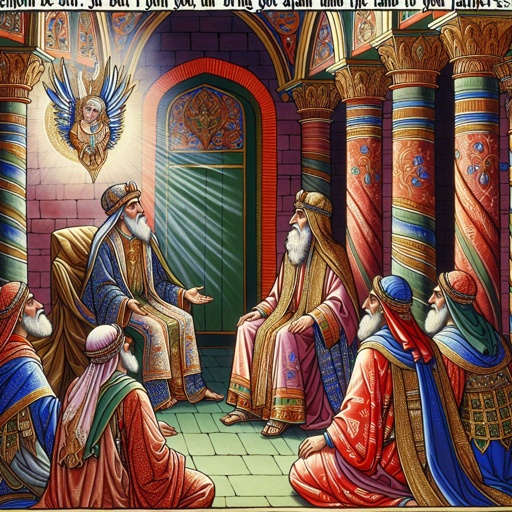
Genesis 48:21 - "And Israel said unto Joseph, Behold, I die: but God shall be with you, and bring you again unto the land of your fathers."

Genesis 48:2 - "And one told Jacob, and said, Behold, thy son Joseph cometh unto thee: and Israel strengthened himself, and sat upon the bed."
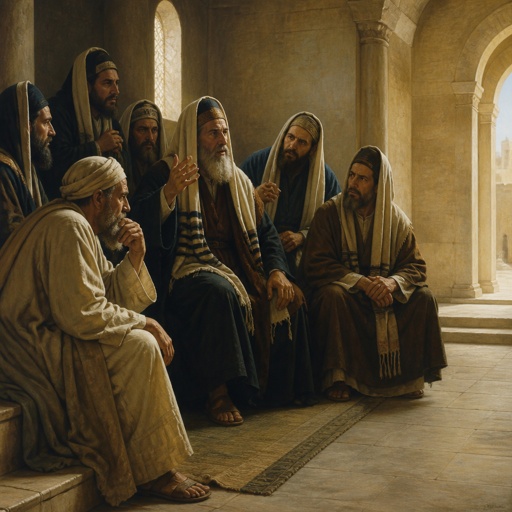
"Have any of the rulers or of the Pharisees believed on him?" - John 7:48
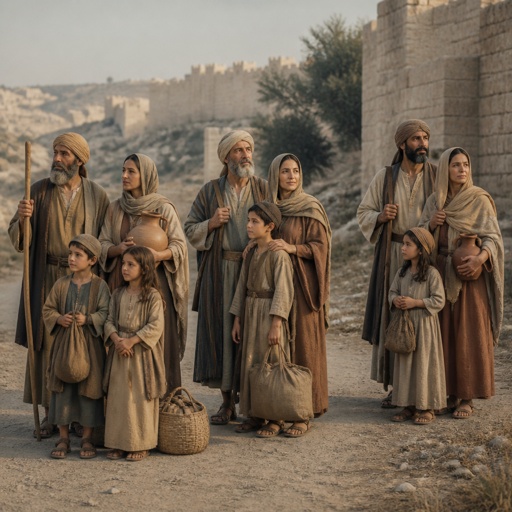
"The children of Lebana, the children of Hagaba, the children of Shalmai," - Nehemiah 7:48
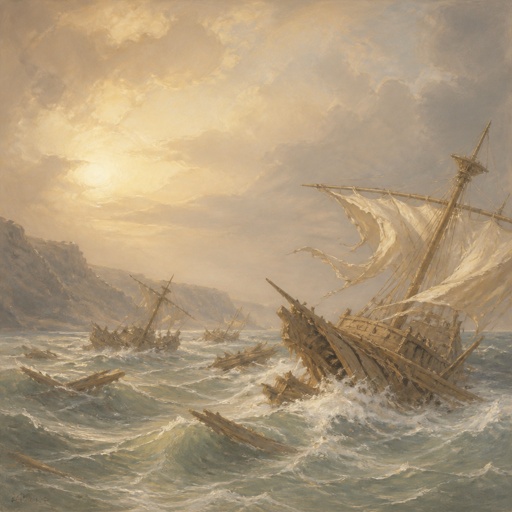
"Thou breakest the ships of Tarshish with an east wind." - Psalms 48:7
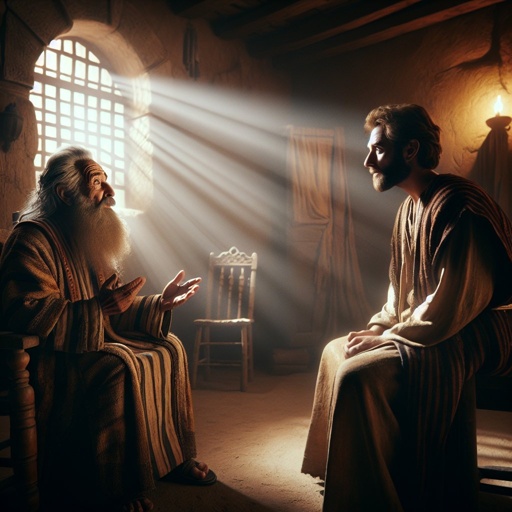
Genesis 48:11 - "And Israel said unto Joseph, I had not thought to see thy face: and, lo, God hath shewed me also thy seed."

1 Kings 7:48 - "And Solomon made all the vessels that pertained unto the house of the LORD: the altar of gold, and the table of gold, whereupon the shewbread was,"
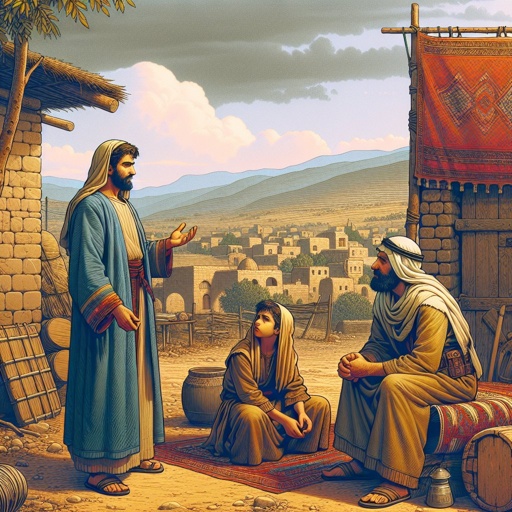
Genesis 48:1 - "And it came to pass after these things, that one told Joseph, Behold, thy father is sick: and he took with him his two sons, Manasseh and Ephraim."

Genesis 48:22 - "Moreover I have given to thee one portion above thy brethren, which I took out of the hand of the Amorite with my sword and with my bow."

Genesis 48:20 - "And he blessed them that day, saying, In thee shall Israel bless, saying, God make thee as Ephraim and as Manasseh: and he set Ephraim before Manasseh."
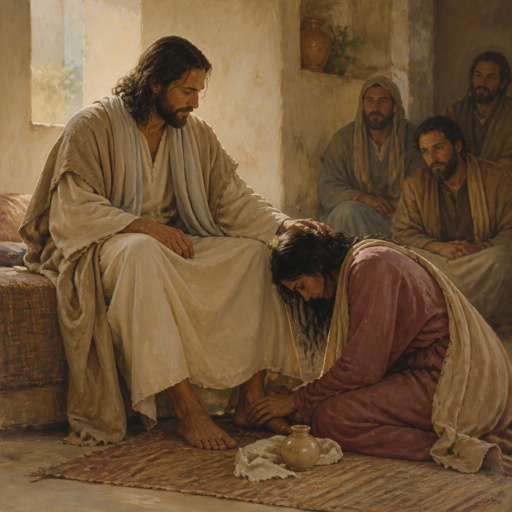
"And he said unto her, Thy sins are forgiven." - Luke 7:48

Genesis 48:10 - "Now the eyes of Israel were dim for age, so that he could not see. And he brought them near unto him; and he kissed them, and embraced them."
Genesis 48:15 - "¶ And he blessed Joseph, and said, God, before whom my fathers Abraham and Isaac did walk, the God which fed me all my life long unto this day,"