The Heart of Worship: Lessons from Cain and Abel
"4 And Abel, he also brought of the firstlings of his flock and of the fat thereof. And the Lord had respect unto Abel and to his offering: 5 But unto Cain and to his offering he had not respect. And Cain was very wroth, and his countenance fell." - Genesis 4:3-5
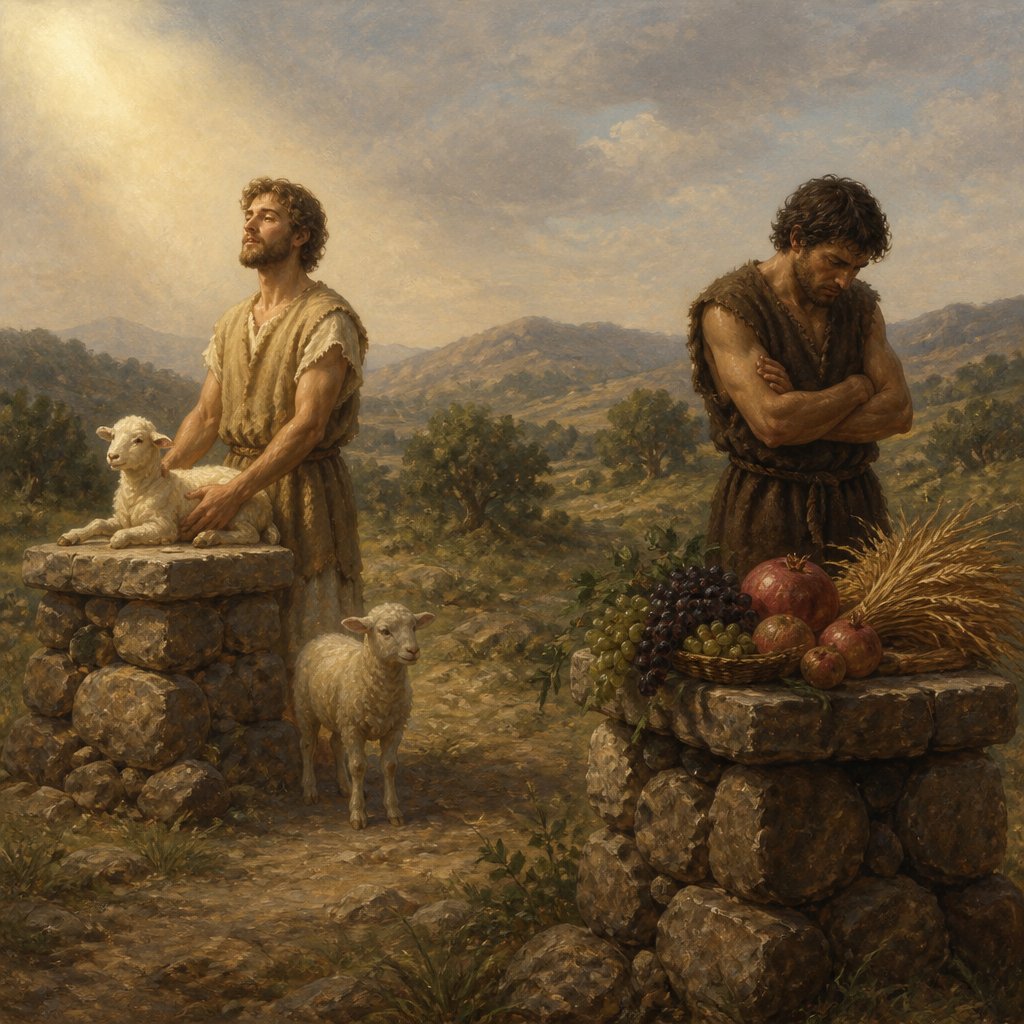
In the arena of worship and offerings, the story of Cain and Abel stands as a poignant lesson that reverberates through the ages, challenging our perceptions of merit and favor before God. The verses from Genesis 4:3-5 (KJV) tell us, "And Abel, he also brought of the firstlings of his flock and of the fat thereof. And the Lord had respect unto Abel and to his offering: But unto Cain and to his offering he had not respect. And Cain was very wroth, and his countenance fell."
At its core, this passage reveals the deep-seated principles of what it means to approach God with our offerings. Abel's offering is described with distinct honor—he offers the "firstlings of his flock and of the fat thereof." This detail highlights not just the physical offering but the attitude behind it. Abel did not merely bring an offering; he brought the best of what he had. His sacrifice reflected a heart devoted to God, showcasing not only obedience but a profound reverence and understanding of who God is.
In contrast, Cain's offering is described with less specificity. The scripture states he brought "of the fruit of the ground" (Genesis 4:3), but does not elaborate on the quality or the intention behind it. This absence may suggest a lack of care or genuine devotion in his offering. When the Lord accepts Abel's offering but disregards Cain's, it is not a reflection of favoritism but rather an indictment of Cain's heart condition and his casual approach to worship.
Cain’s reaction is immediate and intense. "Cain was very wroth, and his countenance fell." His anger is a visceral response to feeling rejected. Yet, in his anger, Cain fails to see the lesson that God seeks to impart. Instead of humbling himself to inquire how he might improve his offering or his heart, he allows his feelings to overpower his understanding. This escalation of emotions leads to dire consequences, as we later see him committing an unspeakable act against Abel, which deepens his separation from God.
In our own lives, we must reflect on where our worship stands. Are we bringing our best to God? Are we offering our first fruits—what costs us something, what is precious to us? Or do we offer our leftovers, thinking little of what we present to the Creator of the universe?
The respect God showed towards Abel’s offering speaks volumes about the importance of our attitudes in worship. Worship is not just a matter of action; it is intricately tied to our hearts. God desires sincerity over performance, quality over quantity. It reminds us that it is not merely the act of giving, but the heart behind the act that creates an atmosphere of worship that God honors.
Moreover, Cain’s lesson is one we ought to recognize in ourselves. In our walk of faith, disappointment and feelings of inadequacy can lead to anger and resentment towards God or others if we’re not careful. God’s message to Cain after his offering was rejected serves as a reminder of His grace: "If thou doest well, shalt thou not be accepted?" (Genesis 4:7). There was still an opportunity for Cain to realign himself with God’s expectations, but he allowed his emotions to cloud his judgment.
As we consider our lives, let us strive to be like Abel, bringing forth the best of what we have with a heart full of gratitude. Let us examine our motivations as we bring our offerings—of finances, time, or acts of service—and ensure we are doing it joyfully and sincerely unto the Lord. May we resist the temptation to mirror Cain, whose heart was hardened by anger and resentment. Instead, let us cultivate a spirit of humility and worship, always seeking to glorify God with our best, remembering that He sees beyond our actions to the very intentions of our hearts.
Want to reflect more on Genesis 4:3-5?
Continue your spiritual journey with Bible Chat — an AI-powered tool for exploring God's Word through conversation. Ask questions, discover connections, and deepen your understanding.
Get Our Apps


Genesis 4:3-5 Artwork

Genesis 4:3-5 - "In the course of time Cain brought some of the fruits of the soil as an offering to the Lord. But Abel also brought an offering—fat portions from some of the firstborn of his flock. The Lord looked with favor on Abel and his offering, but on Cain and his offering he did not look with favor. So Cain was very angry, and his face was downcast."
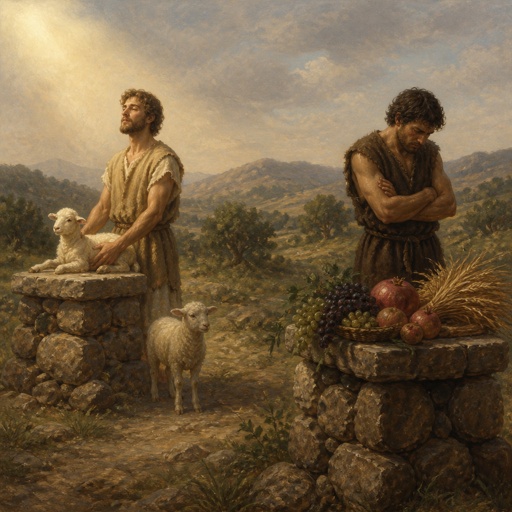
"In the course of time Cain brought some of the fruits of the soil as an offering to the Lord. But Abel also brought an offering—fat portions from some of the firstborn of his flock. The Lord looked with favor on Abel and his offering, but on Cain and his offering he did not look with favor. So Cain was very angry, and his face was downcast." - Genesis 4:3-5

Genesis 4:3 - "And in process of time it came to pass, that Cain brought of the fruit of the ground an offering unto the LORD."

create image of Genesis 5:3

Genesis 3:4 - "And the serpent said unto the woman, Ye shall not surely die:"

1 Samuel 5: 3-4

Genesis 4:5 - "But unto Cain and to his offering he had not respect. And Cain was very wroth, and his countenance fell."

Genesis 5:4 - "And the days of Adam after he had begotten Seth were eight hundred years: and he begat sons and daughters:"
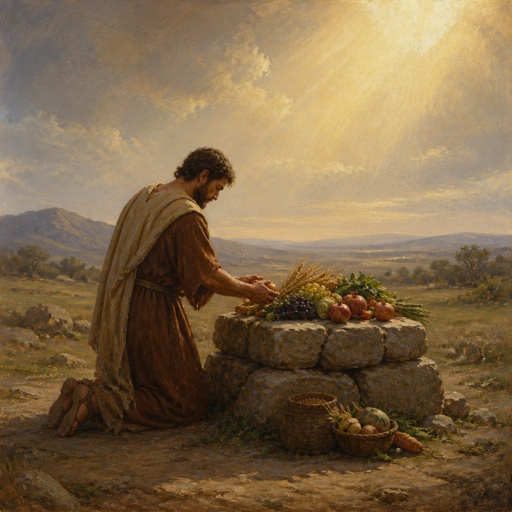
"And in process of time it came to pass, that Cain brought of the fruit of the ground an offering unto the LORD." - Genesis 4:3

Genesis 5:3 - "¶ And Adam lived an hundred and thirty years, and begat a son in his own likeness, after his image; and called his name Seth:"

Genesis 3:5 - "For God doth know that in the day ye eat thereof, then your eyes shall be opened, and ye shall be as gods, knowing good and evil."

Genesis 3:4 - "And the serpent said unto the woman, Ye shall not surely die:"

Genesis 3:4 - "And the serpent said unto the woman, Ye shall not surely die:"

"And the serpent said unto the woman, Ye shall not surely die:" - Genesis 3:4

Romans 5:3-4 - "And not only so, but we glory in tribulations also: knowing that tribulation worketh patience; And patience, experience; and experience, hope."

Proverbs 5:3-4 - "For the lips of an adulterous woman drip honey, and her speech is smoother than oil; but in the end she is bitter as gall, sharp as a double-edged sword."

1 Thessalonians 4:3-5 - "For this is the will of God, your sanctification: that you abstain from sexual immorality; that each one of you know how to control his own body in holiness and honor, not in the passion of lust like the Gentiles who do not know God."

2 Corinthians 3:4-5 - "Such confidence we have through Christ before God. Not that we are competent in ourselves to claim anything for ourselves, but our competence comes from God."
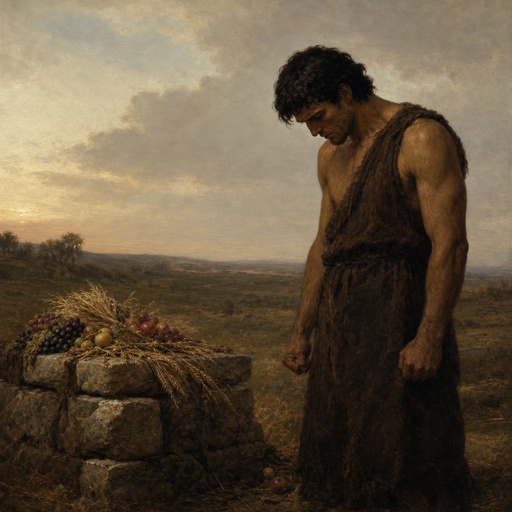
"But unto Cain and to his offering he had not respect. And Cain was very wroth, and his countenance fell." - Genesis 4:5

Genesis 24:5

Genesis 27:5

Genesis 17:5

Genesis 20-5

Genesis 11:5

Genesis 22-5

Genesis 1:5

Genesis 11:5

Genesis 23-5

Genesis 11:5

Genesis 25:5