The Offering That Gains Divine Favor
"And Abel, he also brought of the firstlings of his flock and of the fat thereof. And the LORD had respect unto Abel and to his offering:" - Genesis 4:4
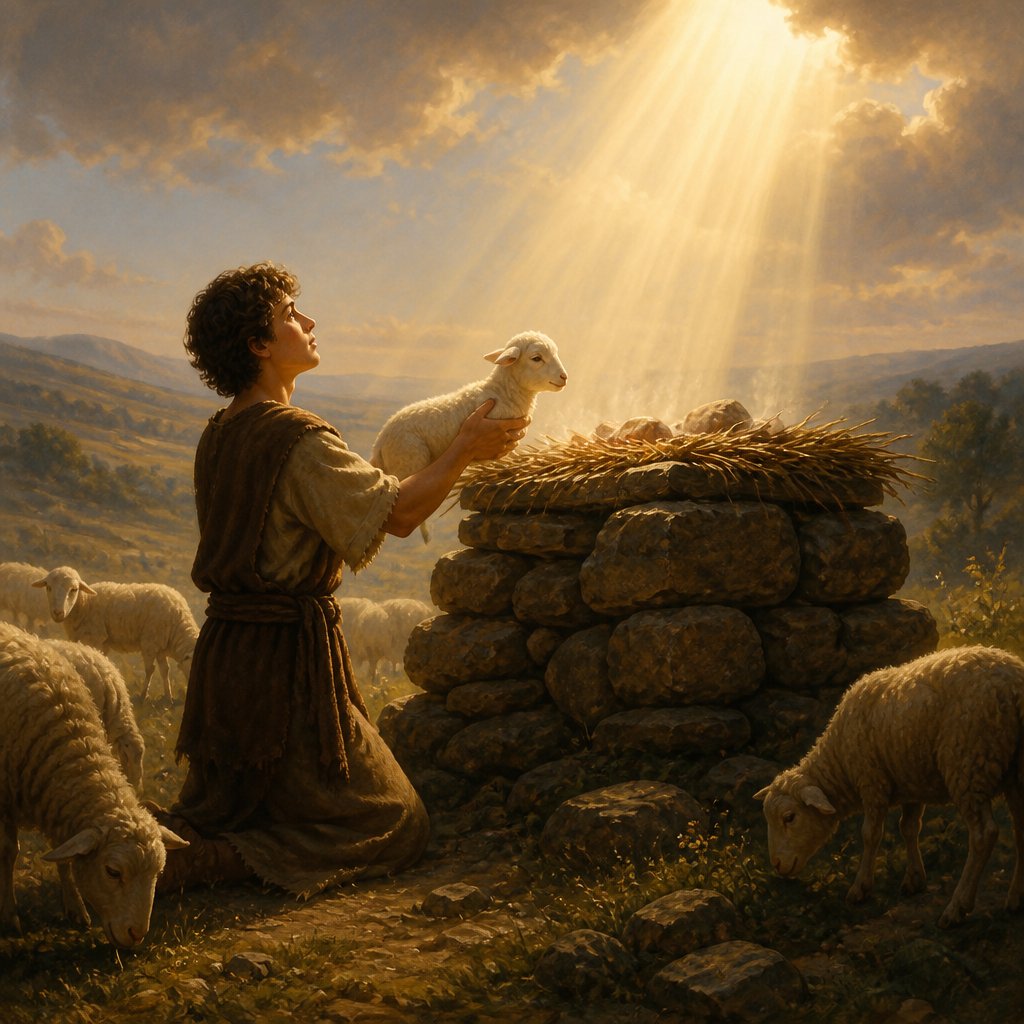
In the narrative of Genesis 4:4, we encounter the poignant story of Abel, who epitomizes the essence of true worship: "And Abel, he also brought of the firstlings of his flock and of the fat thereof. And the LORD had respect unto Abel and to his offering" (KJV). This verse unfolds profound insights about the nature of our offerings to God and His response to them.
At its core, the passage emphasizes the concept of giving and the heart behind such actions. Abel's offering was not just any ordinary gift; it was a reflection of his devotion and acknowledgment of God’s sovereignty. He brought the firstlings of his flock—the best of what he had—to the altar, signifying that he valued his relationship with God above all else. This choice reveals an crucial aspect of worship: it is not merely about the act of giving but about the intention and the recognition of God’s rightful place in our lives.
Unlike his brother Cain, who offered the fruits of the ground, Abel went beyond mere obligation; he brought the *first* and the *fat*, the choicest portions of his livestock. In this, we see his heart’s alignment with God’s desires. Hebrews 11:4 reinforces this, stating, "By faith Abel offered unto God a more excellent sacrifice than Cain, by which he obtained witness that he was righteous, God testifying of his gifts: and by it he being dead yet speaketh." Abel’s faith was expressed through his tangible offering, something we must take note of as we consider our offerings today.
God’s response to Abel’s offering—His respect—highlights the significance of honor in our relationships. The term ‘respect’ can also be understood as ’regard’ and indicates that God valued what Abel presented and, more importantly, the heart behind it. God is not solely interested in what we give; He is infinitely more concerned with why we give it. Are our offerings drenched with love and gratitude? Do they spring forth from a desire to please Him?
As we reflect on our own lives, consider the kinds of offerings we bring to God. Many people might think of offerings solely in the context of monetary gifts, but offerings extend to our time, talents, and resources. When we serve others, share our faith, or allocate our time for prayer and reflection, we are making offerings unto the Lord. Are we bringing our *best*, or are we reserving the choicest parts of our lives for ourselves?
In our modern context, it is easy to compare our offerings with those around us. We may feel compelled to give based on societal standards or norms, coveting recognition or approval. However, the lesson from Abel and Cain teaches us the futility of comparing ourselves to others. God’s acceptance of an offering is not based on its size but the spirit in which it is given. Let us focus our attention on authenticity and sincerity, allowing our gifts to flow from our relationship with God.
Moreover, there’s an imperative lesson about priorities. Abel made a conscious choice to give his first and best to God. It begs us to ponder: what comes first in our lives? Do we prioritize God, or is He an afterthought? As we navigate our daily lives, let us strive to give God the foremost place, reflecting that priority in our offerings. Each moment spent in prayer, worship, or serving others contributes a verse to our own story of faith.
Ultimately, Genesis 4:4 offers us a challenge to assess our lives—what do we bring before our Creator? In the moments of contemplation, let our hearts echo the passion of Abel. Let us strive to offer, through faith, that which is most valuable, ensuring that in all things, God is honored and glorified.
Want to reflect more on Genesis 4:4?
Continue your spiritual journey with Bible Chat — an AI-powered tool for exploring God's Word through conversation. Ask questions, discover connections, and deepen your understanding.
Get Our Apps


Genesis 4:4 Artwork

Genesis 4:4 - "And Abel, he also brought of the firstlings of his flock and of the fat thereof. And the LORD had respect unto Abel and to his offering:"
"And Abel, he also brought of the firstlings of his flock and of the fat thereof. And the LORD had respect unto Abel and to his offering:" - Genesis 4:4

Genesis 6:4

Genesis 6: 4

Genesis 29-4

Genesis 19-4

Genesis 25-4

Genesis 16:4

Genesis 1:4

Genesis 24-4

Genesis 23-4

Genesis 20-4

Genesis 21-4

Genesis 17:4

Genesis 22-4

Genesis 18-4

Genesis 10:4 - "And the sons of Javan; Elishah, and Tarshish, Kittim, and Dodanim."

Genesis 14:4 - "Twelve years they served Chedorlaomer, and in the thirteenth year they rebelled."

Genesis 36:4 - "And Adah bare to Esau Eliphaz; and Bashemath bare Reuel;"

Genesis 4:24 - "If Cain shall be avenged sevenfold, truly Lamech seventy and sevenfold."

Genesis 3:4 - "And the serpent said unto the woman, Ye shall not surely die:"

Genesis 31:4 - "And Jacob sent and called Rachel and Leah to the field unto his flock,"

Genesis 1:4 - "And God saw the light, that it was good: and God divided the light from the darkness."

Genesis 4:20 - "And Adah bare Jabal: he was the father of such as dwell in tents, and of such as have cattle."

Genesis 9:4 - "But flesh with the life thereof, which is the blood thereof, shall ye not eat."

Genesis 17:4 - "As for me, behold, my covenant is with thee, and thou shalt be a father of many nations."

Genesis 8:4 - "And the ark rested in the seventh month, on the seventeenth day of the month, upon the mountains of Ararat."

Genesis 4:21 - "And his brother's name was Jubal: he was the father of all such as handle the harp and organ."

Genesis 38:4 - "And she conceived again, and bare a son; and she called his name Onan."

Genesis 4:13 - "And Cain said unto the LORD, My punishment is greater than I can bear."