The Destructive Power of Jealousy: A Lesson from Cain and Abel
"And Cain talked with Abel his brother: and it came to pass, when they were in the field, that Cain rose up against Abel his brother, and slew him." - Genesis 4:8
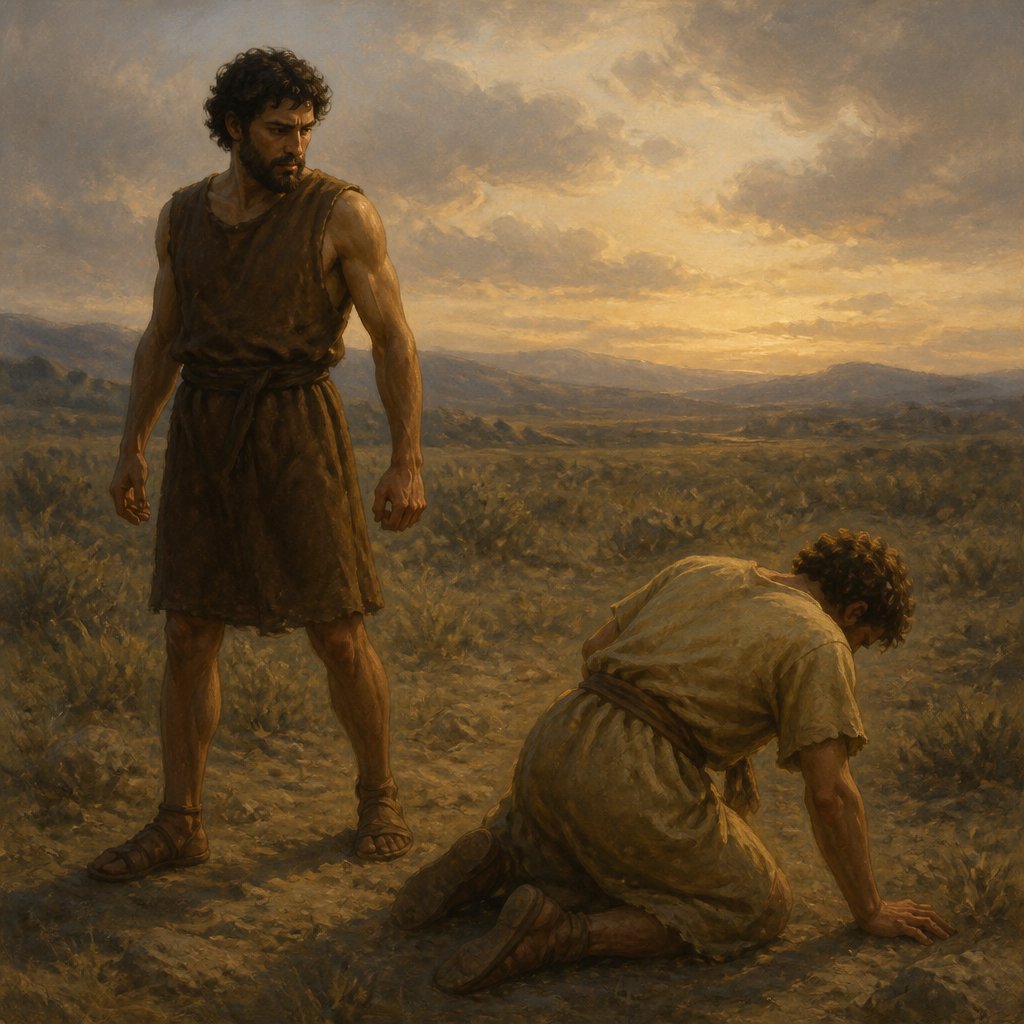
In Genesis 4:8, we read, "And Cain talked with Abel his brother: and it came to pass, when they were in the field, that Cain rose up against Abel his brother, and slew him." This verse captures a poignant moment in the early narrative of humanity—a moment filled with profound lessons on the nature of sin, the depths of jealousy, and the catastrophic consequences of unchecked emotions.
The backdrop of this tragic event begins with Cain and Abel, two brothers who offered their sacrifices to God. Cain, the firstborn, tilled the ground and brought produce from the earth, while Abel, the younger sibling, offered a lamb from his flock. The Scriptures reveal that God favored Abel’s offering over Cain’s, a fact that set the stage for a devastating rift. Instead of reflecting on God’s desires for genuine worship and sacrifice, Cain harbored jealousy and resentment in his heart.
Cain’s dialogue with Abel—a talk that initially might have seemed innocuous—was underlined by Cain’s simmering rage. This moment is crucial; it represents how conversations can either uplift or lead to destruction. Cain’s words reflected his internal turmoil, possibly laden with accusations or defensiveness. His inability to process and bring his feelings before God resulted in a terrifying turn of events. Just as unchecked anger can fester in our own lives, so too did it in Cain’s heart until it culminated in the act of murder.
The sin in Cain was not merely in the act of killing Abel; the sin originated long before that fateful encounter in the field. God Himself warns Cain earlier, saying, "If thou doest well, shalt thou not be accepted? And if thou doest not well, sin lieth at the door. And unto thee shall be his desire, and thou shalt rule over him" (Genesis 4:7). This verse implies that sin is often at the brink, waiting for an opportunity to pounce, much like a predator lying in wait. It reminds us of the importance of vigilance over our hearts and the feelings we allow to take root.
Cain's story is a stark reminder of how jealousy and anger can blind us to the truth and lead us to actions that are irreparable. Cain, overwhelmed by his emotions, failed to recognize the preciousness of his brother’s life. Instead of taking his grievances to God, acknowledging his feelings, and seeking reconciliation, he allowed pride and insecurity to govern his actions. In doing so, he committed the first murder, severing a sacred bond—a reality that reverberated through human history.
We must reflect on the lessons embedded in Cain's choices. First, we are urged to examine our feelings—particularly those of jealousy, anger, or resentment. Are we nurturing feelings that could lead us to harm others verbally, emotionally, or physically? The stakes of our unchecked emotions can lead to disastrous outcomes, not unlike that which befell Cain and Abel. Repentance should not only be a response to external actions but also to the internal motivations that drive us.
Second, God’s appeal to Cain reminds us of His mercy and desire for our repentance. Even at the brink of sin, God urged Cain to turn back—to master his emotions and avoid the impending sin that lay ahead. God is ever ready to grant forgiveness and help us navigate our struggles but requires our willingness to confront and surrender our anxieties to Him.
Ultimately, the legacy of Cain and Abel serves to illuminate the necessity for reconciliation and forgiveness in our lives. We are called to nurture relationships with love, acceptance, and grace, rather than allowing jealousy or rivalry to fester. As we navigate our own emotional challenges, let us remember to bring them before God, fostering dialogue instead of discord, and allowing Him to transform our hearts.
As we pray and meditate on this account of Cain and Abel, may we ask God to reveal any hidden feelings of jealousy or resentment within us. Let us lay these burdens at His feet, seeking His strength to cultivate love and understanding instead. In doing so, we step toward embodying the love of Christ, who calls us to be reconciled not only to Him but to one another.
Want to reflect more on Genesis 4:8?
Continue your spiritual journey with Bible Chat — an AI-powered tool for exploring God's Word through conversation. Ask questions, discover connections, and deepen your understanding.
Get Our Apps


Genesis 4:8 Artwork

Genesis 4:8 - "And Cain talked with Abel his brother: and it came to pass, when they were in the field, that Cain rose up against Abel his brother, and slew him."
"And Cain talked with Abel his brother: and it came to pass, when they were in the field, that Cain rose up against Abel his brother, and slew him." - Genesis 4:8

Genesis 8:4 - "And the ark rested in the seventh month, on the seventeenth day of the month, upon the mountains of Ararat."

"And the ark rested in the seventh month, on the seventeenth day of the month, upon the mountains of Ararat." - Genesis 8:4

Genesis 1:6-8

Genesis 1:6-8

genesis 8:11

Genesis 3:8

genesis 8:11

Genesis 22-8

Genesis 8:11

genesis 8:11

Genesis 3:8

Genesis 8:11

Genesis 23-8

Genesis 3:8

Genesis 17:8

Genesis 21-8

genesis 8:11

Genesis 19-8

Genesis 20-8

Genesis 18-8

Genesis 24-8

Genesis 16:8

Genesis 29-8

Genesis 8:11

genesis 8:11

Genesis 25-8

Genesis 15:8

genesis 8:11