Remembering the Legacy: A Journey to Canaan
“For his sons carried him into the land of Canaan, and buried him in the cave of the field of Machpelah, which Abraham bought with the field for a possession of a buryingplace of Ephron the Hittite, before Mamre.” — Genesis 50:13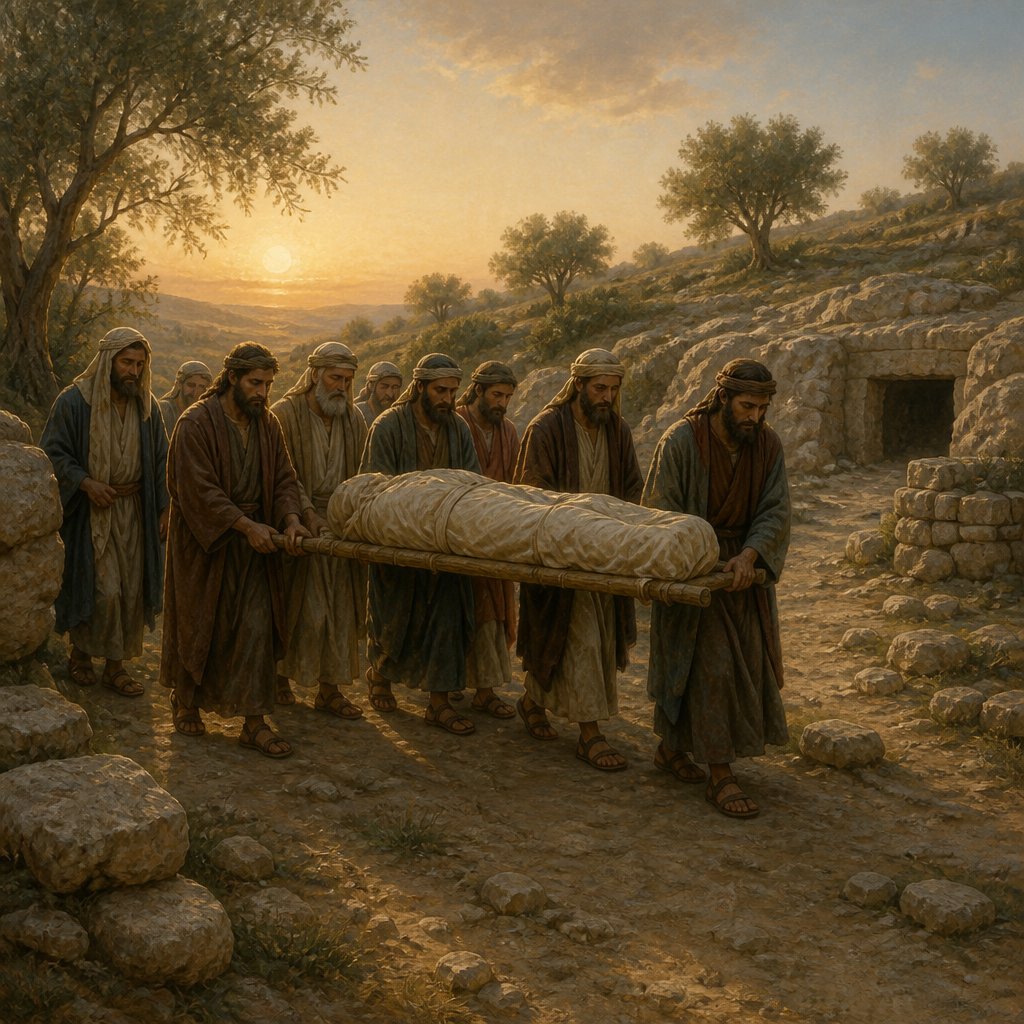
In the closing chapters of the book of Genesis, we witness a poignant moment that encapsulates faith, family, and the significance of heritage. Genesis 50:13 provides us with a vivid image: "For his sons carried him into the land of Canaan, and buried him in the cave of the field of Machpelah, which Abraham bought with the field for a possession of a buryingplace of Ephron the Hittite, before Mamre." This verse not only recounts a physical journey but also signifies a deep spiritual transition for the family of Israel.
As we reflect on this moment, we must consider the weight of Joseph's actions and the implications for the entire lineage of Jacob. Joseph had risen to prominence in Egypt, a place where he had experienced both trials and triumphs. After the passing of Jacob, he took the responsibility of carrying his father to the land promised to their ancestors. The elaborate journey back to Canaan signified a commitment to legacy, identity, and faithfulness to God’s promises.
From a practical standpoint, Jacob’s burial in Canaan was a fulfillment of God’s promise to Abraham, Isaac, and Jacob—the covenant that their descendants would inherit the land. In Genesis 12:7, God had previously declared to Abraham, "Unto thy seed will I give this land." This act of burial was more than just a physical resting place; it was a powerful statement of belief in God’s covenant and a pledge of loyalty to the land that symbolized hope and divine promise. Joseph understood this reality deeply. He was not merely honoring his father; he was affirming his faith in God’s decrees by bringing Jacob home.
As we delve deeper, we can draw parallels between Jacob's burial and our own journeys of faith. The act of burial signifies finality, yet it also symbolizes continuity. In death, we see the celebration of a life lived in obedience to God and a transition into eternal life. Every believer carries the weight of legacy—both those who have gone before us and those who will follow. Just as Joseph honored his father’s last wishes, we too must honor the legacy of faith entrusted to us by our forebears. This can inspire an active participation in the unfolding of God’s purposes in our lives.
Furthermore, consider the place—Machpelah. This cave not only served as a tomb but as a reminder of God’s promises. Every time the descendants of Jacob would pass by this sacred site, they would be reminded of the journey of faith, the struggles, the blessings, and most importantly, the assurance that God is faithful to His word. In life’s many challenges, we often need physical reminders—places, objects, and people—that tie us back to God’s faithfulness. Machpelah serves as an example of a physical legacy tied to spiritual truth.
In settling his father’s remains in Canaan, Joseph also bore the burden of grief, ensuring that the memory of Jacob lived on in the land of promise. This was a testament of love and the recognition of life’s fleeting nature. As we remember the legacies of those who have impacted us, it is essential that we carry their teachings, their love, and their faith into our daily lives and share this with the generations to come. Jesus calls us to be good stewards—not just of physical possessions but of all that we’ve inherited spiritually.
As we reflect on Genesis 50:13, let us ask ourselves: What legacy are we carrying? In what ways can we honor those who have invested in us? In a world where distractions abound, let us not forget our roots or the promises of God. May we, like Joseph, ensure that we uphold the faith that binds us to the past while eagerly looking forward to the future God has prepared for us. Through every burial, through every remembrance, may we find strength to walk in faith, remembering that we are not alone in this journey. God is with us, just as He was with Joseph.
Get our apps


Artwork for Genesis 50:13

Genesis 50:13 - "For his sons carried him into the land of Canaan, and buried him in the cave of the field of Machpelah, which Abraham bought with the field for a possession of a buryingplace of Ephron the Hittite, before Mamre."
"For his sons carried him into the land of Canaan, and buried him in the cave of the field of Machpelah, which Abraham bought with the field for a possession of a buryingplace of Ephron the Hittite, before Mamre." - Genesis 50:13

Genesis 24-50

Genesis 50:26

Genesis 50:25

Genesis 50:26

Genesis 50:25

Genesis 50:26

Genesis 50:25

Genesis 50:26

Genesis 50:12 - "And his sons did unto him according as he commanded them:"

Genesis 50:19 - "And Joseph said unto them, Fear not: for am I in the place of God?"

Psalms 50:13 - "Will I eat the flesh of bulls, or drink the blood of goats?"

Create a coffin for Joseph Genesis 50:26

Genesis 50:1 - "And Joseph fell upon his father's face, and wept upon him, and kissed him."

Matthew 13:50 - "And shall cast them into the furnace of fire: there shall be wailing and gnashing of teeth."

Genesis 50:9 - "And there went up with him both chariots and horsemen: and it was a very great company."

Genesis 50:22 - "¶ And Joseph dwelt in Egypt, he, and his father's house: and Joseph lived an hundred and ten years."

Genesis 50:2 - "And Joseph commanded his servants the physicians to embalm his father: and the physicians embalmed Israel."

Genesis 50:6 - "And Pharaoh said, Go up, and bury thy father, according as he made thee swear."

Leviticus 13:50 - "And the priest shall look upon the plague, and shut up it that hath the plague seven days:"

Genesis 50:16 - "And they sent a messenger unto Joseph, saying, Thy father did command before he died, saying,"

Genesis 50:18 - "And his brethren also went and fell down before his face; and they said, Behold, we be thy servants."

Genesis 50:26 - "So Joseph died, being an hundred and ten years old: and they embalmed him, and he was put in a coffin in Egypt."

Genesis 50:20 - "But as for you, ye thought evil against me; but God meant it unto good, to bring to pass, as it is this day, to save much people alive."

Genesis 50:3 - "And forty days were fulfilled for him; for so are fulfilled the days of those which are embalmed: and the Egyptians mourned for him threescore and ten days."

Genesis 24:50 - "Then Laban and Bethuel answered and said, The thing proceedeth from the LORD: we cannot speak unto thee bad or good."

Genesis 50:25 - "And Joseph took an oath of the children of Israel, saying, God will surely visit you, and ye shall carry up my bones from hence."

Genesis 50:8 - "And all the house of Joseph, and his brethren, and his father's house: only their little ones, and their flocks, and their herds, they left in the land of Goshen."

Genesis 50:7 - "¶ And Joseph went up to bury his father: and with him went up all the servants of Pharaoh, the elders of his house, and all the elders of the land of Egypt,"