From Betrayal to Blessing: Understanding Divine Providence
“But as for you, ye thought evil against me; but God meant it unto good, to bring to pass, as it is this day, to save much people alive.” — Genesis 50:20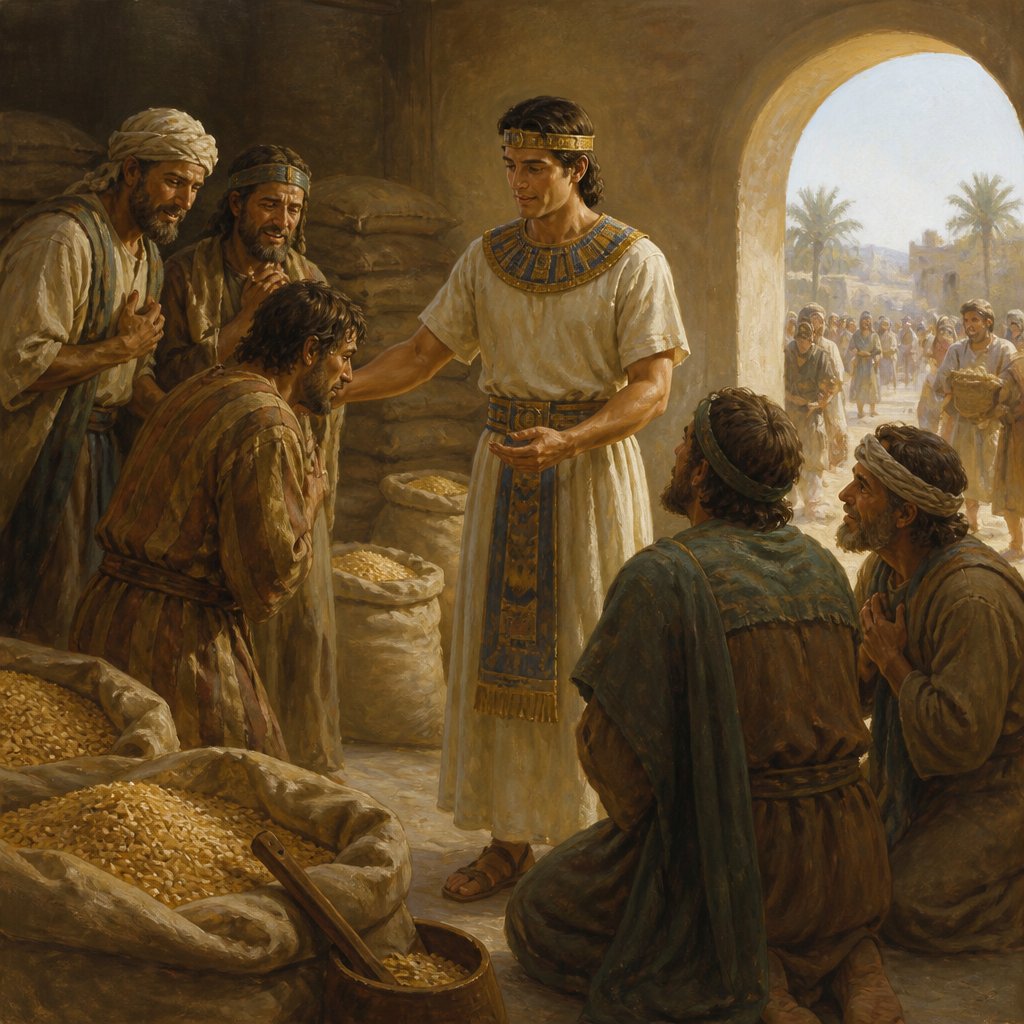
In Genesis 50:20, we encounter a powerful moment of reconciliation and revelation in the life of Joseph: "But as for you, ye thought evil against me; but God meant it unto good, to bring to pass, as it is this day, to save much people alive." This verse encapsulates a profound truth about God’s sovereignty and the redemptive arc of our trials and tribulations.
Joseph, the favored son of Jacob, faced extreme adversity that would have crushed many. Envy and hatred from his brothers led them to sell him into slavery. Later, he found himself in prison after being wrongfully accused. Throughout these dire chapters of his life, Joseph remained faithful, constantly exuding a spirit of integrity and trust in God.
When we face betrayal or hardship, it is easy to forget that God can use even the darkest moments for His divine purposes. Joseph’s words in Genesis 50:20 remind us that what others may intend for our harm, God can and will transform into something good.
This principle of divine providence leads us into a deeper understanding of God’s character. God is not merely passive in our situations; instead, He actively works behind the scenes, orchestrating events to fulfill His plans. Joseph understood this revelation only after years of waiting and suffering, and his acknowledgment of God’s hand in his adversity illuminates a key aspect of faith: trusting God's plan, even when we cannot see it.
Consider the impact of Joseph’s journey: while his brothers acted out of jealousy, their evil intentions unwittingly positioned Joseph to save them during a famine. God allowed the betrayal to culminate in a life-saving role for Joseph, ensuring that not just his family, but a significant population would survive. This echoes the promise found throughout Scripture—that God can bring life from death, hope from despair.
In our own lives, we can feel like victims of circumstance or injustices inflicted by others. We may cry out in anguish, asking why God allows suffering. Yet, Genesis 50:20 invites us to reframe our perspective. It teaches that there is often a divine purpose in our pain, a hidden blessing in our trials. The key lies in our response—will we choose to trust that God is working for our good, even when we do not comprehend the path ahead?
Joseph’s story is also a testament to forgiveness. When he revealed his identity to his brothers, he didn’t seek revenge; instead, he embraced reconciliation. His statement about their intentions versus God’s intentions illustrates a broader truth about grace. In holding onto grievances, we risk missing out on the larger narrative God wants to weave in and through our lives.
Today, reflect on your own life. Are there areas where you have felt wronged? In what ways can you see God at work in those situations? How might your struggles be transformed into a testimony that brings hope or life to others?
It is essential to cultivate a heart that chooses to trust in God's goodness amidst difficulty. We are invited to see our challenges not as an end but as opportunities for God’s glory to shine through. Just as Joseph stood firm in his faith, let us also be resolute in our trust, knowing that the God who allows us to experience anguish can also redeem our pain.
As we meditate on Genesis 50:20, let this truth anchor your spirit: God can take the very things that were meant to harm us and turn them into blessings—not just for ourselves but for many others. The narrative of our lives is ultimately written by His hands, and in His economy, the most powerful acts of redemption are birthed from betrayal, proving that whatever the enemy intends for evil, God will use for good.
Get our apps


Artwork for Genesis 50:20

Genesis 50:20 - "But as for you, ye thought evil against me; but God meant it unto good, to bring to pass, as it is this day, to save much people alive."
"But as for you, ye thought evil against me; but God meant it unto good, to bring to pass, as it is this day, to save much people alive." - Genesis 50:20

Genesis 24-50

Genesis 50:26

Genesis 50:25

Genesis 50:26

Genesis 50:25

Genesis 50:26

Genesis 50:25

Genesis 50:26

Genesis 50:12 - "And his sons did unto him according as he commanded them:"

Genesis 50:19 - "And Joseph said unto them, Fear not: for am I in the place of God?"

Create a coffin for Joseph Genesis 50:26

Genesis 50:1 - "And Joseph fell upon his father's face, and wept upon him, and kissed him."

Genesis 50:9 - "And there went up with him both chariots and horsemen: and it was a very great company."

Genesis 50:22 - "¶ And Joseph dwelt in Egypt, he, and his father's house: and Joseph lived an hundred and ten years."

Genesis 50:2 - "And Joseph commanded his servants the physicians to embalm his father: and the physicians embalmed Israel."

Psalms 50:20 - "Thou sittest and speakest against thy brother; thou slanderest thine own mother's son."

Genesis 50:6 - "And Pharaoh said, Go up, and bury thy father, according as he made thee swear."

Genesis 50:16 - "And they sent a messenger unto Joseph, saying, Thy father did command before he died, saying,"

Genesis 50:18 - "And his brethren also went and fell down before his face; and they said, Behold, we be thy servants."

Genesis 50:26 - "So Joseph died, being an hundred and ten years old: and they embalmed him, and he was put in a coffin in Egypt."

Genesis 50:3 - "And forty days were fulfilled for him; for so are fulfilled the days of those which are embalmed: and the Egyptians mourned for him threescore and ten days."

Genesis 24:50 - "Then Laban and Bethuel answered and said, The thing proceedeth from the LORD: we cannot speak unto thee bad or good."

Genesis 50:25 - "And Joseph took an oath of the children of Israel, saying, God will surely visit you, and ye shall carry up my bones from hence."

Genesis 50:8 - "And all the house of Joseph, and his brethren, and his father's house: only their little ones, and their flocks, and their herds, they left in the land of Goshen."

Genesis 50:7 - "¶ And Joseph went up to bury his father: and with him went up all the servants of Pharaoh, the elders of his house, and all the elders of the land of Egypt,"

Genesis 50:14 - "¶ And Joseph returned into Egypt, he, and his brethren, and all that went up with him to bury his father, after he had buried his father."

Genesis 50:21 - "Now therefore fear ye not: I will nourish you, and your little ones. And he comforted them, and spake kindly unto them."

Genesis 50:23 - "And Joseph saw Ephraim's children of the third generation: the children also of Machir the son of Manasseh were brought up upon Joseph's knees."