The Consequences of Our Actions: Learning from Ham's Mistake
"And Ham, the father of Canaan, saw the nakedness of his father, and told his two brethren without." - Genesis 9:22
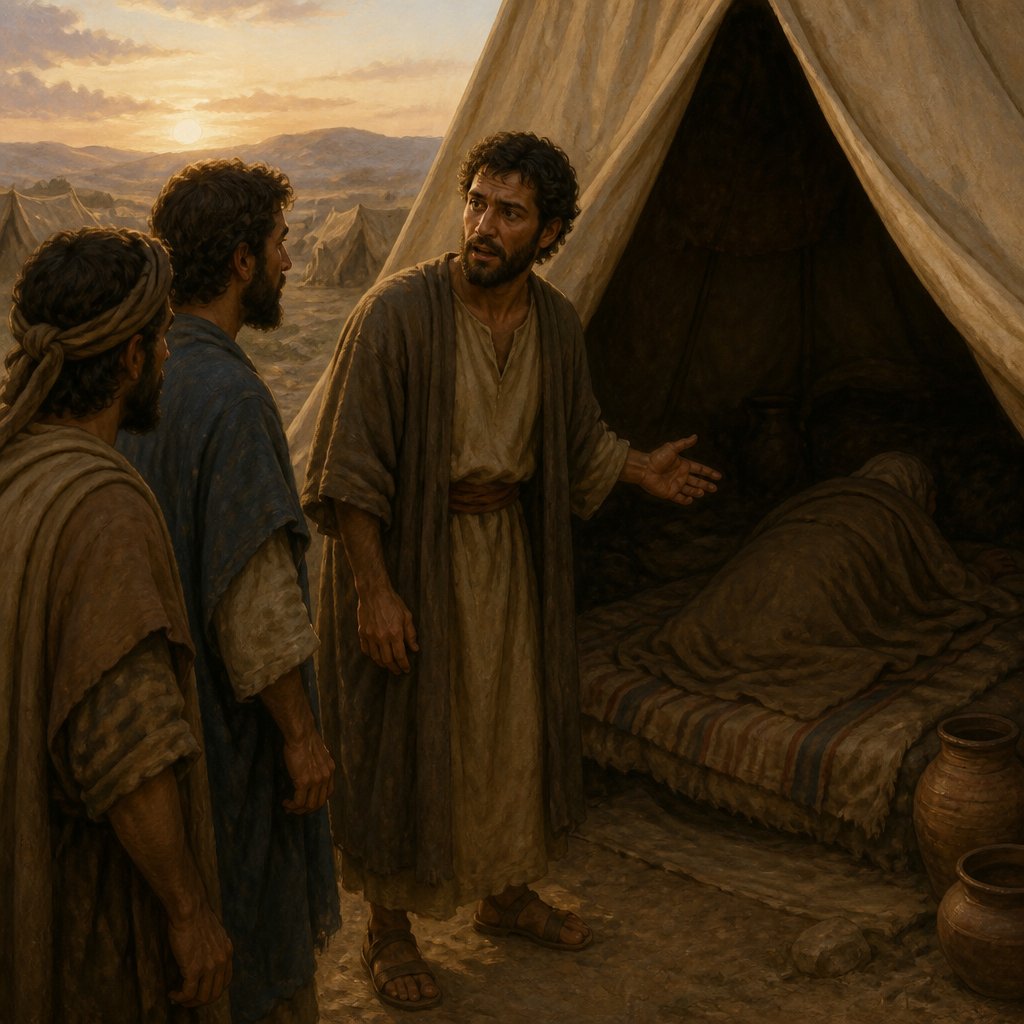
In the quiet moments of our lives, it's essential to reflect on the actions of those before us and the lessons they impart. Genesis 9:22 presents an account that can easily be glossed over due to its starkness: "And Ham, the father of Canaan, saw the nakedness of his father, and told his two brethren without." The implications of this scripture radiate far beyond its simple narration. The actions of Ham not only led to personal shame but also to generational consequences.
To understand the gravity of Ham's actions, we must first consider the context. Noah, after the great flood, planted a vineyard, and in his revelry, became intoxicated and lay uncovered in his tent. Ham enters the scene and sees his father's nakedness. While the act of merely seeing may appear innocuous, it is Ham’s response to that sight that bears significant weight. He didn’t cover his father or respond with dignity; instead, he chose to expose Noah's vulnerability to his brothers, leading to a tripartite division of actions that speaks volumes about character and the implications of our responses to others' failures.
In Jewish tradition, the term "nakedness" can reference shameful exposure more broadly. To see one’s father in such a state wasn’t merely a physical observation but also a deep moral failure. It can be viewed as an act of disrespect, a violation of the honor that should be afforded to a parent. In this light, Ham embodies a lack of compassion, an inclination to gossip, and a hunger to elevate oneself by belittling another, particularly someone so intimately connected to him.
Shem and Japheth, in contrast, provide a notable lesson in dignity. "And Shem and Japheth took a garment and laid it upon both their shoulders, and went backward, and covered the nakedness of their father; and their faces were backward, and they saw not their father's nakedness" (Genesis 9:23). Their actions reflected a heart of honor. They approached Noah with a protective spirit, choosing dignity over derision. This response led to a blessing for Shem and Japheth while Ham faced a curse reflected in the fate of Canaan: "Cursed be Canaan; a servant of servants shall he be unto his brethren" (Genesis 9:25).
As believers, we are often faced with choices when witnessing the faults of others—be it within our families, friendships, or communities. The temptation may arise to propagate the weaknesses of others, to speak ill, or to revel in their missteps as a form of self-elevation or entertainment. However, the account of Ham and his brothers serves as a clarion call to recognize the weight of our responses. A quick gossip may lead to a rift that not only affects us but also hangs heavily over generations.
Reflecting on Ham’s failure encourages us to ask ourselves difficult questions: How do we respond when we encounter others' vulnerabilities? Do we choose to spread their misfortunes like wildfire, or do we tend to their wounds with humility and grace?
Moreover, it’s crucial to recognize that every action carries weight in God’s economy. The results of Ham’s transgression reverberated throughout history, marking a seed of discord that stemmed from a singular act of impropriety. Let us instead carry forward the spirit of Shem and Japheth—covering where there was exposure, healing where there was hurt, and extending grace where it is least deserved.
In this contemporary age where social media and public platforms proliferate the unmasking of others' weaknesses, let us be vigilant stewards of love and respect. May we choose grace and restoration over judgment, ensuring that in our community, honor triumphs over shame. As we reflect on Genesis 9:22, let it remind us of the profound impact of our choices and the legacy we are crafting, not just for ourselves, but for those who will walk the path after us.
Want to reflect more on Genesis 9:22?
Continue your spiritual journey with Bible Chat — an AI-powered tool for exploring God's Word through conversation. Ask questions, discover connections, and deepen your understanding.
Get Our Apps


Genesis 9:22 Artwork

Genesis 9:22 - "And Ham, the father of Canaan, saw the nakedness of his father, and told his two brethren without."
"And Ham, the father of Canaan, saw the nakedness of his father, and told his two brethren without." - Genesis 9:22

Genesis 22-9

Genesis 22-9

Genesis 22:9 - "And they came to the place which God had told him of; and Abraham built an altar there, and laid the wood in order, and bound Isaac his son, and laid him on the altar upon the wood."

Genesis 22-22

Genesis 22:22 - "And Chesed, and Hazo, and Pildash, and Jidlaph, and Bethuel."

Genesis 22

Genesis 22 14

Genesis 28-22

Genesis 18-22

Genesis 21:22

Genesis 22-8

Genesis 22-12

Genesis 22:15

Genesis 22-10

Genesis 22-16

Genesis 22-14

Genesis 17-22

Genesis 22-23

Genesis 22-7

Genesis 22-21

Genesis 22-4

Genesis 19-22

Genesis 22-17

Genesis 22:1

Genesis 22-20

Genesis 24-22

Genesis 22:10

Genesis 22-3