From Shadows to Substance: The Perfect Sacrifice of Christ
"For the law having a shadow of good things to come, and not the very image of the things, can never with those sacrifices which they offered year by year continually make the comers thereunto perfect. For then would they not have ceased to be offered? because that the worshippers once purged should have had no more conscience of sins. But in those sacrifices there is a remembrance again made of sins every year. For it is not possible that the blood of bulls and of goats should take away sins. Wherefore when he cometh into the world, he saith, Sacrifice and offering thou wouldest not, but a body hast thou prepared me: In burnt offerings and sacrifices for sin thou hast had no pleasure. Then said I, Lo, I come (in the volume of the book it is written of me,) to do thy will, O God. Above when he said, Sacrifice and offering and burnt offerings and offering for sin thou wouldest not, neither hadst pleasure therein; which are offered by the law; Then said he, Lo, I come to do thy will, O God. He taketh away the first, that he may establish the second. By the which will we are sanctified through the offering of the body of Jesus Christ once for all. And every priest standeth daily ministering and offering oftentimes the same sacrifices, which can never take away sins: But this man, after he had offered one sacrifice for sins for ever, sat down on the right hand of God; From henceforth expecting till his enemies be made his footstool. For by one offering he hath perfected for ever them that are sanctified. Whereof the Holy Ghost also is a witness to us: for after that he had said before, This is the covenant that I will make with them after those days, saith the Lord, I will put my laws into their hearts, and in their minds will I write them; And their sins and iniquities will I remember no more." - Hebrews 10:1-17
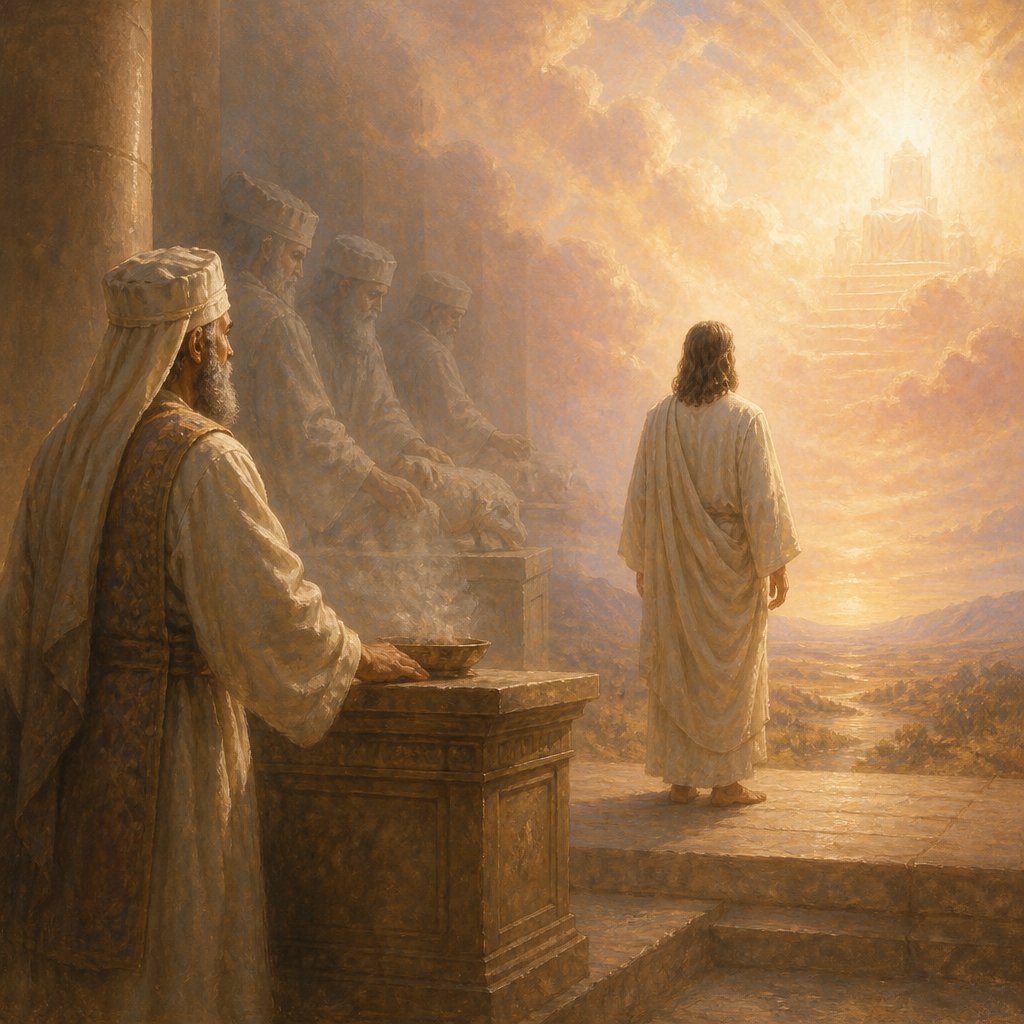
Hebrews 10:1-17 (KJV) reads like a symphony of grace and fulfillment, resonating with the heart of what it means to live in the light of Christ's redemptive work. The writer of Hebrews unveils the profound transition from the shadows of the Old Covenant—the sacrifices of bulls and goats—to the ultimate sacrifice of Jesus Christ. In contemplating this text, we find rich truths that challenge us to examine our own understanding of sin, sacrifice, and salvation.
"For the law having a shadow of good things to come, and not the very image of the things, can never with those sacrifices which they offered year by year continually make the comers thereunto perfect" (Hebrews 10:1). This opening verse sets the stage for the entire discussion. It speaks of the law as a mere shadow, a precursor to something far greater. Imagine walking on a sunny day; the shadow you cast could never fully encompass the vibrant reality of who you are. Similarly, the Levitical sacrificial system, while instituted by God, was designed to point beyond itself to the ultimate sacrifice—Jesus Christ.
The ritual sacrifices were continuous, emphasizing the persistent reminder of sin. "But in those sacrifices there is a remembrance again made of sins every year" (10:3). This is crucial for our understanding of why Jesus had to come. The continual offering of sacrifices illustrated humanity’s inability to completely atone for sin on its own. It was a cycle of remembrance—every year a reminder that sin was ever-present, ever-looming. As a result, the worshippers were left burdened, always conscious of sin, never fully free.
Yet comes the stunning proclamation: "For it is not possible that the blood of bulls and of goats should take away sins" (10:4). It is striking to acknowledge that the blood of animals, though commanded by God, was insufficient to deal with the root issue of humanity's sinfulness. The shedding of blood showed the seriousness of sin, but it did not cleanse the conscience nor grant lasting peace. Herein lies the beauty of the Gospel: God did not desire sacrifices that were driven by obligation; He desired obedience of the heart.
"When he cometh into the world, he saith... to do thy will, O God" (10:7). Christ, the perfect embodiment of obedience, came to fulfill the very will of God. His incarnation is a divine intervention aimed at remedying humanity's plight. Where the Old Covenant pointed to a need for atonement, the New Covenant—embodied in Christ—fulfilled that need once and for all. "He taketh away the first, that he may establish the second" (10:9). In His sacrifice, Jesus dismantled the old system of sacrifice and established a new way—a grace-filled relationship with God through faith.
The passage crescendos with assurance and completion: "By the which will we are sanctified through the offering of the body of Jesus Christ once for all" (10:10). Here, the writer assures us that Christ’s sacrifice is sufficient. In contrast to the repetitive, ineffective rituals of the past, Christ's one offering assures us of our sanctification—a process by which we are made holy through a single, perfect act. No longer do we bear the weight of sin or the guilt of our past because Jesus has set us free.
Moreover, God promises, "Their sins and iniquities will I remember no more" (10:17). What a profound comfort to know that in Christ, our transgressions are not only forgiven but forgotten! The weight of guilt that once shackled us has been lifted, and we are invited into a new identity as beloved children of God.
In finishing our reflection on this powerful text, let us be compelled to live in the reality of this truth. As we approach God, let us not crawl back to the old ways of guilt and sacrifice. Instead, let us boldly enter the throne room of grace with confidence, knowing that we are perfect in Christ—a perfect sacrifice that satisfies both justice and mercy for all time. Indeed, may our lives reflect the beauty of His finished work, moving from shadows into the glorious light of His love.
Want to reflect more on Hebrews 10:1-17?
Continue your spiritual journey with Bible Chat — an AI-powered tool for exploring God's Word through conversation. Ask questions, discover connections, and deepen your understanding.
Get Our Apps


Hebrews 10:1-17 Artwork
Hebrews 10:1-17 - "For the law, having a shadow of the good things to come, and not the very image of the things, can never with these same sacrifices, which they offer continually year by year, make those who approach perfect. For then would they not have ceased to be offered? For the worshipers, once purified, would have had no more consciousness of sins. But in those sacrifices there is a reminder of sins every year. For it is not possible that the blood of bulls and goats could take away sins. Therefore, when He came into the world, He said: “Sacrifice and offering You did not desire, But a body You have prepared for Me. In burnt offerings and sacrifices for sin You had no pleasure. Then I said, ‘Behold, I have come—In the volume of the book it is written of Me—To do Your will, O God.’” Previously saying, “Sacrifice and offering, burnt offerings, and offerings for sin You did not desire, nor had pleasure in them” (which are offered according to the law), then He said, “Behold, I have come to do Your will, O God.” He takes away the first that He may establish the second. By that will, we have been sanctified through the offering of the body of Jesus Christ once for all. And every priest stands ministering daily and offering repeatedly the same sacrifices, which can never take away sins. But this Man, after He had offered one sacrifice for sins forever, sat down at the right hand of God, from that time waiting till His enemies are made His footstool. For by one offering He has perfected forever those who are being sanctified. But the Holy Spirit also witnesses to us; for after He had said before, “This is the covenant that I will make with them after those days, says the Lord: I will put My laws into their hearts, and in their minds I will write them,” then He adds, “Their sins and their lawless deeds I will remember no more.”"
"For the law, having a shadow of the good things to come, and not the very image of the things, can never with these same sacrifices, which they offer continually year by year, make those who approach perfect. For then would they not have ceased to be offered? For the worshipers, once purified, would have had no more consciousness of sins. But in those sacrifices there is a reminder of sins every year. For it is not possible that the blood of bulls and goats could take away sins. Therefore, when He came into the world, He said: “Sacrifice and offering You did not desire, But a body You have prepared for Me. In burnt offerings and sacrifices for sin You had no pleasure. Then I said, ‘Behold, I have come—In the volume of the book it is written of Me—To do Your will, O God.’” Previously saying, “Sacrifice and offering, burnt offerings, and offerings for sin You did not desire, nor had pleasure in them” (which are offered according to the law), then He said, “Behold, I have come to do Your will, O God.” He takes away the first that He may establish the second. By that will, we have been sanctified through the offering of the body of Jesus Christ once for all. And every priest stands ministering daily and offering repeatedly the same sacrifices, which can never take away sins. But this Man, after He had offered one sacrifice for sins forever, sat down at the right hand of God, from that time waiting till His enemies are made His footstool. For by one offering He has perfected forever those who are being sanctified. But the Holy Spirit also witnesses to us; for after He had said before, “This is the covenant that I will make with them after those days, says the Lord: I will put My laws into their hearts, and in their minds I will write them,” then He adds, “Their sins and their lawless deeds I will remember no more.”" - Hebrews 10:1-17

Hebrews 10:17 - "And their sins and iniquities will I remember no more."
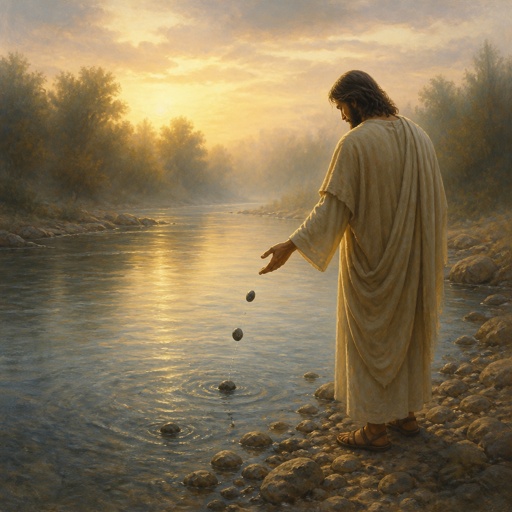
"And their sins and iniquities will I remember no more." - Hebrews 10:17

Nehemiah 10:17 - "Ater, Hizkijah, Azzur,"

Hebrews 1:10 - "And, Thou, Lord, in the beginning hast laid the foundation of the earth; and the heavens are the works of thine hands:"

Hebrews 10:5-10

Hebrews 10:5-10

Hebrews 10:22

Hebrews 10:20

Hebrews 10:10 - "By the which will we are sanctified through the offering of the body of Jesus Christ once for all."

Hebrews 10:1 - "For the law having a shadow of good things to come, and not the very image of the things, can never with those sacrifices which they offered year by year continually make the comers thereunto perfect."

1 Samuel 10:17 - "¶ And Samuel called the people together unto the LORD to Mizpeh;"

Hebrews 7:17 - "For he testifieth, Thou art a priest for ever after the order of Melchisedec."

Hebrews 10:21 - "And having an high priest over the house of God;"

Hebrews 10:31 - "It is a fearful thing to fall into the hands of the living God."

"And, Thou, Lord, in the beginning hast laid the foundation of the earth; and the heavens are the works of thine hands:" - Hebrews 1:10

Hebrews 5:10 - "Called of God an high priest after the order of Melchisedec."

Hebrews 10:18 - "Now where remission of these is, there is no more offering for sin."

Hebrews 9:17 - "For a testament is of force after men are dead: otherwise it is of no strength at all while the testator liveth."

Hebrews 10:14 - "For by one offering he hath perfected for ever them that are sanctified."

Hebrews 10:37 - "For yet a little while, and he that shall come will come, and will not tarry."

Hebrews (10:37) For just a little longer and he who is coming will arrive and not delay.

Hebrews 10:6 - "In burnt offerings and sacrifices for sin thou hast had no pleasure."

Hebrews 10:4 - "For it is not possible that the blood of bulls and of goats should take away sins."

Hebrews (10:37) For just a little longer and he who is coming will arrive and not delay.

Hebrews (10:37) For just a little longer and he who is coming will arrive and not delay.

Hebrews (10:37) For just a little longer and he who is coming will arrive and not delay.

Hebrews (10:37) For just a little longer and he who is coming will arrive and not delay.

Hebrews (10:37) For just a little longer and he who is coming will arrive and not delay.