Angels, Spirits, and the Flame of Fire: Understanding Divine Ministry
“And of the angels he saith, Who maketh his angels spirits, and his ministers a flame of fire.” — Hebrews 1:7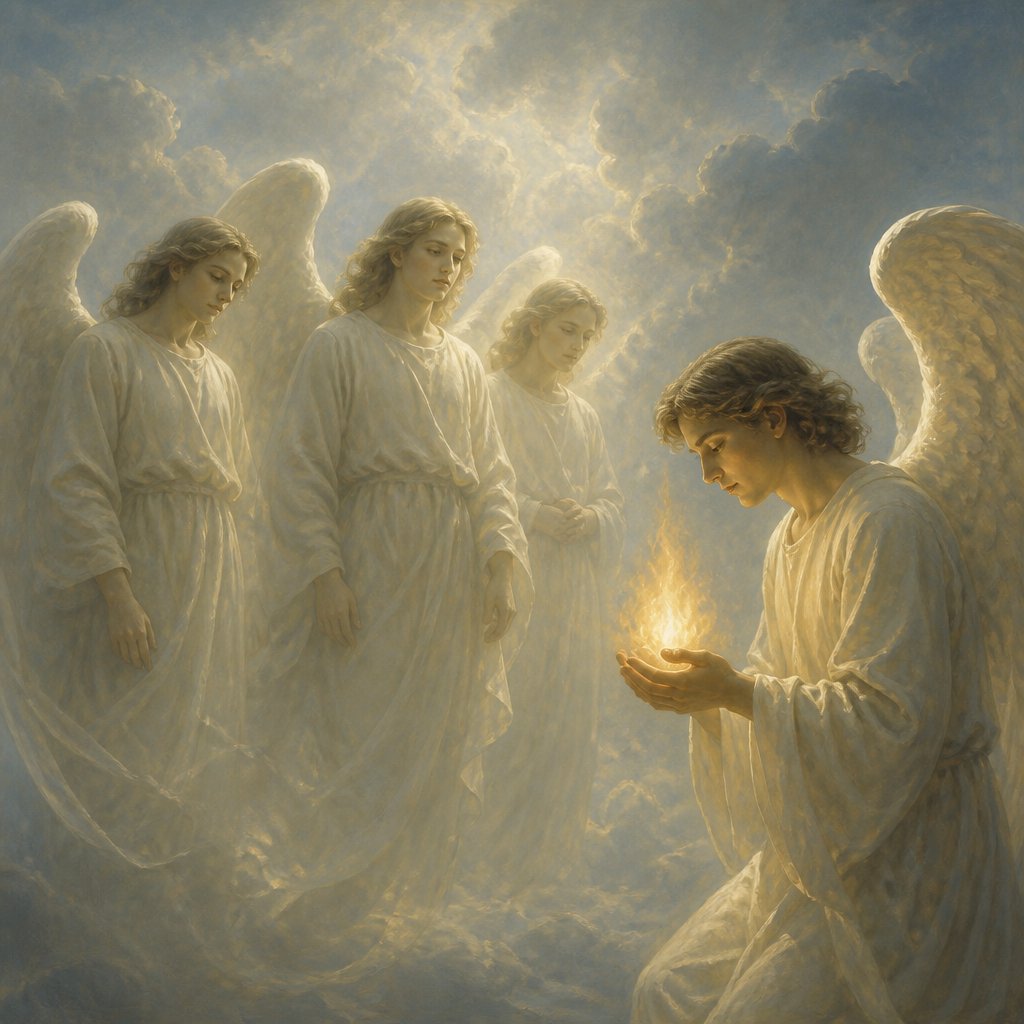
The world of the unseen is filled with wonders that stretch far beyond our comprehension. Among these wonders, the realm of angels is both fascinating and daunting. At the outset of the Book of Hebrews, we are reminded of the role and nature of these celestial beings. Hebrews 1:7 states, "And of the angels he saith, Who maketh his angels spirits, and his ministers a flame of fire" (KJV). This portion of Scripture invites us to reflect on the character and functions of angels in the divine order.
To grasp the depth of this verse, we must consider the context and the intention behind the author’s emphasis on angels. The Book of Hebrews, written to Jewish believers, seeks to establish the superiority of Christ over all things, including angels. While angels have authority and magnificence, they do not possess the ultimate preeminence that belongs only to Christ. In this verse, the author is quoting from Psalm 104:4, which emphasizes that God commands the angels, transforming them into spirits, and He assigns them the role of ministers—servants ready to execute His divine will.
The phrase “Who maketh his angels spirits” emphasizes the ethereal nature of angels. They are not physical beings constrained by space and time as we are; instead, they are described as spirits. This suggests that angels operate in the realm of the spirit, living and moving under the command of God as agents of His purposes. In essence, they are created beings who reflect the glory of God’s authority and serve at His pleasure. In our spiritual journey, it is comforting to know that God utilizes angels to assist and minister to those who are heirs of salvation (Hebrews 1:14). Their role is inherently linked to God’s function as the Ultimate Sovereign, fiercely protective of His people and zealous in executing His plans.
The second part of the verse—“and his ministers a flame of fire”—is rich in symbolism. Fire, throughout Scripture, signifies purity, presence, power, and judgment. By calling angels a “flame of fire,” the author implies that their ministry is potent and effective. It reveals the passionate zeal angels possess as they fulfill their inscribed roles. This fiery image instills a sense of urgency and intensity in the nature of their service, reminding us that God’s messengers are not slack but invigorated by His eternal purpose.
As we meditate on this verse, several themes emerge that are relevant to our spiritual lives. Firstly, we must recognize the importance of divine ministry. Just as God deploys angels, He summons us—His followers—to be His instruments in this world. We, too, are called to be “flames of fire,” radiant with His light and love. We are to practice our faith fervently, living in a way that represents the heart of God to those around us.
Secondly, in the midst of our struggles and trials, we can derive peace from the knowledge that God has placed angelic beings around us. They are watchful and have been assigned to aid us in accordance with God’s will. This does not mean we rely on angels instead of God; rather, we approach Him with the assurance that His creation is diligently at work, supporting His plans for our lives.
Lastly, we are reminded of our ultimate reliance on the sovereignty of Christ. When contemplating the power and authority that these angels embody, we must always center our view on Jesus, who is above all. In Christ, we possess everything we need to walk in faith and fulfill the purposes He has set before us.
In conclusion, Hebrews 1:7 presents a significant glimpse into the grandeur of God’s creation and His divine organization. As we honor the angels and the roles they play, let us do so while recognizing the supremacy of Christ. May we take up our call as His ministers, fiery in spirit, impacting the world for His glory.
Get our apps


Artwork for Hebrews 1:7

Hebrews 1:7 - "And of the angels he saith, Who maketh his angels spirits, and his ministers a flame of fire."
"And of the angels he saith, Who maketh his angels spirits, and his ministers a flame of fire." - Hebrews 1:7

Hebrews 7:1 - "For this Melchisedec, king of Salem, priest of the most high God, who met Abraham returning from the slaughter of the kings, and blessed him;"

Hebrews 7:7 - "And without all contradiction the less is blessed of the better."

1 Samuel 13:7 - "And some of the Hebrews went over Jordan to the land of Gad and Gilead. As for Saul, he was yet in Gilgal, and all the people followed him trembling."

Hebrews 7:20 - "And inasmuch as not without an oath he was made priest:"

"And without all contradiction the less is blessed of the better." - Hebrews 7:7

Hebrews 7:12 - "For the priesthood being changed, there is made of necessity a change also of the law."

Hebrews 7:24 - "But this man, because he continueth ever, hath an unchangeable priesthood."

Hebrews 7:22 - "By so much was Jesus made a surety of a better testament."

Hebrews 7:17 - "For he testifieth, Thou art a priest for ever after the order of Melchisedec."

Hebrews 7:10 - "For he was yet in the loins of his father, when Melchisedec met him."

Hebrews 7:18 - "For there is verily a disannulling of the commandment going before for the weakness and unprofitableness thereof."

Hebrews 1:14

Hebrews 1:14

Hebrews 7:16 - "Who is made, not after the law of a carnal commandment, but after the power of an endless life."
Hebrews 3:7 - "Wherefore (as the Holy Ghost saith, To day if ye will hear his voice,"

Hebrews 6:1

Hebrews 8:7 - "For if that first covenant had been faultless, then should no place have been sought for the second."

Hebrews 7:15 - "And it is yet far more evident: for that after the similitude of Melchisedec there ariseth another priest,"
Hebrews 7:23 - "And they truly were many priests, because they were not suffered to continue by reason of death:"

Hebrews 7:8 - "And here men that die receive tithes; but there he receiveth them, of whom it is witnessed that he liveth."

Hebrews 6:1

Hebrews 10:7 - "Then said I, Lo, I come (in the volume of the book it is written of me,) to do thy will, O God."

Hebrews 7:14 - "For it is evident that our Lord sprang out of Juda; of which tribe Moses spake nothing concerning priesthood."

Hebrews 7:13 - "For he of whom these things are spoken pertaineth to another tribe, of which no man gave attendance at the altar."

Hebrews 7:9 - "And as I may so say, Levi also, who receiveth tithes, payed tithes in Abraham."

Hebrews 8:1-5

Hebrews 7:17 - "For he testifieth, Thou art a priest for ever after the order of Melchisedec."
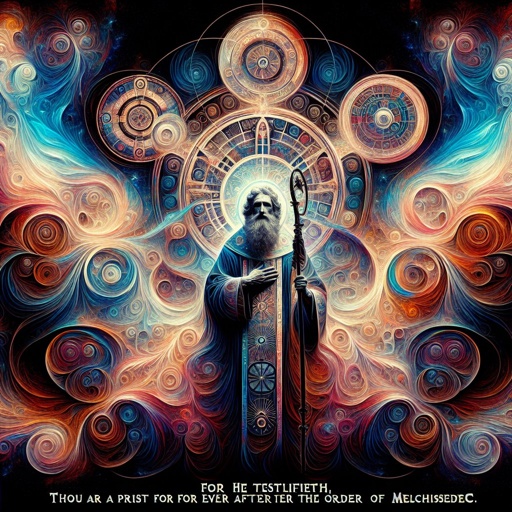
Hebrews 7:17 - "For he testifieth, Thou art a priest for ever after the order of Melchisedec."