Crowned in Glory: The Depths of Christ’s Suffering and Triumph
“But we see Jesus, who was made a little lower than the angels for the suffering of death, crowned with glory and honour; that he by the grace of God should taste death for every man.” — Hebrews 2:9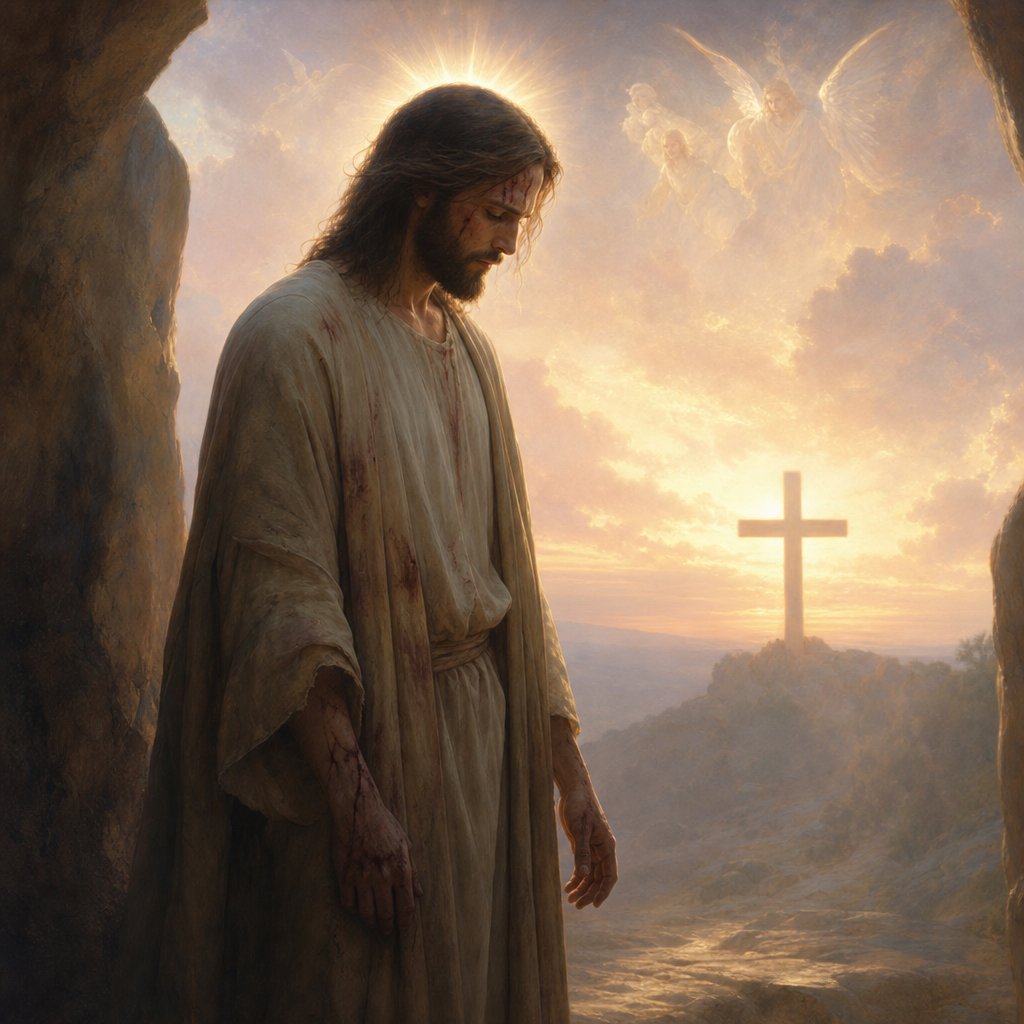
The profound message of Hebrews 2:9 presents us with an extraordinary view of Jesus Christ. The verse states, "But we see Jesus, who was made a little lower than the angels for the suffering of death, crowned with glory and honour; that he by the grace of God should taste death for every man." This passage captures the essence of Christ’s duality—His humiliation and suffering juxtaposed against His glorification and honor—each serving a divine purpose in our salvation.
When we first consider that Jesus was made “a little lower than the angels,” we are confronted with the stark reality of God’s staggering humility. God, in His infinite majesty and splendor, chose to take on human form, thus willingly lowering Himself to our level. This is not an act of weakness, but of incredible strength and love. Through the incarnation, God desired to deepen His connection with mankind, to bridge the chasm created by sin. By becoming one of us, Jesus entered our reality with all its sufferings, temptations, and trials.
Suffering is a common thread in the human experience. Everyone grapples with loss, pain, betrayal, and disappointment. Yet, in His incarnation, Jesus didn’t merely observe our suffering from a distance; He immersed Himself in it. Whether it was the agony in Gethsemane, the betrayal of friends, or the brutal crucifixion, He experienced the depth of sorrow and anguish firsthand. Hebrews reminds us that His suffering was “for the suffering of death”—it was purposeful and intentional.
The profound love of Christ shines through His suffering. The KJV in this verse concludes that He “by the grace of God should taste death for every man.” Here, grace is paramount. It is through His sacrificial death that Jesus offered redemption to humanity. He did not come to save a select few but rather to taste death for every man. This encompassed not just the righteous but also sinners—those who were farthest from God. In doing so, He validated our struggles and insecurities, showing that His sacrifice was rich with empathy and understanding.
As we meditate on the notion of Christ tasting death, we come face-to-face with the truth of our own mortality and sinfulness. It is a humbling realization that He went through the valley of death, not because he was destined to, but because He chose to so that we might have life. Christ’s death was not an end; rather, it marked the beginning of hope. By the resurrection, He triumphed over death, breaking its chains for all who believe. This leads us to the beautiful commentary of being “crowned with glory and honour.”
When we reflect on the term "crowned," we should recognize its implications. A crown signifies victory, sovereignty, and acknowledgment of authority. In Christ’s crowning, we see Him exalted, deserving of all glory and honor due to His obedience and sacrificial love. It also serves as a reminder for us; the scripture doesn’t conclude with His humiliation but rather celebrates His exaltation.
In light of these truths, as believers, our response must be one of profound gratitude and reverence. Let us embrace the magnitude of Christ's sacrifice and the honor of His presence in our lives. We are called to remember that, although we are imperfect, His grace covers us. Because of this grace, we are offered the opportunity to live lives that reflect His glory.
Ultimately, as we fix our eyes on Jesus, we should find solace in knowing that He understands our struggles. The very Creator of the universe walked among us to show us the way—not only as an example of how to live but as our deliverer, who paid the ultimate price so that we live in freedom. Take a moment today to reflect on Jesus—lowered, crowned, and ultimately exalted—and let your heart soar in gratitude towards the one who tasted death so that we might know eternal life.
Get our apps


Artwork for Hebrews 2:9

Hebrews 2:9 - "But we see Jesus, who was made a little lower than the angels for the suffering of death, crowned with glory and honour; that he by the grace of God should taste death for every man."
"But we see Jesus, who was made a little lower than the angels for the suffering of death, crowned with glory and honour; that he by the grace of God should taste death for every man." - Hebrews 2:9
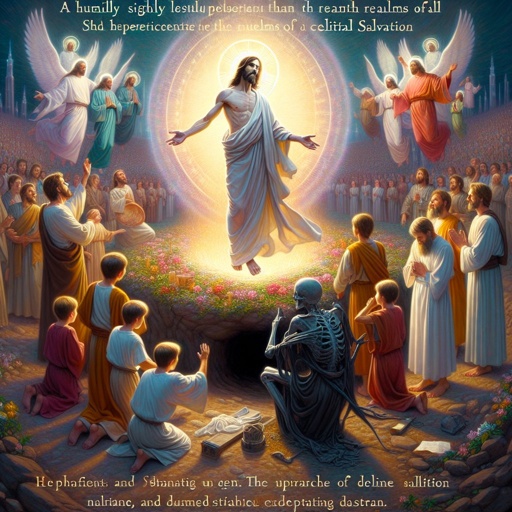
Hebrews 2:9-15 - "But we see Jesus, who was made a little lower than the angels for the suffering of death, crowned with glory and honour; that he by the grace of God should taste death for every man. For it became him, for whom are all things, and by whom are all things, in bringing many sons unto glory, to make the captain of their salvation perfect through sufferings. For both he that sanctifieth and they who are sanctified are all of one: for which cause he is not ashamed to call them brethren, Saying, I will declare thy name unto my brethren, in the midst of the church will I sing praise unto thee. And again, I will put my trust in him. And again, Behold I and the children which God hath given me. Forasmuch then as the children are partakers of flesh and blood, he also himself likewise took part of the same; that through death he might destroy him that had the power of death, that is, the devil; And deliver them who through fear of death were all their lifetime subject to bondage."
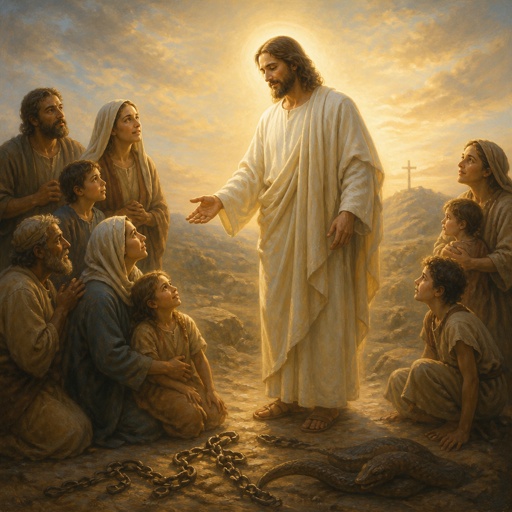
"But we see Jesus, who was made a little lower than the angels for the suffering of death, crowned with glory and honour; that he by the grace of God should taste death for every man. For it became him, for whom are all things, and by whom are all things, in bringing many sons unto glory, to make the captain of their salvation perfect through sufferings. For both he that sanctifieth and they who are sanctified are all of one: for which cause he is not ashamed to call them brethren, Saying, I will declare thy name unto my brethren, in the midst of the church will I sing praise unto thee. And again, I will put my trust in him. And again, Behold I and the children which God hath given me. Forasmuch then as the children are partakers of flesh and blood, he also himself likewise took part of the same; that through death he might destroy him that had the power of death, that is, the devil; And deliver them who through fear of death were all their lifetime subject to bondage." - Hebrews 2:9-15

Hebrews 9:2 - "For there was a tabernacle made; the first, wherein was the candlestick, and the table, and the shewbread; which is called the sanctuary."
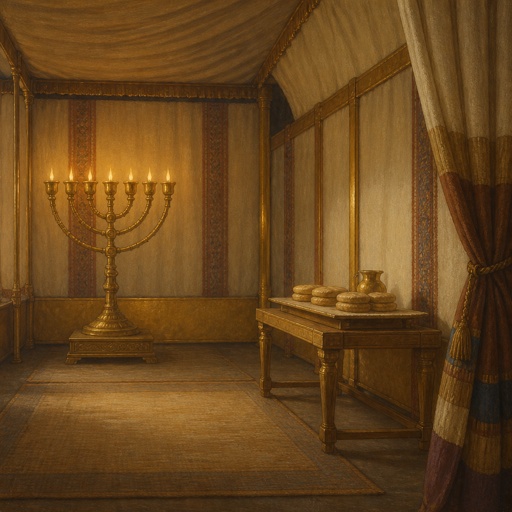
"For there was a tabernacle made; the first, wherein was the candlestick, and the table, and the shewbread; which is called the sanctuary." - Hebrews 9:2

Hebrews 4:9 - "There remaineth therefore a rest to the people of God."

Hebrews 9:16 - "For where a testament is, there must also of necessity be the death of the testator."

Hebrews 9:18 - "Whereupon neither the first testament was dedicated without blood."

Hebrews 9:27 - "And as it is appointed unto men once to die, but after this the judgment:"

Hebrews 9:3 - "And after the second veil, the tabernacle which is called the Holiest of all;"

Hebrews 9:9 - "Which was a figure for the time then present, in which were offered both gifts and sacrifices, that could not make him that did the service perfect, as pertaining to the conscience;"

Hebrews 9:13 - "For if the blood of bulls and of goats, and the ashes of an heifer sprinkling the unclean, sanctifieth to the purifying of the flesh:"

Hebrews 9:20 - "Saying, This is the blood of the testament which God hath enjoined unto you."

Hebrews 9:21 - "Moreover he sprinkled with blood both the tabernacle, and all the vessels of the ministry."

Hebrews 9:17 - "For a testament is of force after men are dead: otherwise it is of no strength at all while the testator liveth."

Hebrews 9:1 - "Then verily the first covenant had also ordinances of divine service, and a worldly sanctuary."

Hebrews 9:22 - "And almost all things are by the law purged with blood; and without shedding of blood is no remission."

Hebrews 3:9 - "When your fathers tempted me, proved me, and saw my works forty years."

Hebrews 9:5 - "And over it the cherubims of glory shadowing the mercyseat; of which we cannot now speak particularly."
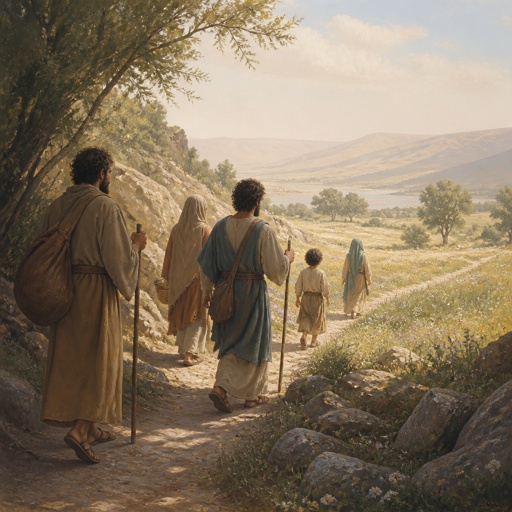
"There remaineth therefore a rest to the people of God." - Hebrews 4:9

Hebrews 6:9 - "But, beloved, we are persuaded better things of you, and things that accompany salvation, though we thus speak."

Hebrews 7:9 - "And as I may so say, Levi also, who receiveth tithes, payed tithes in Abraham."

Hebrews 9:8 - "The Holy Ghost this signifying, that the way into the holiest of all was not yet made manifest, while as the first tabernacle was yet standing:"

Hebrews 9:6 - "Now when these things were thus ordained, the priests went always into the first tabernacle, accomplishing the service of God."

Hebrews 9:10 - "Which stood only in meats and drinks, and divers washings, and carnal ordinances, imposed on them until the time of reformation."

Hebrews 9:23 - "It was therefore necessary that the patterns of things in the heavens should be purified with these; but the heavenly things themselves with better sacrifices than these."

Hebrews 5:9 - "And being made perfect, he became the author of eternal salvation unto all them that obey him;"

Hebrews 11:2 - "For by it the elders obtained a good report."

Hebrews 2:2 - "For if the word spoken by angels was stedfast, and every transgression and disobedience received a just recompence of reward;"