The Cry of a Savior: Understanding Hebrews 5:7
“Who in the days of his flesh, when he had offered up prayers and supplications with strong crying and tears unto him that was able to save him from death, and was heard in that he feared;” — Hebrews 5:7
In the book of Hebrews, we are given a profound glimpse into the emotional and spiritual depth of our Lord Jesus Christ during His earthly ministry. The passage in Hebrews 5:7 states, "Who in the days of his flesh, when he had offered up prayers and supplications with strong crying and tears unto him that was able to save him from death, and was heard in that he feared;" This verse captures a moment of intense prayer, profound human struggle, and heartfelt connection with the Father.
As we meditate on this verse, we observe that even Jesus, the Son of God, experienced the weight of human anguish. The phrase "in the days of his flesh" reminds us of His incarnation. God chose to step into the realm of human experience, fully embodying our struggles, pain, and temptations. This profound mystery of the God-man demonstrates that God is not distant from our suffering. He understands our trials because He lived them.
The description of Jesus offering "prayers and supplications with strong crying and tears" takes us to the intimate and vulnerable moments of His life. In the Garden of Gethsemane, we witness Him staggering under the anticipation of the cross, knowing the immense suffering He was about to endure. The strength of His cries and His tears speak to the gravity of His mission—to bear the weight of the world’s sin and separation from God. This evokes a powerful image of a Savior who is not only mighty but also tender and compassionate, caring deeply for the souls He came to save.
Moreover, the reference to Jesus praying to “him that was able to save him from death” emphasizes His awareness of the power of God the Father—the ultimate source of salvation and deliverance. In this prayer, we witness His desire to align with the will of His Father, even amidst excruciating emotional turmoil. It serves as a model for our own prayers. Often, we are faced with overwhelming circumstances that lead to distress and despair. This passage assures us that it is not wrong to cry out to God earnestly, expressing our fears, struggles, and yearnings.
The text states that Jesus was "heard in that he feared." This remarkable line reveals the depth of Jesus's reverent submission to God. His prayers, born from deep anguish, were not just pleas for rescue; they were expressions of His solid faith and commitment to the will of God. This notion of being 'heard' does not imply that the answer will always align with our desires. In this case, the Father’s listening resulted in the will to go forth with the crucifixion for the sake of redemption. From this, we learn that being heard can sometimes mean receiving strength to endure rather than immediate relief.
As we reflect on Jesus’s model of prayer marked by crying, tears, and reverence, we are encouraged to bring our fears before God. Our stories may not change the world as His did, but God desires our authenticity in prayer. In embracing vulnerability, we might find His presence profoundly close, comforting, and transforming our pain into purpose.
Furthermore, the verse serves as a powerful reminder that suffering is not in vain. Jesus’ experience teaches us that through trials, our relationship with God deepens, as we learn to lean on Him. In our darkest moments, we may also find our greatest audience with our Heavenly Father.
In conclusion, Hebrews 5:7 invites us into a deeper understanding of Christ's humanity and our own. As we encounter our afflictions, let us follow Jesus’s example of earnest prayer, allowing our hearts to cry out, knowing that we are heard by the One who understands our suffering, who has walked our path, and who is able to save. May our tears be like His—transformational, marked by hope, and filled with trust in God’s sovereign plan.
Get our apps


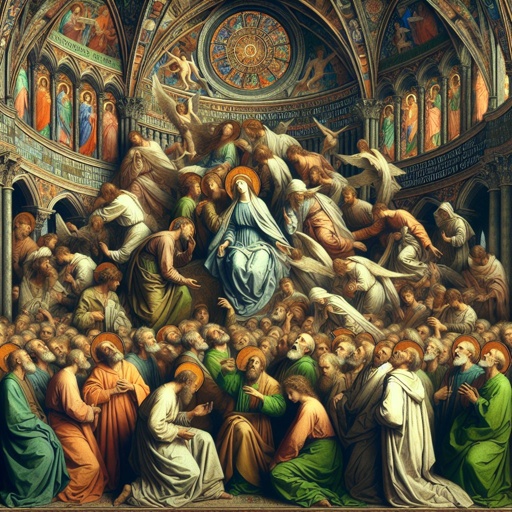
Artwork for Hebrews 5:7

Hebrews 5:7 - "Who in the days of his flesh, when he had offered up prayers and supplications with strong crying and tears unto him that was able to save him from death, and was heard in that he feared;"

"Who in the days of his flesh, when he had offered up prayers and supplications with strong crying and tears unto him that was able to save him from death, and was heard in that he feared;" - Hebrews 5:7

Hebrews 7:5 - "And verily they that are of the sons of Levi, who receive the office of the priesthood, have a commandment to take tithes of the people according to the law, that is, of their brethren, though they come out of the loins of Abraham:"

Hebrews 8:5

Hebrews 7:7 - "And without all contradiction the less is blessed of the better."

Zechariah 5:7 - "And, behold, there was lifted up a talent of lead: and this is a woman that sitteth in the midst of the ephah."

Hebrews 8:1-5

Hebrews 10:5-10

Hebrews 10:5-10

Hebrews 4:5 - "And in this place again, If they shall enter into my rest."

Hebrews 5:10 - "Called of God an high priest after the order of Melchisedec."

Hebrews 7:20 - "And inasmuch as not without an oath he was made priest:"

"And without all contradiction the less is blessed of the better." - Hebrews 7:7

Hebrews 6:5 - "And have tasted the good word of God, and the powers of the world to come,"

Hebrews 7:12 - "For the priesthood being changed, there is made of necessity a change also of the law."

Hebrews 7:24 - "But this man, because he continueth ever, hath an unchangeable priesthood."

Hebrews 7:22 - "By so much was Jesus made a surety of a better testament."

Hebrews 7:17 - "For he testifieth, Thou art a priest for ever after the order of Melchisedec."

Hebrews 7:10 - "For he was yet in the loins of his father, when Melchisedec met him."

Hebrews 7:18 - "For there is verily a disannulling of the commandment going before for the weakness and unprofitableness thereof."

Philippians 3:5 - "Circumcised the eighth day, of the stock of Israel, of the tribe of Benjamin, an Hebrew of the Hebrews; as touching the law, a Pharisee;"

Hebrews 5:13 - "For every one that useth milk is unskilful in the word of righteousness: for he is a babe."

Hebrews 5:4 - "And no man taketh this honour unto himself, but he that is called of God, as was Aaron."

Hebrews 7:16 - "Who is made, not after the law of a carnal commandment, but after the power of an endless life."

Hebrews 3:7 - "Wherefore (as the Holy Ghost saith, To day if ye will hear his voice,"

Hebrews 5:3 - "And by reason hereof he ought, as for the people, so also for himself, to offer for sins."

Hebrews 2:5 - "For unto the angels hath he not put in subjection the world to come, whereof we speak."

Hebrews 8:7 - "For if that first covenant had been faultless, then should no place have been sought for the second."

Hebrews 7:15 - "And it is yet far more evident: for that after the similitude of Melchisedec there ariseth another priest,"
Hebrews 7:23 - "And they truly were many priests, because they were not suffered to continue by reason of death:"