The Greatness of Melchisedec: A Reflection on Christ's Eternal Priesthood
“For this Melchisedec, king of Salem, priest of the most high God, who met Abraham returning from the slaughter of the kings, and blessed him;” — Hebrews 7:1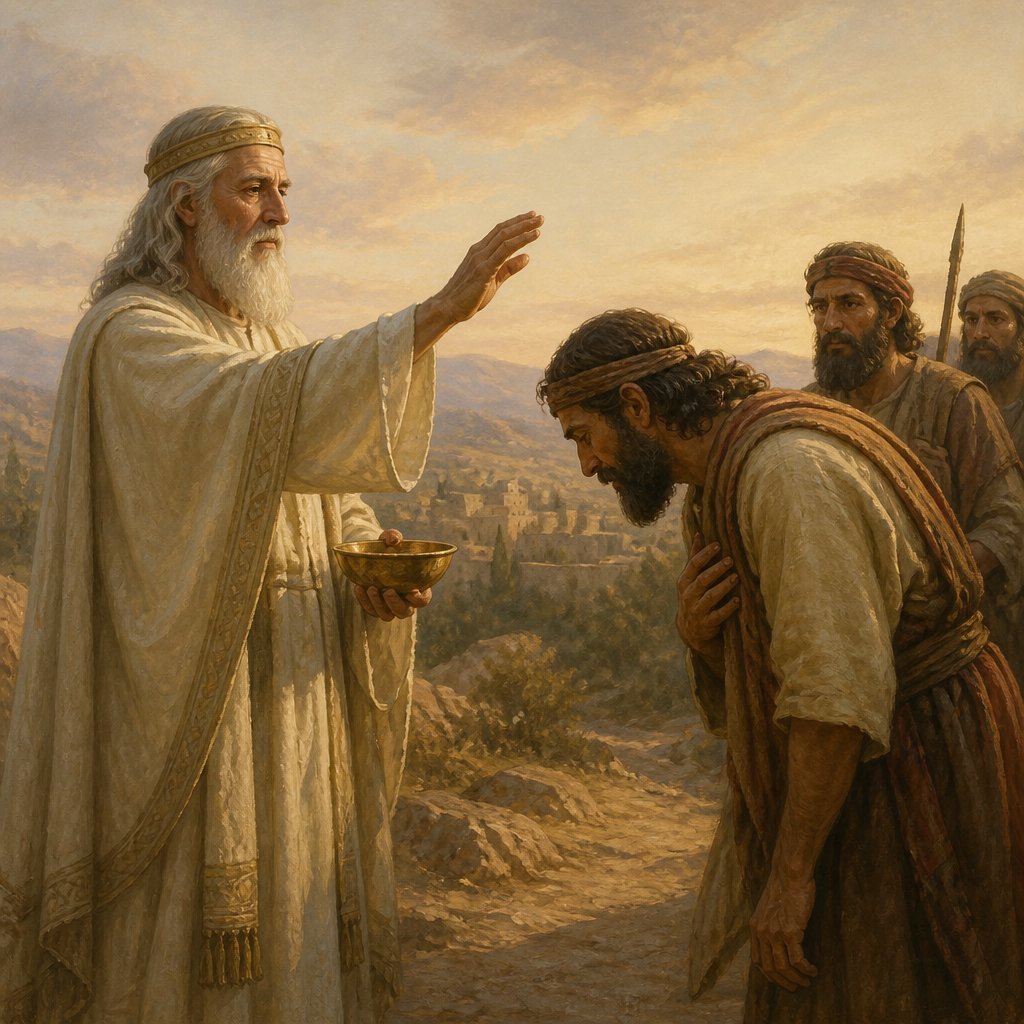
In Hebrews 7:1, the Apostle Paul introduces us to a remarkable figure in biblical history: “For this Melchisedec, king of Salem, priest of the most high God, who met Abraham returning from the slaughter of the kings, and blessed him.” This solitary encounter between Melchisedec and Abraham has profound implications not only for understanding the ancient priesthood but also for unveiling the eternal priesthood of Jesus Christ.
To grasp the significance of Melchisedec, we must first consider the context of his appearance. The historical backdrop of Genesis provides a narrative where Abraham, after a victorious battle, encounters Melchisedec, who is described as both a king and a priest. This dual identity is striking. In a time when the roles of kings and priests were separate, Melchisedec stands out as a singular figure who embodies both offices, pointing toward a greater reality in the person of Jesus Christ. As Christians, we are invited to reflect on how Melchisedec foreshadows the Messiah, who is our King and High Priest.
When Abraham met Melchisedec, he had just returned from rescuing his nephew Lot. This was not merely a military endeavor; it was a demonstration of faith and covenant loyalty. After the battle, Melchisedec came to Abraham, bringing bread and wine—a symbol of communion and celebration. He blessed Abraham, proclaiming, “Blessed be Abram of the most high God, possessor of heaven and earth” (Genesis 14:19). This act of blessing is profound. It shows that Melchisedec, as a priest of the Most High God, was affirming God’s favor upon Abraham.
This moment is pivotal because it illustrates the primacy of God’s blessing in our lives. In the midst of our victories or struggles, God desires to bless us, often through unexpected means. We might find similar blessings in our encounters with those God places in our paths. Just as Melchisedec blessed Abraham, we are called to be vessels of blessing in the lives of others, reflecting the light of Christ into the world.
Moreover, Hebrews highlights the importance of Melchisedec’s eternal priesthood. Unlike the Levitical priests, who had a genealogy and an earthly ministry, Melchisedec is described as one whose priesthood is eternal (Hebrews 7:3). There is no recorded beginning or end to his life, which serves to illustrate the everlasting nature of Christ’s priesthood. Jesus, as our great High Priest, does not need to offer sacrifices repeatedly, as the Levitical priests did; rather, He has offered Himself once and for all. This reality should fill our hearts with hope and assurance. We serve a Savior whose priestly intercession is constant and unfailing.
This leads us to another key component of this narrative: the idea of representation. Melchisedec represents Christ, and like Melchisedec, Jesus intercedes for us. When we stumble or find ourselves weighed down by guilt and shame, we can have confidence that we have an advocate before the Father. Christ's intercession assures us that we are not alone in our struggles; He stands with us, having paid the ultimate price for our sins.
Thus, as we meditate upon Hebrews 7:1, let us not merely consider Melchisedec as a historical figure, but as a type pointing us to the greater truth of Jesus Christ. In our moments of victory, in the hardships we face, or in the mundane rituals of daily life, let us hold fast to the assurance that we have a King who blesses and a Priest who intercedes. Let us actively seek to be conduits of His blessing, reflecting His grace and mercy to others.
In conclusion, may our hearts rejoice in the truth that Melchisedec came bearing blessings and that through Christ, our blessings are not only secured but also everlasting. Let us embrace our identity as part of a royal priesthood called to proclaim the excellencies of Him who called us out of darkness into His marvelous light (1 Peter 2:9). Amen.
Get our apps


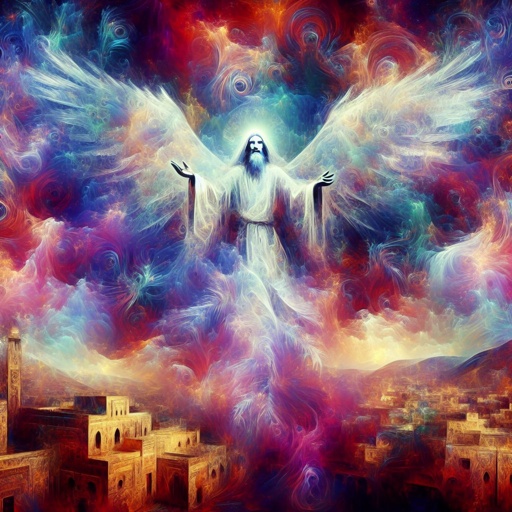
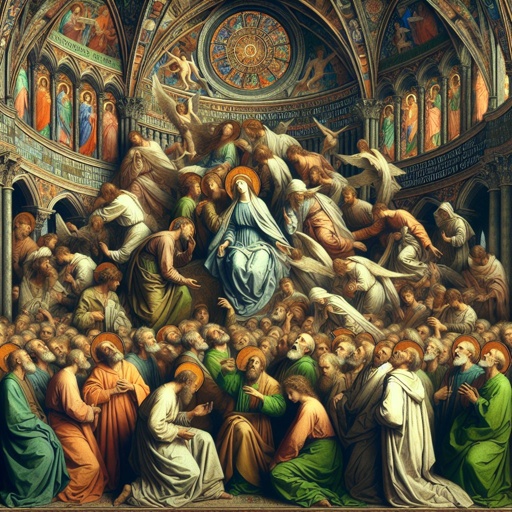
Artwork for Hebrews 7:1

Hebrews 7:1 - "For this Melchisedec, king of Salem, priest of the most high God, who met Abraham returning from the slaughter of the kings, and blessed him;"

Hebrews 7:1-2 - "For this Melchizedek, king of Salem, priest of the Most High God, met Abraham returning from the slaughter of the kings and blessed him, and to him Abraham apportioned a tenth part of everything. He is first, by translation of his name, king of righteousness, and then he is also king of Salem, that is, king of peace."
"For this Melchisedec, king of Salem, priest of the most high God, who met Abraham returning from the slaughter of the kings, and blessed him;" - Hebrews 7:1
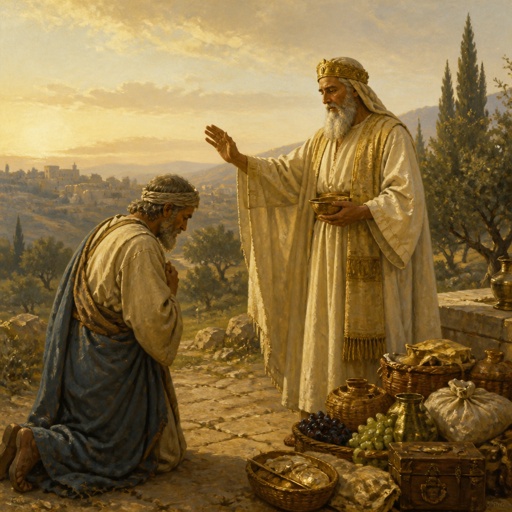
"For this Melchizedek, king of Salem, priest of the Most High God, met Abraham returning from the slaughter of the kings and blessed him, and to him Abraham apportioned a tenth part of everything. He is first, by translation of his name, king of righteousness, and then he is also king of Salem, that is, king of peace." - Hebrews 7:1-2

Hebrews 1:7 - "And of the angels he saith, Who maketh his angels spirits, and his ministers a flame of fire."

Hebrews 7:7 - "And without all contradiction the less is blessed of the better."

1 Samuel 13:7 - "And some of the Hebrews went over Jordan to the land of Gad and Gilead. As for Saul, he was yet in Gilgal, and all the people followed him trembling."

Hebrews 7:20 - "And inasmuch as not without an oath he was made priest:"

"And without all contradiction the less is blessed of the better." - Hebrews 7:7

Hebrews 7:12 - "For the priesthood being changed, there is made of necessity a change also of the law."

Hebrews 7:24 - "But this man, because he continueth ever, hath an unchangeable priesthood."

Hebrews 7:22 - "By so much was Jesus made a surety of a better testament."
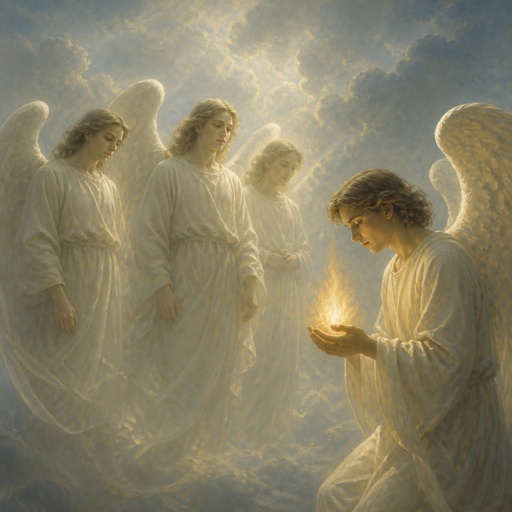
"And of the angels he saith, Who maketh his angels spirits, and his ministers a flame of fire." - Hebrews 1:7

Hebrews 7:17 - "For he testifieth, Thou art a priest for ever after the order of Melchisedec."

Hebrews 7:10 - "For he was yet in the loins of his father, when Melchisedec met him."

Hebrews 7:18 - "For there is verily a disannulling of the commandment going before for the weakness and unprofitableness thereof."

Hebrews 1:14

Hebrews 1:14

Hebrews 7:16 - "Who is made, not after the law of a carnal commandment, but after the power of an endless life."
Hebrews 3:7 - "Wherefore (as the Holy Ghost saith, To day if ye will hear his voice,"

Hebrews 6:1

Hebrews 8:7 - "For if that first covenant had been faultless, then should no place have been sought for the second."

Hebrews 7:15 - "And it is yet far more evident: for that after the similitude of Melchisedec there ariseth another priest,"
Hebrews 7:23 - "And they truly were many priests, because they were not suffered to continue by reason of death:"

Hebrews 7:8 - "And here men that die receive tithes; but there he receiveth them, of whom it is witnessed that he liveth."

Hebrews 6:1

Hebrews 10:7 - "Then said I, Lo, I come (in the volume of the book it is written of me,) to do thy will, O God."

Hebrews 7:14 - "For it is evident that our Lord sprang out of Juda; of which tribe Moses spake nothing concerning priesthood."

Hebrews 7:13 - "For he of whom these things are spoken pertaineth to another tribe, of which no man gave attendance at the altar."

Hebrews 7:9 - "And as I may so say, Levi also, who receiveth tithes, payed tithes in Abraham."