The Eternal Priesthood: Understanding Our High Priest in Christ
“And it is yet far more evident: for that after the similitude of Melchisedec there ariseth another priest,” — Hebrews 7:15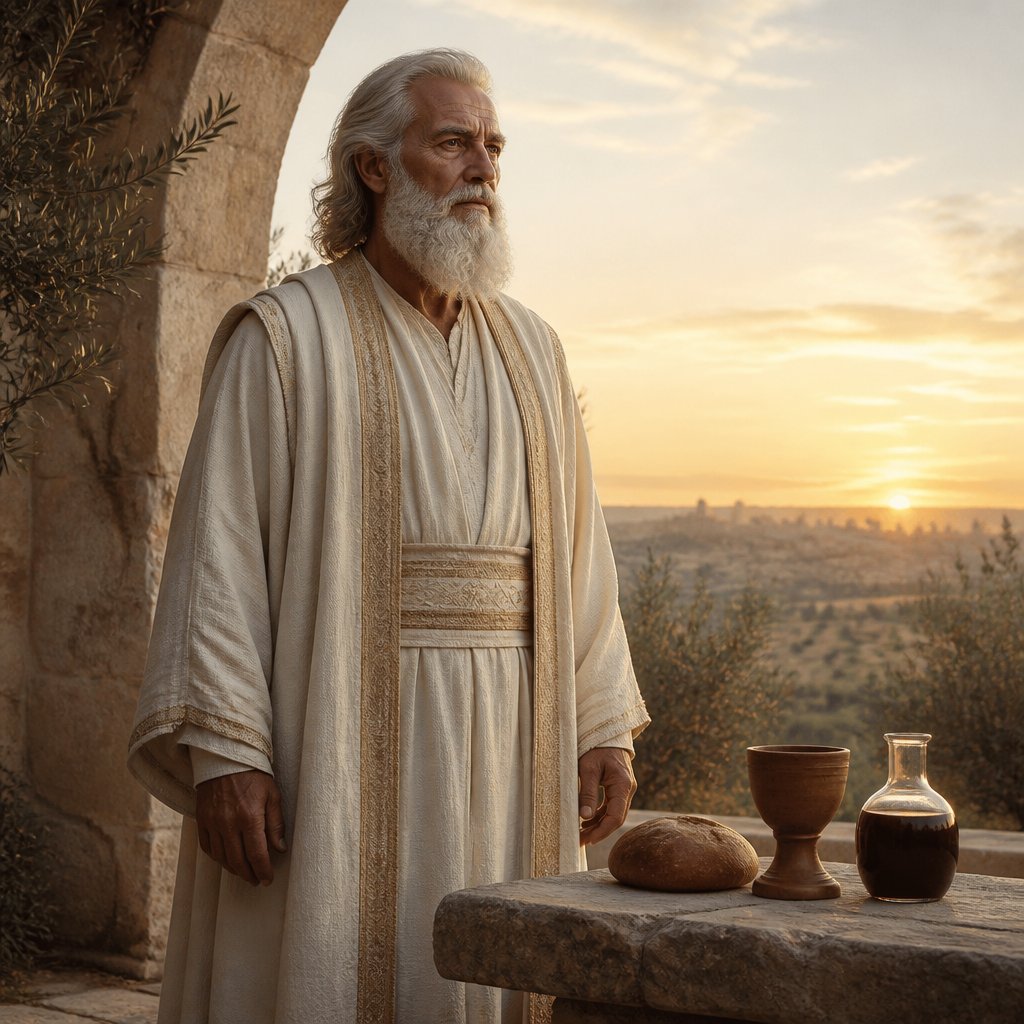
As we delve into the depths of Hebrews 7:15, "And it is yet far more evident: for that after the similitude of Melchisedec there ariseth another priest," we are invited into a profound understanding of the nature of Christ's priesthood. The writer of Hebrews presents a pivotal argument, revealing, through the figure of Melchisedec, the significance of Christ as our eternal High Priest. This verse encapsulates a powerful contrast and deeper meaning that transforms how we relate to God and understand the role of Jesus in our salvation.
To unpack this verse, we first need to examine Melchisedec, a mysterious character found in Genesis 14:18-20. He is described as the king of Salem and a priest of the Most High God, who blessed Abraham and received a tithe from him. This dual role of being both king and priest is rare in Jewish tradition, where these offices were typically separate. Melchisedec appears without a recorded lineage and has no beginning or end mentioned. This anomaly hints at a greater truth: Melchisedec serves as a type or shadow of Christ, foreshadowing the eternal priesthood that Jesus would embody.
In Hebrews 7:15, the phrase, "after the similitude of Melchisedec," emphasizes that Christ’s priesthood is not aligned with the Levitical priesthood that was an integral part of the old covenant. The author of Hebrews argues that this new priesthood established in Christ is superior and eternal. By referring to Melchisedec, it highlights that Jesus is not bound by the laws of genealogy or temporary roles. He is the ultimate fulfillment of God’s redemptive plan.
As we reflect on this truth, it brings great comfort and assurance to our faith. Unlike the Levitical priests, who served for a limited time and had to offer daily sacrifices for their sins and the sins of the people, Christ, as our High Priest after the order of Melchisedec, offers Himself once for all (Hebrews 7:27). His sacrifice is complete, perfect, and eternal. His priesthood transcends time, and through Him, we have direct access to God.
Furthermore, the word "ariseth" in our verse indicates an active progression; it suggests that this new priest is not only a continuation but a powerful coming forth of God’s promise to redeem humanity. We see this promise manifest in Jesus’ ministry, death, and resurrection. He didn’t come just to abolish the law, but to fulfill it, establishing a new covenant through His blood (Luke 22:20). This is the good news for us—Jesus intercedes for us continuously because He holds the eternal position as our priest.
In our lives today, we often feel lost, burdened by guilt or shame. Yet, this passage reassures us that we are not separated from God. Because of the priesthood of Christ, we have someone who understands our struggles and intercedes on our behalf (Hebrews 4:15-16). We can approach the throne of grace with confidence, knowing that our High Priest is not distant or indifferent but intimately aware of our plight and committed to our redemption.
In conclusion, Hebrews 7:15 provides us a profound reminder of the depth and beauty of Christ's priesthood. As believers, we must grasp the reality that Jesus stands as our eternal High Priest, not limited by the temporal bounds that governed the old covenant. He replaces the old system with a new one—not just for the Jews, but for all humanity. In Him, we find hope, redemption, and an everlasting relationship with our Creator. Let us then approach Him with boldness, resting in the assurance that we are received and loved as children of God, forever reconciled through our High Priest, who arises after the similitude of Melchisedec.
Get our apps


Artwork for Hebrews 7:15

Hebrews 7:15 - "And it is yet far more evident: for that after the similitude of Melchisedec there ariseth another priest,"
"And it is yet far more evident: for that after the similitude of Melchisedec there ariseth another priest," - Hebrews 7:15

Hebrews 7:7 - "And without all contradiction the less is blessed of the better."

Hebrews 7:20 - "And inasmuch as not without an oath he was made priest:"

"And without all contradiction the less is blessed of the better." - Hebrews 7:7

Hebrews 6:15 - "And so, after he had patiently endured, he obtained the promise."
Hebrews 10:15 - "Whereof the Holy Ghost also is a witness to us: for after that he had said before,"

Hebrews 7:12 - "For the priesthood being changed, there is made of necessity a change also of the law."

Hebrews 7:24 - "But this man, because he continueth ever, hath an unchangeable priesthood."

Hebrews 7:22 - "By so much was Jesus made a surety of a better testament."

Hebrews 7:17 - "For he testifieth, Thou art a priest for ever after the order of Melchisedec."

Hebrews 7:10 - "For he was yet in the loins of his father, when Melchisedec met him."

Hebrews 7:18 - "For there is verily a disannulling of the commandment going before for the weakness and unprofitableness thereof."

Hebrews 3:15 - "While it is said, To day if ye will hear his voice, harden not your hearts, as in the provocation."

Hebrews 2:15 - "And deliver them who through fear of death were all their lifetime subject to bondage."

Hebrews 7:16 - "Who is made, not after the law of a carnal commandment, but after the power of an endless life."
Hebrews 3:7 - "Wherefore (as the Holy Ghost saith, To day if ye will hear his voice,"

Hebrews 8:7 - "For if that first covenant had been faultless, then should no place have been sought for the second."
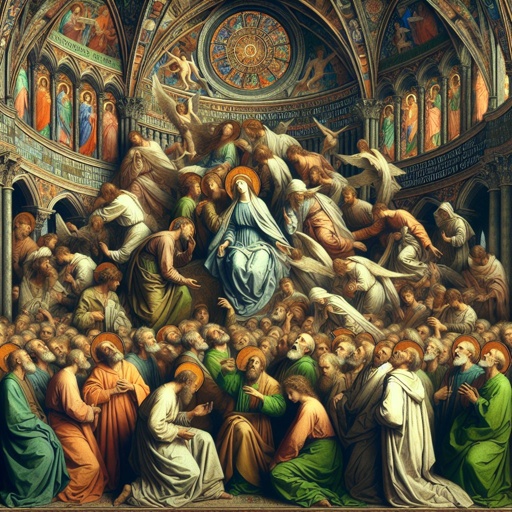
Hebrews 7:23 - "And they truly were many priests, because they were not suffered to continue by reason of death:"

Hebrews 7:8 - "And here men that die receive tithes; but there he receiveth them, of whom it is witnessed that he liveth."

Genesis 40:15 - "For indeed I was stolen away out of the land of the Hebrews: and here also have I done nothing that they should put me into the dungeon."

Hebrews 11:15 - "And truly, if they had been mindful of that country from whence they came out, they might have had opportunity to have returned."

Hebrews 1:7 - "And of the angels he saith, Who maketh his angels spirits, and his ministers a flame of fire."

Hebrews 10:7 - "Then said I, Lo, I come (in the volume of the book it is written of me,) to do thy will, O God."

Hebrews 7:14 - "For it is evident that our Lord sprang out of Juda; of which tribe Moses spake nothing concerning priesthood."

Hebrews 7:13 - "For he of whom these things are spoken pertaineth to another tribe, of which no man gave attendance at the altar."

Hebrews 7:9 - "And as I may so say, Levi also, who receiveth tithes, payed tithes in Abraham."

Hebrews 7:17 - "For he testifieth, Thou art a priest for ever after the order of Melchisedec."

Hebrews 7:19 - "For the law made nothing perfect, but the bringing in of a better hope did; by the which we draw nigh unto God."
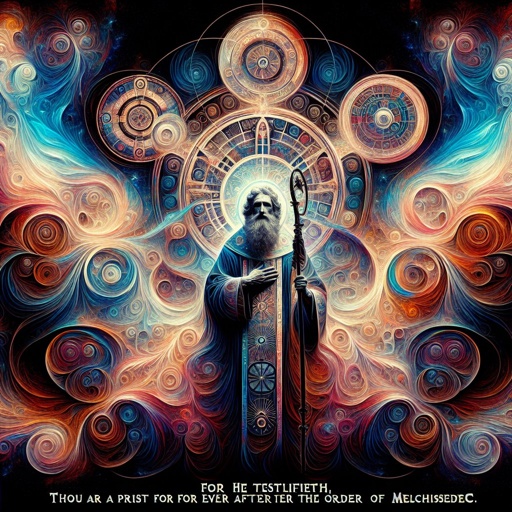
Hebrews 7:17 - "For he testifieth, Thou art a priest for ever after the order of Melchisedec."