The Kingship of Righteousness and Peace
“To whom also Abraham gave a tenth part of all; first being by interpretation King of righteousness, and after that also King of Salem, which is, King of peace;” — Hebrews 7:2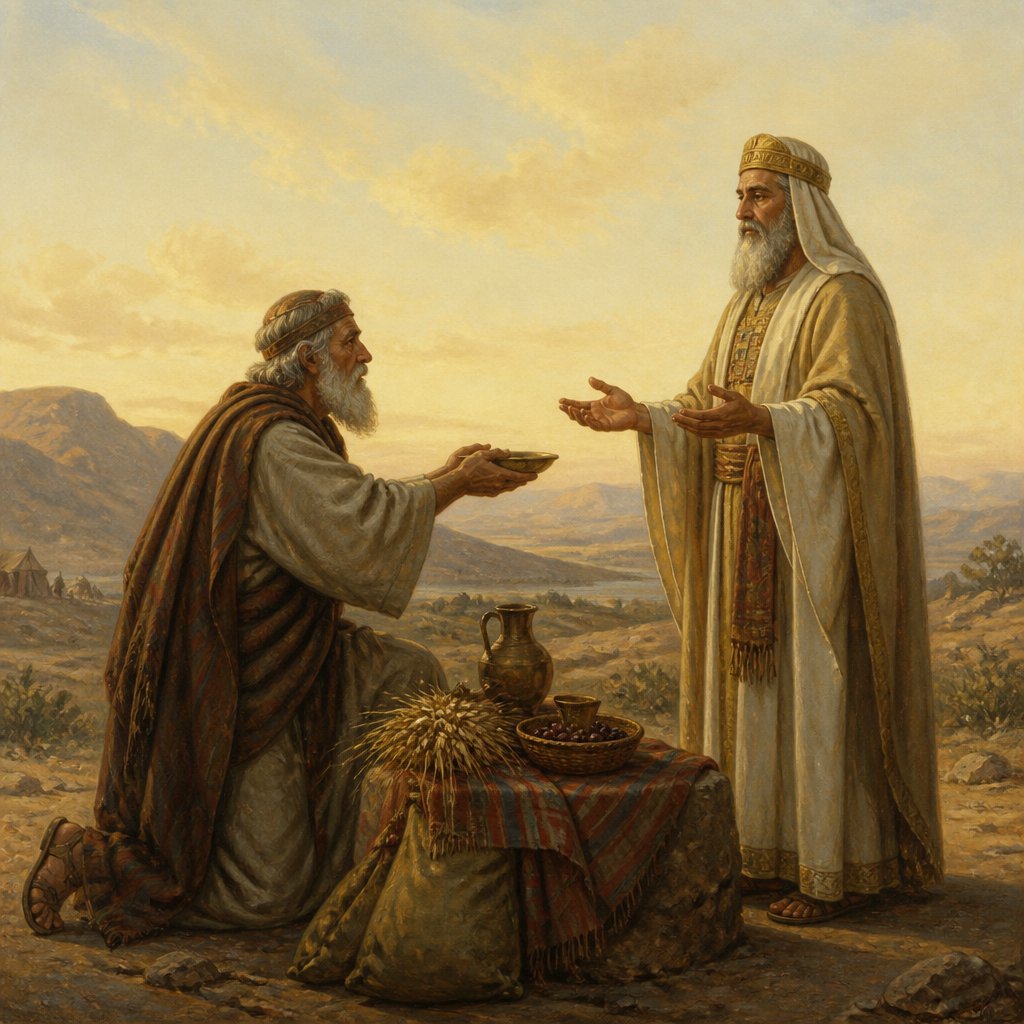
In the grand narrative of Scripture, the figure of Melchizedek emerges as a pivotal character whose significance transcends his immediate context. Hebrews 7:2 provides a profound insight into Melchizedek’s dual titles: "To whom also Abraham gave a tenth part of all; first being by interpretation King of righteousness, and after that also King of Salem, which is, King of peace." This verse encapsulates essential aspects of Christ's ministry and speaks volumes about the nature of true leadership.
Melchizedek, whose name translates to "king of righteousness," represents the standard of righteousness that God requires from His creation. Righteousness, in biblical terms, is not merely about adherence to a set of rules; rather, it embodies a relationship that is characterized by integrity, holiness, and justice. This is seen throughout Scripture, where God's demands for righteousness are often tied to His desire for His people to embody His character. In this light, Melchizedek’s kingship becomes a foreshadowing of Jesus Christ, who is our ultimate King of Righteousness.
When Abraham, the patriarch of faith, encounters Melchizedek after the victory over the kings, he willingly gives him a tenth of the spoils. This act, documented in Genesis 14:20, symbolizes submission to the rightful authority that Melchizedek represents. The significance of this act goes beyond a mere transaction; it is a recognition that righteousness comes before victory. In our lives, we are often tempted to pursue success and recognition without first seeking alignment with God’s standards of righteousness. Here, we see that Abraham prioritized the authority of Melchizedek, acknowledging that true prosperity stems from a foundation of righteousness established by God.
Following his title as King of Righteousness, Melchizedek is also referred to as the King of Salem, which translates to "King of Peace." Here lies another layer of significance. The relationship between righteousness and peace is profound. Romans 5:1 reminds us that "being justified by faith, we have peace with God through our Lord Jesus Christ." True peace can only emanate from a position of righteousness. Where there is sin and injustice, there cannot be peace; instead, there is turmoil and strife.
In a world rife with conflict and division, the peace that originates from righteousness seems elusive. However, the kingship of Christ, as illustrated through Melchizedek, reassures us that God's desire is for us to walk in a way that pleases Him, which in turn invokes His peace in our lives. We can reflect upon our daily actions: Do we strive for righteousness, or are we merely seeking our own version of peace? If we pursue righteousness—aligning our lives with God’s holy standards—then peace will be the natural byproduct of our lives.
As Christians, we are called to emulate our King of Righteousness and Peace. This is not simply a series of moral choices; it is the embodiment of Christ’s spirit within us. We must daily pursue righteousness, first in our relationship with God, and then towards others, understanding that our peace cannot flourish without right relationships at its foundation. Whether in personal relationships, at the workplace, or within societal dynamics, we have the mandate to be agents of peace that stem from righteousness.
In closing, as we meditate on Hebrews 7:2, let us remember that we have a King who exceeds the standards of righteousness and peace. Christ, our Melchizedek, invites us to participate in His reign, live according to His righteousness, and share His peace as we move through the complexities of life. As we cultivate these traits in our hearts, we further proclaim His dominion over our lives and declare to the world that the Kingdom of God is indeed at hand.
Get our apps


Artwork for Hebrews 7:2

Hebrews 7:2 - "To whom also Abraham gave a tenth part of all; first being by interpretation King of righteousness, and after that also King of Salem, which is, King of peace;"
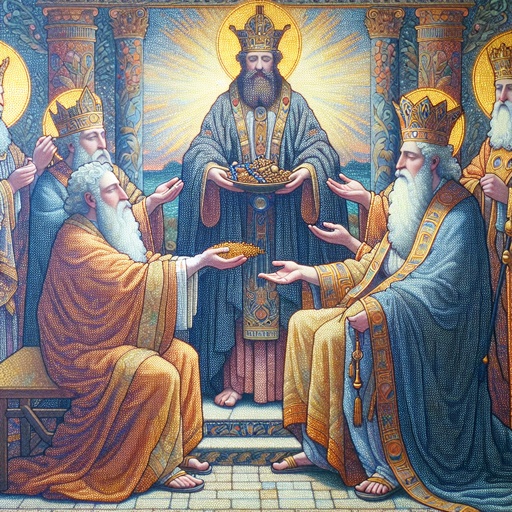
Hebrews 7:2 (KJV) 2 To whom also Abraham gave a tenth part of all; first being by interpretation King of righteousness, and after that also King of Salem, which is, King of peace;
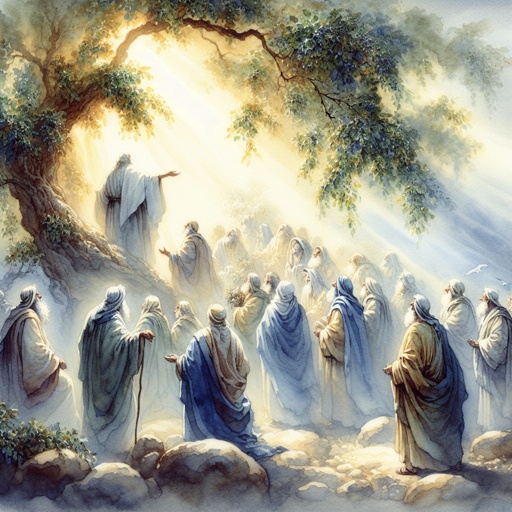
Hebrews 7:2 (KJV) 2 To whom also Abraham gave a tenth part of all; first being by interpretation King of righteousness, and after that also King of Salem, which is, King of peace;
"To whom also Abraham gave a tenth part of all; first being by interpretation King of righteousness, and after that also King of Salem, which is, King of peace;" - Hebrews 7:2

Hebrews 2:7 - "Thou madest him a little lower than the angels; thou crownedst him with glory and honour, and didst set him over the works of thy hands:"

Hebrews 7:7 - "And without all contradiction the less is blessed of the better."
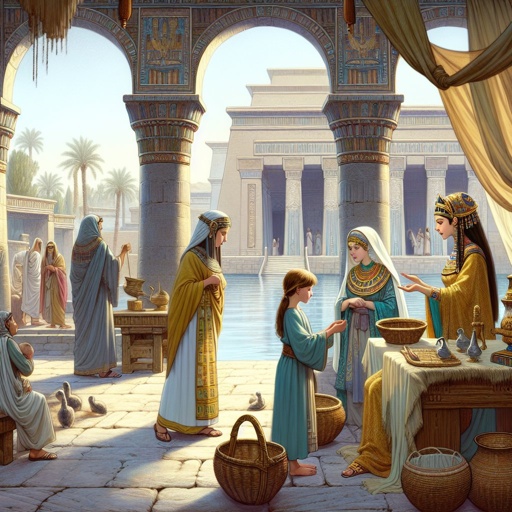
Exodus 2:7 - "Then said his sister to Pharaoh's daughter, Shall I go and call to thee a nurse of the Hebrew women, that she may nurse the child for thee?"

Hebrews 7:20 - "And inasmuch as not without an oath he was made priest:"

"And without all contradiction the less is blessed of the better." - Hebrews 7:7

Hebrews 7:12 - "For the priesthood being changed, there is made of necessity a change also of the law."

Hebrews 7:24 - "But this man, because he continueth ever, hath an unchangeable priesthood."

Hebrews 7:22 - "By so much was Jesus made a surety of a better testament."

Hebrews 7:17 - "For he testifieth, Thou art a priest for ever after the order of Melchisedec."

Hebrews 7:10 - "For he was yet in the loins of his father, when Melchisedec met him."

Hebrews 7:18 - "For there is verily a disannulling of the commandment going before for the weakness and unprofitableness thereof."

Hebrews 7:16 - "Who is made, not after the law of a carnal commandment, but after the power of an endless life."

Hebrews 3:7 - "Wherefore (as the Holy Ghost saith, To day if ye will hear his voice,"

Hebrews 8:7 - "For if that first covenant had been faultless, then should no place have been sought for the second."

Hebrews 7:15 - "And it is yet far more evident: for that after the similitude of Melchisedec there ariseth another priest,"
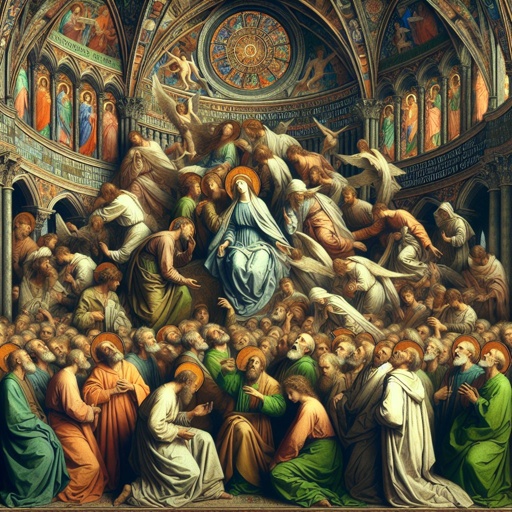
Hebrews 7:23 - "And they truly were many priests, because they were not suffered to continue by reason of death:"

Hebrews 7:8 - "And here men that die receive tithes; but there he receiveth them, of whom it is witnessed that he liveth."

Hebrews 1:7 - "And of the angels he saith, Who maketh his angels spirits, and his ministers a flame of fire."

Hebrews 7:1-2 - "For this Melchizedek, king of Salem, priest of the Most High God, met Abraham returning from the slaughter of the kings and blessed him, and to him Abraham apportioned a tenth part of everything. He is first, by translation of his name, king of righteousness, and then he is also king of Salem, that is, king of peace."

Hebrews 10:7 - "Then said I, Lo, I come (in the volume of the book it is written of me,) to do thy will, O God."

Hebrews 7:14 - "For it is evident that our Lord sprang out of Juda; of which tribe Moses spake nothing concerning priesthood."

Hebrews 7:13 - "For he of whom these things are spoken pertaineth to another tribe, of which no man gave attendance at the altar."

Hebrews 7:9 - "And as I may so say, Levi also, who receiveth tithes, payed tithes in Abraham."

Hebrews 11:2 - "For by it the elders obtained a good report."

Exodus 2: 7 Miriam asked Pharaoh's daughter whether she could go and get a hebrew nurse with river, pyramids in background. Maids looking on

Hebrews 2:2 - "For if the word spoken by angels was stedfast, and every transgression and disobedience received a just recompence of reward;"