The Once and For All Sacrifice: Understanding the Depth of Christ's Offering
“Who needeth not daily, as those high priests, to offer up sacrifice, first for his own sins, and then for the people’s: for this he did once, when he offered up himself.” — Hebrews 7:27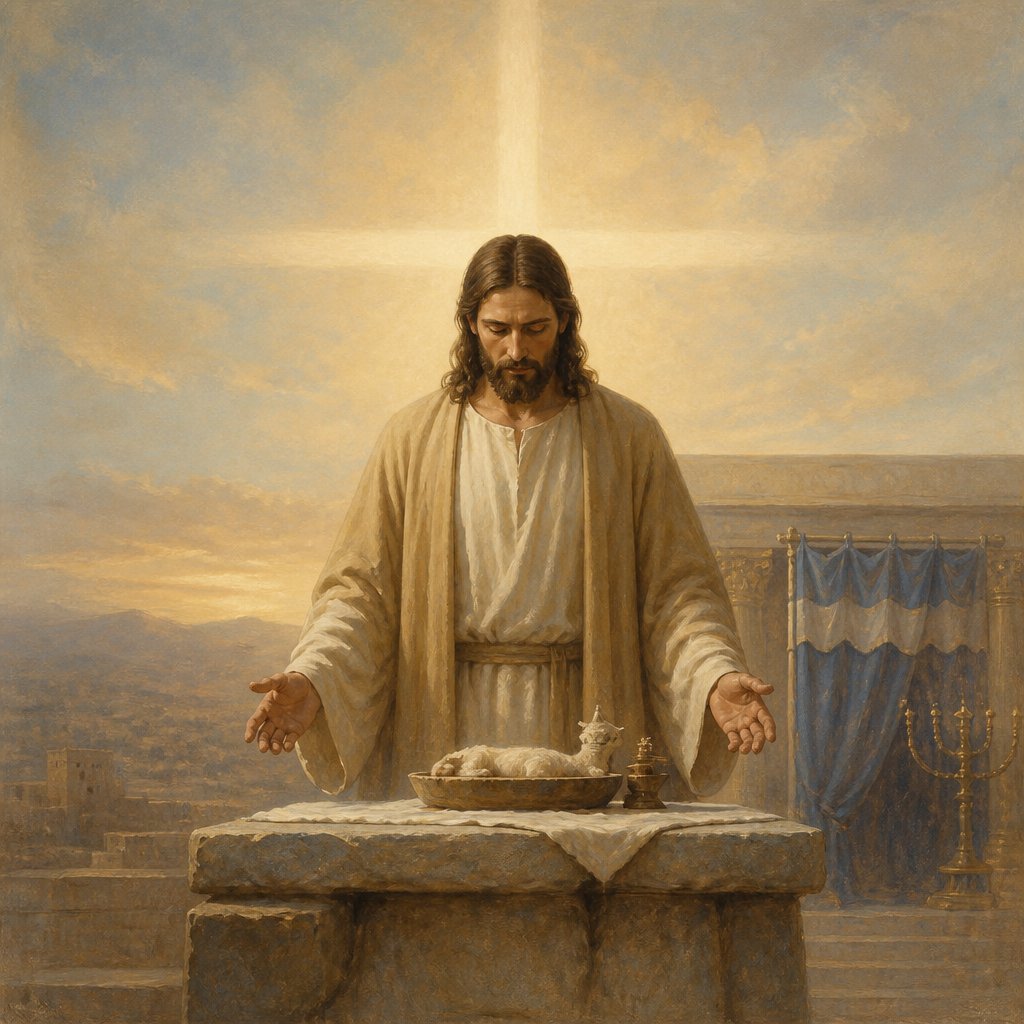
Hebrews 7:27 reads, "Who needeth not daily, as those high priests, to offer up sacrifice, first for his own sins, and then for the people's: for this he did once, when he offered up himself." This profound verse encapsulates the heart of the Gospel and the superiority of Christ’s priesthood over the Levitical priesthood that had been established under the Mosaic Law.
To fully grasp the significance of this passage, we must first understand the role of the high priests in the Old Testament. The high priest was a mediator between God and the people of Israel. His duties involved offering sacrifices to atone for his own sins and the sins of the people, a practice that took place daily. Each morning and evening, lambs and rams were laid upon the altar, and their blood was shed as a sign of the heavy cost of sin. These daily sacrifices served as a reminder to the people of their constant need for atonement and reconciliation with God due to their sinful nature.
However, the writer of Hebrews shifts the focus from those daily, recurring sacrifices to the once and for all sacrifice of Jesus Christ. Unlike the high priests of old, who needed to offer sacrifices repeatedly, Jesus did not require such daily offerings. His sacrifice was unique, final, and eternal. The phrase "for this he did once" denotes not just the singular action of Jesus on the cross but highlights the completeness of His offering—He paid the ultimate price for humanity's sins by laying down His life.
The implications of this truth are staggering. For one, they free us from the burden of attempting to atone for our sins through our works or ongoing sacrifices. If we were to rely on our own actions to achieve righteousness, we would find ourselves in a perpetual state of striving, never quite realizing perfect peace with God. But through Jesus, who offered Himself up once, we are granted immediate access to forgiveness, reconciliation, and peace with God. There is no need for daily atonement because Christ encompassed all of our past, present, and future sins in one supreme act of love.
Moreover, understanding this verse allows us to recognize the depth of Christ's love for humanity. He did not merely perform His duties out of obligation; He willingly laid down His life. The phrase "when he offered up himself" articulates the voluntary nature of His sacrifice, where He took upon Himself the sins of the world, bearing the weight and punishment that we rightfully deserve. It challenges us to reflect on the magnitude of love that would lead one to suffer so greatly for a world that was hostile towards Him. This understanding breeds a heart of gratitude and worship.
As we meditate on Hebrews 7:27, we are reminded of the freedom we have in Christ. We no longer need to live under the shadow of condemnation, fearful of daily sacrifices ineffectively trying to make ourselves right with God. Jesus' sacrifice bridges the gap, allowing us to come boldly to the throne of grace. This is not merely a gift; it is an invitation to relationship.
In conclusion, let us live in the light of this powerful truth. Knowing that He has offered up Himself for us can transform our daily lives. Let this realization compel us not to take His grace for granted but to live in response as grateful recipients of such mercy. May our hearts overflow with thanksgiving, and may our lives reflect His glory, honoring the one who did not need to offer daily sacrifices for our sins, but chose to save us once and for all.
Get our apps


Artwork for Hebrews 7:27
Hebrews 7:27 - "Who needeth not daily, as those high priests, to offer up sacrifice, first for his own sins, and then for the people's: for this he did once, when he offered up himself."
"Who needeth not daily, as those high priests, to offer up sacrifice, first for his own sins, and then for the people's: for this he did once, when he offered up himself." - Hebrews 7:27

Hebrews 9:27 - "And as it is appointed unto men once to die, but after this the judgment:"

Hebrews 7:7 - "And without all contradiction the less is blessed of the better."

Hebrews 10:27 - "But a certain fearful looking for of judgment and fiery indignation, which shall devour the adversaries."

Hebrews 11:27 - "By faith he forsook Egypt, not fearing the wrath of the king: for he endured, as seeing him who is invisible."

"Non his son, Jehoshua his son." - 1 Chronicles 7:27

Hebrews 7:20 - "And inasmuch as not without an oath he was made priest:"
"And as it is appointed unto men once to die, but after this the judgment:" - Hebrews 9:27

"And without all contradiction the less is blessed of the better." - Hebrews 7:7

Hebrews 7:12 - "For the priesthood being changed, there is made of necessity a change also of the law."

Hebrews 7:24 - "But this man, because he continueth ever, hath an unchangeable priesthood."

Hebrews 7:22 - "By so much was Jesus made a surety of a better testament."

Hebrews 7:17 - "For he testifieth, Thou art a priest for ever after the order of Melchisedec."

Hebrews 7:10 - "For he was yet in the loins of his father, when Melchisedec met him."

Hebrews 7:18 - "For there is verily a disannulling of the commandment going before for the weakness and unprofitableness thereof."

Hebrews 12:27 - "And this word, Yet once more, signifieth the removing of those things that are shaken, as of things that are made, that those things which cannot be shaken may remain."

Hebrews 7:16 - "Who is made, not after the law of a carnal commandment, but after the power of an endless life."
Hebrews 3:7 - "Wherefore (as the Holy Ghost saith, To day if ye will hear his voice,"

Hebrews 8:7 - "For if that first covenant had been faultless, then should no place have been sought for the second."

Hebrews 7:15 - "And it is yet far more evident: for that after the similitude of Melchisedec there ariseth another priest,"
Hebrews 7:23 - "And they truly were many priests, because they were not suffered to continue by reason of death:"

Hebrews 7:8 - "And here men that die receive tithes; but there he receiveth them, of whom it is witnessed that he liveth."

Hebrews 1:7 - "And of the angels he saith, Who maketh his angels spirits, and his ministers a flame of fire."
"But a certain fearful looking for of judgment and fiery indignation, which shall devour the adversaries." - Hebrews 10:27

Hebrews 10:7 - "Then said I, Lo, I come (in the volume of the book it is written of me,) to do thy will, O God."

Hebrews 7:14 - "For it is evident that our Lord sprang out of Juda; of which tribe Moses spake nothing concerning priesthood."

Hebrews 7:13 - "For he of whom these things are spoken pertaineth to another tribe, of which no man gave attendance at the altar."

Hebrews 7:9 - "And as I may so say, Levi also, who receiveth tithes, payed tithes in Abraham."

Hebrews 7:17 - "For he testifieth, Thou art a priest for ever after the order of Melchisedec."