The Greatness of Divine Authority: Reflecting on Hebrews 7:4
“Now consider how great this man was, unto whom even the patriarch Abraham gave the tenth of the spoils.” — Hebrews 7:4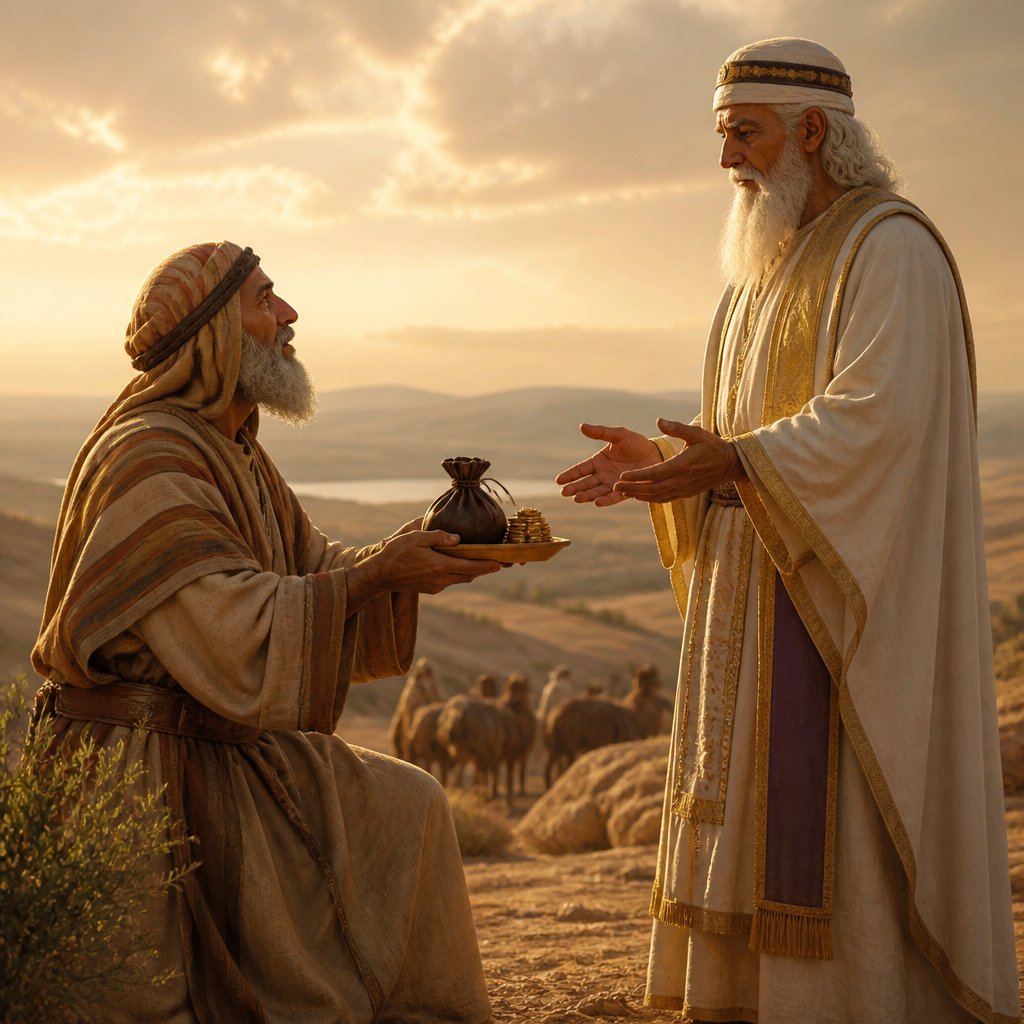
As we delve into the richness of Hebrews 7:4, we are urged to reflect profoundly on the greatness of Melchisedec, a figure who possesses great significance in the Biblical narrative. The verse states, "Now consider how great this man was, unto whom even the patriarch Abraham gave the tenth of the spoils." This verse beckons us to explore themes of greatness, reverence, and divine order, urging us to understand why Abraham—a man esteemed as a father of many nations—would present a tithe to this enigmatic king and priest.
To unpack the greatness of Melchisedec, it is imperative to first acknowledge Abraham's stature. Abraham, hailed as the father of faith, received a covenant from God that promised him descendants as numerous as the stars and blessings that would extend to all nations. In the context of Hebrews, however, we see that even someone as revered as Abraham recognized a higher authority in Melchisedec, which establishes a striking precedent. The act of tithing is not merely one of giving; it is an acknowledgment of the sovereignty and greatness of God as represented through Melchisedec.
Melchisedec’s name translates to "king of righteousness," and he is also the king of Salem, meaning "peace." This duality emphasizes that true greatness and authority come from God alone. As individuals, we can seek worldly acknowledgments and accolades, but ultimate significance is derived from how we respond to the divine. Just as Abraham acknowledged Melchisedec’s authority by giving a tenth of his spoils—the spoils won in battle, representing his hard-fought victory—so too are we called to acknowledge God’s supremacy through our lives and resources.
When we consider the implications of giving a tithe, we’re invited into a practice that goes beyond mere financial commitment. The act of giving—of offering a portion of what we have back to God—symbolizes our recognition of His provision and our trust in His promises. It is an invitation into a deeper relationship founded on faith and gratitude. By tithing, we declare that God is the source of all our blessings, an acknowledgment of His greatness akin to that which Abraham displayed.
Moreover, this passage invites us to reflect on the character of our giving. Just as Abraham’s tithe was not a mere obligation but a responsive act of reverence, we too are called to give from a place of understanding and appreciation for what God has provided in our lives. Our tithing should emerge from an overflow of gratitude rather than a sense of duty. The question we must honestly reflect on is this: Do we recognize who God is in our lives? Is His greatness displayed in how we manage our resources?
Furthermore, Hebrews sheds light on the eternal priesthood of Christ as analogous to Melchisedec. Just as Melchisedec’s priesthood was without lineage or end, Christ's priesthood remains forever, providing us eternal access to God. This continuity underscores that our relationship with God is not bound by the law but is rooted in grace through faith. Understanding the enormity of this grace invites us to respond in faith, demonstrating our appreciation and dedication to God with our lives, finances, time, and talents.
In summary, Hebrews 7:4 challenges us to consider the greatness of God and how it reverberates through our lives, as seen in the example set by Abraham. It prompts us to offer everything we have back to God willingly and gratefully, reflecting on His unending mercies. As we contemplate Melchisedec’s significance as king and priest, let us commit to recognizing and honoring God’s greatness through our every action. May we, like Abraham, willingly surrender and contribute everything we have, assuring our hearts are aligned with the divine purpose. Let our lives be marked by gratitude, reverence, and a deep appreciation for the incomprehensible greatness of our Lord.
Get our apps


Artwork for Hebrews 7:4

Hebrews 7:4 - "Now consider how great this man was, unto whom even the patriarch Abraham gave the tenth of the spoils."
"Now consider how great this man was, unto whom even the patriarch Abraham gave the tenth of the spoils." - Hebrews 7:4
Hebrews 4:7 - "Again, he limiteth a certain day, saying in David, To day, after so long a time; as it is said, To day if ye will hear his voice, harden not your hearts."

Hebrews 7:7 - "And without all contradiction the less is blessed of the better."

Hebrews 4:9 - "There remaineth therefore a rest to the people of God."

Hebrews 7:20 - "And inasmuch as not without an oath he was made priest:"

"And without all contradiction the less is blessed of the better." - Hebrews 7:7

Hebrews 7:12 - "For the priesthood being changed, there is made of necessity a change also of the law."

Hebrews 7:24 - "But this man, because he continueth ever, hath an unchangeable priesthood."

Hebrews 7:22 - "By so much was Jesus made a surety of a better testament."

Hebrews 4:5 - "And in this place again, If they shall enter into my rest."

Hebrews 7:17 - "For he testifieth, Thou art a priest for ever after the order of Melchisedec."

Hebrews 7:10 - "For he was yet in the loins of his father, when Melchisedec met him."

Hebrews 7:18 - "For there is verily a disannulling of the commandment going before for the weakness and unprofitableness thereof."

Hebrews 10:4 - "For it is not possible that the blood of bulls and of goats should take away sins."

Hebrews 7:16 - "Who is made, not after the law of a carnal commandment, but after the power of an endless life."
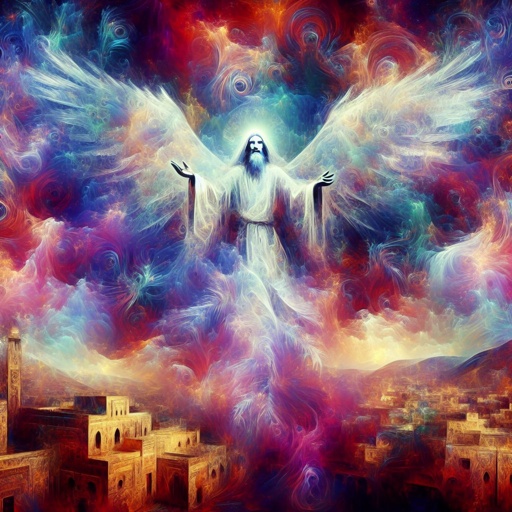
Hebrews 3:7 - "Wherefore (as the Holy Ghost saith, To day if ye will hear his voice,"

Hebrews 4:4 - "For he spake in a certain place of the seventh day on this wise, And God did rest the seventh day from all his works."

Hebrews 12:4 - "Ye have not yet resisted unto blood, striving against sin."

Hebrews 4:12 – "For the word of God is alive and active. Sharper than any double-edged sword."

Hebrews 8:7 - "For if that first covenant had been faultless, then should no place have been sought for the second."

Hebrews 7:15 - "And it is yet far more evident: for that after the similitude of Melchisedec there ariseth another priest,"
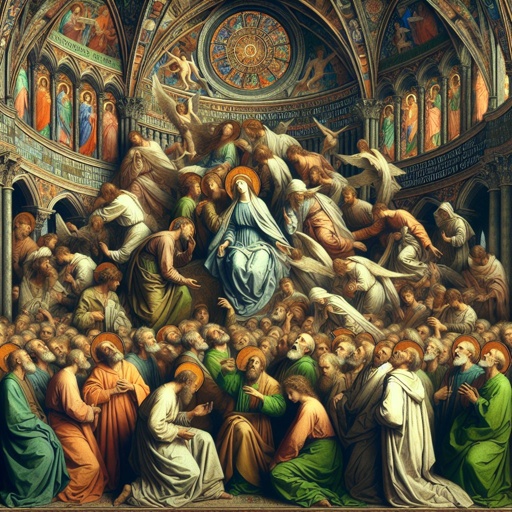
Hebrews 7:23 - "And they truly were many priests, because they were not suffered to continue by reason of death:"

Hebrews 7:8 - "And here men that die receive tithes; but there he receiveth them, of whom it is witnessed that he liveth."

Hebrews 4:12 – "For the word of God is alive and active. Sharper than any double-edged sword."

Hebrews 13:4 - "Marriage is honourable in all, and the bed undefiled: but whoremongers and adulterers God will judge."

Hebrews 5:4 - "And no man taketh this honour unto himself, but he that is called of God, as was Aaron."

Hebrews 1:7 - "And of the angels he saith, Who maketh his angels spirits, and his ministers a flame of fire."

Hebrews 3:4 - "For every house is builded by some man; but he that built all things is God."
!["For the word of God [is] quick, and powerful, and sharper than any twoedged sword, piercing even to the dividing asunder of soul and spirit, and of the joints and marrow, and [is] a discerner of the thoughts and intents of the heart." - Hebrews 4:12](https://media.bible.art/0705b859-7ae8-4ac8-9dce-49043e2ec43b-thumbnail.jpg)
"For the word of God [is] quick, and powerful, and sharper than any twoedged sword, piercing even to the dividing asunder of soul and spirit, and of the joints and marrow, and [is] a discerner of the thoughts and intents of the heart." - Hebrews 4:12