The Eternal Priesthood of Christ: A Tithe That Transcends Death
“And here men that die receive tithes; but there he receiveth them, of whom it is witnessed that he liveth.” — Hebrews 7:8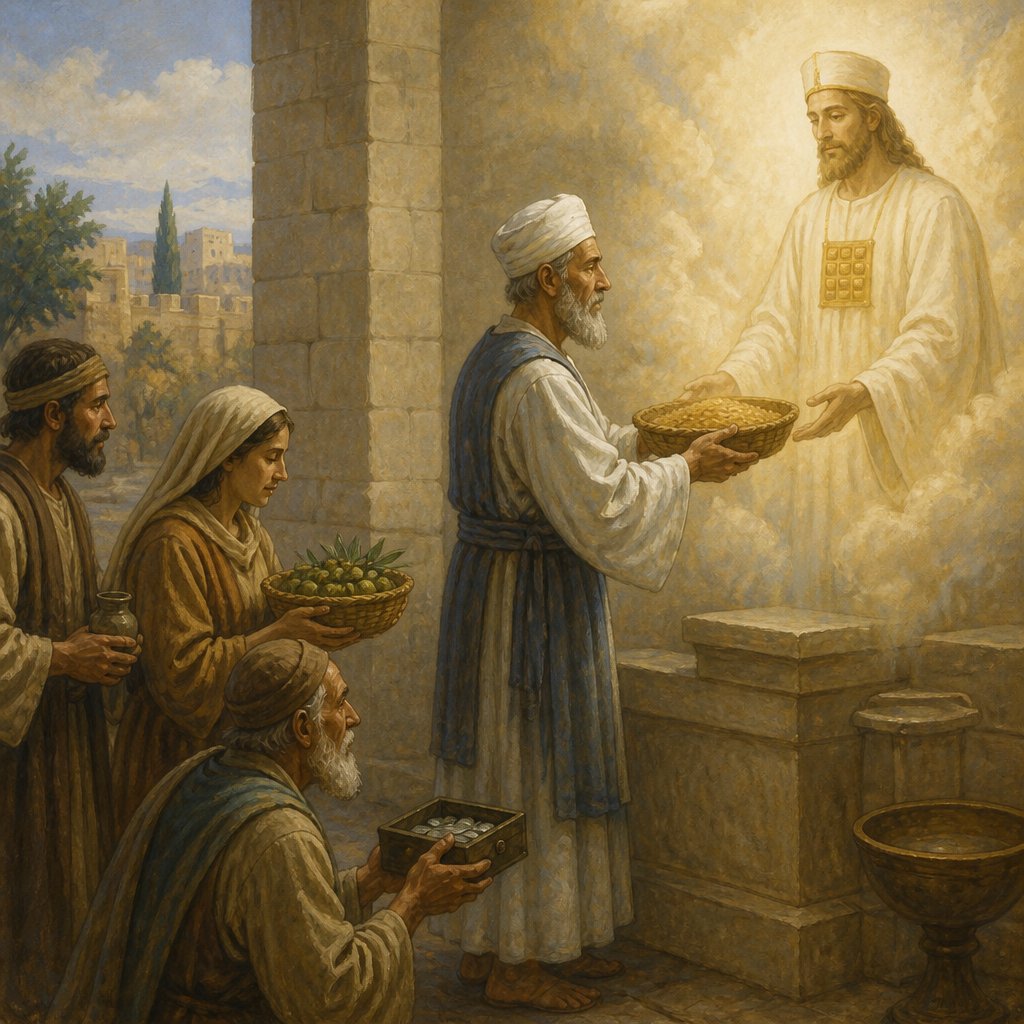
As we delve into the profound meaning of Hebrews 7:8, we are confronted with the striking comparison between the earthly priesthood and the eternal priesthood of Christ: "And here men that die receive tithes; but there he receiveth them, of whom it is witnessed that he liveth." This verse encapsulates two essential truths about worship, sacrifice, and the character of Christ.
To understand this passage, we must first recognize the context of the Book of Hebrews. Written primarily to Jewish Christians, the text seeks to establish the superiority of Christ’s priesthood over the Levitical priesthood. The Levitical priests, descended from Aaron, offered sacrifices for the sins of the people, receiving tithes from their fellow Israelites. However, they, too, were mortal men who faced the inevitability of death; their priesthood ended with their lives. This reality raises an urgent question: How effective can a priesthood be if it is bound by the confines of mortality?
The contrast outlined in Hebrews 7:8 presents a remarkable revelation: while earthly priests receive tithes, Christ, as our eternal high priest, continues to receive them even now. This shifts our understanding of what it means to give. In the act of tithing, we recognize the sovereignty of God over our finances and lives. Our sacrifices become an investment into something far greater than the changing hands of earthly men. They are contributions to the work of an eternal King—a living Christ who intercedes for us even from His throne of glory.
When we look at the latter part of the verse—"but there he receiveth them, of whom it is witnessed that he liveth"—we find hope and reassurance. The phrase, "of whom it is witnessed that he liveth," speaks to the resurrection of Jesus Christ, emphasizing that He is not merely an historical figure but a living savior, forever present among His people. In this light, our tithes and offerings become acts of worship directed toward a God who is alive, dynamic, and actively engaged in our lives.
Imagine the implications of giving to one who is alive! Our tithes, therefore, serve as a tangible expression of our faith and trust in Christ. Every time we contribute our resources, we acknowledge our dependence on Him, not just for physical sustenance but also spiritual. This practice invites us into a relationship of reciprocity wherein our giving positions us to experience the blessings of His grace and provision.
Moreover, the act of tithing releases us from the grip of materialism. In a world that constantly pushes for accumulation and selfishness, our commitment to tithe challenges societal norms, reminding us that everything we possess is ultimately from God. Recognizing His eternal nature invites us to view our resources in a divine context. We begin to understand that we are stewards of God's gifts, called to honor Him and advance His Kingdom on earth.
Consider the spiritual legacy of giving. When we give, we become part of a larger story of redemption and grace. Our tithes provide the means for ministry, outreach, and the sharing of the Gospel to those who have yet to experience the life-giving love of Christ. In essence, your contribution not only supports the church and its mission but also becomes a testimony of your faith—an act that echoes into eternity.
As we ponder Hebrews 7:8 today, let us reevaluate our approach to giving and stewardship. May we bring our tithes not as an obligation but as a celebratory offering to the One who lives and reigns forever. Each donation becomes more than just a transaction, but a testament to a living faith in a living Savior. In such acts of worship, we not only acknowledge His ongoing work among us but also experience the abundant life He promises.
Get our apps


Artwork for Hebrews 7:8

Hebrews 7:8 - "And here men that die receive tithes; but there he receiveth them, of whom it is witnessed that he liveth."
"And here men that die receive tithes; but there he receiveth them, of whom it is witnessed that he liveth." - Hebrews 7:8

Hebrews 8:7 - "For if that first covenant had been faultless, then should no place have been sought for the second."

Hebrews 12:7-8 - "Endure hardship as discipline; God is treating you as his children. For what children are not disciplined by their father? If you are not disciplined - and everyone undergoes discipline - then you are not legitimate, not true sons and daughters at all."
"For if that first covenant had been faultless, then should no place have been sought for the second." - Hebrews 8:7

Hebrews 12:8

Hebrews 8:5

Hebrews 7:7 - "And without all contradiction the less is blessed of the better."

Hebrews 8:1-5

Hebrews 13:8 - "Jesus Christ the same yesterday, and to day, and for ever."

Hebrews 3:8 - "Harden not your hearts, as in the provocation, in the day of temptation in the wilderness:"

Hebrews 7:20 - "And inasmuch as not without an oath he was made priest:"

"And without all contradiction the less is blessed of the better." - Hebrews 7:7

Hebrews 7:12 - "For the priesthood being changed, there is made of necessity a change also of the law."

Hebrews 7:24 - "But this man, because he continueth ever, hath an unchangeable priesthood."

Hebrews 7:22 - "By so much was Jesus made a surety of a better testament."

Hebrews 8:12 - "For I will be merciful to their unrighteousness, and their sins and their iniquities will I remember no more."

Hebrews 8:2 - "A minister of the sanctuary, and of the true tabernacle, which the Lord pitched, and not man."

Hebrews 7:17 - "For he testifieth, Thou art a priest for ever after the order of Melchisedec."

Hebrews 7:10 - "For he was yet in the loins of his father, when Melchisedec met him."

Hebrews 7:18 - "For there is verily a disannulling of the commandment going before for the weakness and unprofitableness thereof."

Hebrews 7:16 - "Who is made, not after the law of a carnal commandment, but after the power of an endless life."

Hebrews 3:7 - "Wherefore (as the Holy Ghost saith, To day if ye will hear his voice,"

Hebrews 6:8 - "But that which beareth thorns and briers is rejected, and is nigh unto cursing; whose end is to be burned."

Hebrews 8:8 - "For finding fault with them, he saith, Behold, the days come, saith the Lord, when I will make a new covenant with the house of Israel and with the house of Judah:"

Hebrews 8:4 - "For if he were on earth, he should not be a priest, seeing that there are priests that offer gifts according to the law:"

Hebrews 7:15 - "And it is yet far more evident: for that after the similitude of Melchisedec there ariseth another priest,"
Hebrews 7:23 - "And they truly were many priests, because they were not suffered to continue by reason of death:"

Hebrews 1:7 - "And of the angels he saith, Who maketh his angels spirits, and his ministers a flame of fire."

"Jesus Christ the same yesterday, and to day, and for ever." - Hebrews 13:8