Once for All: The Finality of Christ's Sacrifice
“Nor yet that he should offer himself often, as the high priest entereth into the holy place every year with blood of others;” — Hebrews 9:25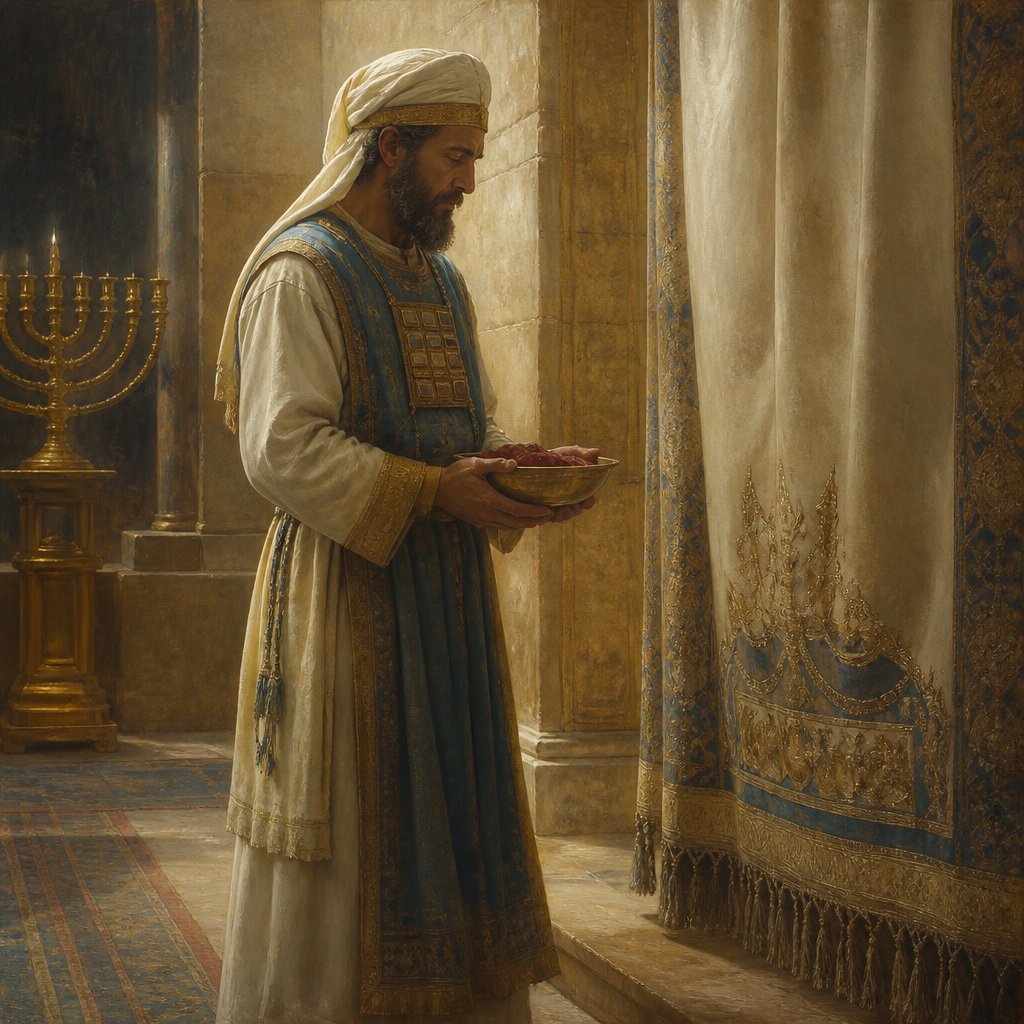
Hebrews 9:25 states, "Nor yet that he should offer himself often, as the high priest entereth into the holy place every year with blood of others;" This passage invites us into a deep understanding of the supremacy and finality of Christ's sacrifice and the implications it has for our daily lives. As we unravel the theological richness of this verse, we engage with the profound truth that Jesus' offering of Himself was not a superficial act; it was a singular event with eternal consequences.
In the Old Testament, the high priest had a weighty responsibility. Once each year, on the Day of Atonement, he would enter the innermost sanctuary of the temple, called the Holy of Holies, to make atonement for the sins of the people. This rite was conducted with great reverence and fear, as the high priest had to meticulously prepare himself to ensure he was worthy to stand in the presence of God. He entered with the blood of others, the sacrifices of animals, which were a foreshadowing of the ultimate sacrifice to come.
The author of Hebrews points out the contrast between the repetitive cycle of animal sacrifices and the singular act of Christ. Jesus did not have to offer Himself repeatedly; His sacrifice was once and for all. This concept is foundational to our understanding of redemption.
The word “once” in this context does not merely signify a singular occurrence but encompasses the idea of completeness. It reflects the finality of Jesus' atonement for sin. In offering Himself, He fulfilled the requirements of the Law and exhausted the need for further sacrifices. As followers of Christ, we can rest in the assurance that our sins, past, present, and future, were covered by His blood. This realization should invoke both gratitude and humility in our hearts.
Yet, the implications extend beyond appreciation. Understanding that Christ’s sacrifice was complete influences how we live our daily lives. Many believers struggle with feelings of unworthiness, believing that they must continually earn God’s favor or redemption. But the scripture teaches us that Christ's atonement was sufficient and effective. We need not attempt to add to His work with our good deeds or self-imposed sacrifices; rather, we are called to rest in the grace afforded through Him.
Moreover, this understanding cultivates a deeper relationship with God. We no longer approach God through the lens of fear or guilt, intimidated by our failings. Instead, we come boldly before His throne of grace (Hebrews 4:16), because Christ, our High Priest, has paved the way for us. This access is a profound gift, allowing for a relationship based on love rather than obligation.
The finality of Christ’s sacrifice also invites us to share the good news with others. Knowing that Christ has freely offered Himself for all encourages us to be witnesses of His grace to our communities. In a world that often craves answers to feelings of inadequacy, we can point others to the sufficiency of Christ's work on the cross. It is a message of hope, and it possesses the power to transform lives.
As we meditate on Hebrews 9:25, let us be mindful of the complete work of Christ. Let it remind us of the depth of God’s love, the seriousness of sin, and the freedom found in His grace. May we live in a way that honors His sacrifice, reflecting His love to those around us, confidently resting in the truth that we are accepted, justified, and redeemed—all because of what Christ has done for us, once for all.
In conclusion, remember that the sacrifice of Jesus is not just a historical event; it is the very foundation upon which our faith is built. It is a call to live in response to His love, embracing our identity as beloved children of God.
Get our apps


Artwork for Hebrews 9:25

Hebrews 9:25 - "Nor yet that he should offer himself often, as the high priest entereth into the holy place every year with blood of others;"
"Nor yet that he should offer himself often, as the high priest entereth into the holy place every year with blood of others;" - Hebrews 9:25

Hebrews 13:25 - "Grace be with you all. Amen."

"Grace be with you all. Amen." - Hebrews 13:25

Hebrews 11:25 - "Choosing rather to suffer affliction with the people of God, than to enjoy the pleasures of sin for a season;"

Hebrews 4:9 - "There remaineth therefore a rest to the people of God."

Hebrews 9:16 - "For where a testament is, there must also of necessity be the death of the testator."

Hebrews 9:18 - "Whereupon neither the first testament was dedicated without blood."

Hebrews 9:27 - "And as it is appointed unto men once to die, but after this the judgment:"

Hebrews 9:3 - "And after the second veil, the tabernacle which is called the Holiest of all;"

Hebrews 9:9 - "Which was a figure for the time then present, in which were offered both gifts and sacrifices, that could not make him that did the service perfect, as pertaining to the conscience;"

Hebrews 10:25 - "Not forsaking the assembling of ourselves together, as the manner of some is; but exhorting one another: and so much the more, as ye see the day approaching."

Hebrews 9:13 - "For if the blood of bulls and of goats, and the ashes of an heifer sprinkling the unclean, sanctifieth to the purifying of the flesh:"

Hebrews 9:20 - "Saying, This is the blood of the testament which God hath enjoined unto you."

Hebrews 9:21 - "Moreover he sprinkled with blood both the tabernacle, and all the vessels of the ministry."

Hebrews 7:25 - "Wherefore he is able also to save them to the uttermost that come unto God by him, seeing he ever liveth to make intercession for them."

Hebrews 9:17 - "For a testament is of force after men are dead: otherwise it is of no strength at all while the testator liveth."

Hebrews 9:2 - "For there was a tabernacle made; the first, wherein was the candlestick, and the table, and the shewbread; which is called the sanctuary."

Hebrews 9:1 - "Then verily the first covenant had also ordinances of divine service, and a worldly sanctuary."

Hebrews 9:22 - "And almost all things are by the law purged with blood; and without shedding of blood is no remission."

Hebrews 3:9 - "When your fathers tempted me, proved me, and saw my works forty years."

Hebrews 9:5 - "And over it the cherubims of glory shadowing the mercyseat; of which we cannot now speak particularly."
"There remaineth therefore a rest to the people of God." - Hebrews 4:9

Hebrews 6:9 - "But, beloved, we are persuaded better things of you, and things that accompany salvation, though we thus speak."

1 Corinthians 9:25-27

1 Corinthians 9:25-27

1 Corinthians 9:25-27

1 Corinthians 9:25-27

Genesis 25-9

Hebrews 7:9 - "And as I may so say, Levi also, who receiveth tithes, payed tithes in Abraham."