The Shackles of Shame: A Reflection on Isaiah 20:4
"So shall the king of Assyria lead away the Egyptians prisoners, and the Ethiopians captives, young and old, naked and barefoot, even with their buttocks uncovered, to the shame of Egypt." - Isaiah 20:4
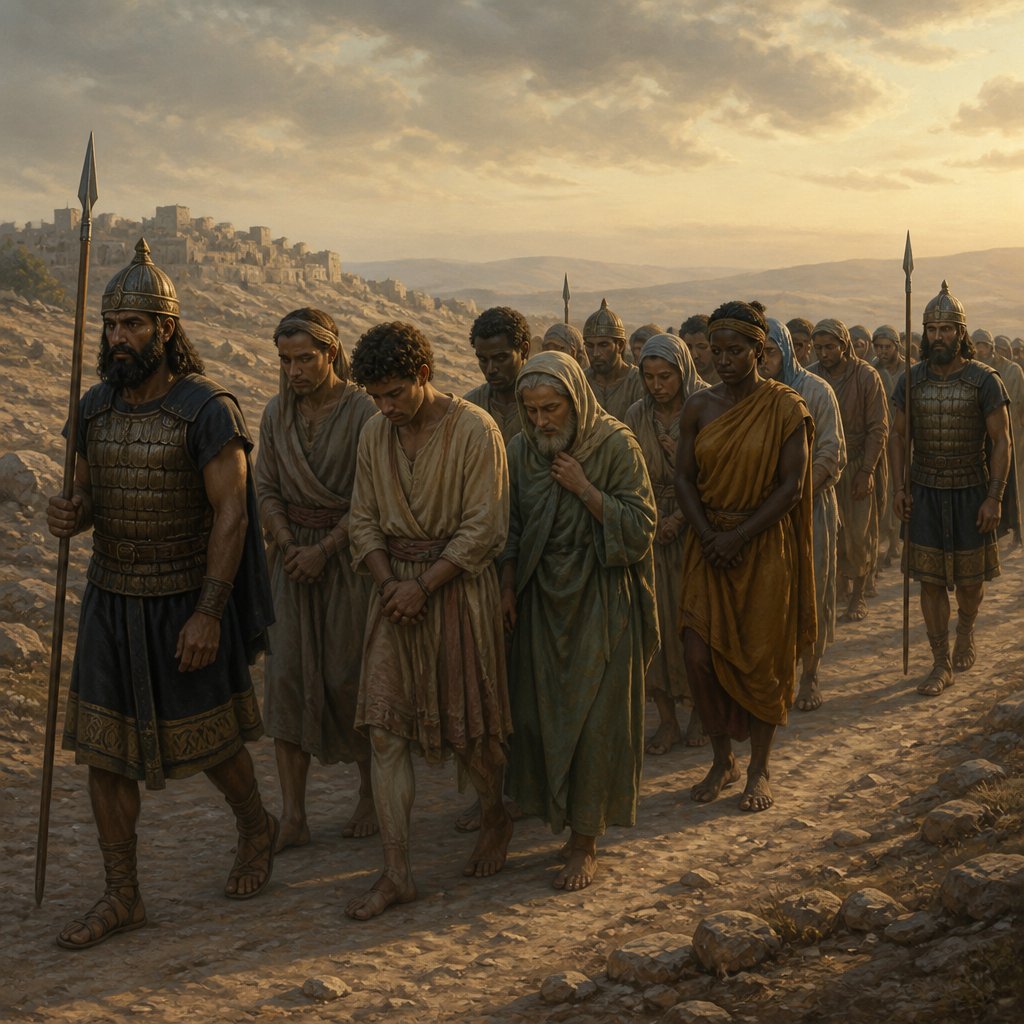
Isaiah 20:4 states, "So shall the king of Assyria lead away the Egyptians prisoners, and the Ethiopians captives, young and old, naked and barefoot, even with their buttocks uncovered, to the shame of Egypt." This verse, while stark and unsettling, provides a profound opportunity to reflect on the deeper spiritual implications of captivity, shame, and the sovereignty of God.
At first glance, this verse evokes strong imagery of defeat and humiliation. The Assyrian king's actions against the Egyptians symbolize the inevitable consequences of defiance against God. In the historical context of Isaiah's prophecy, Assyria was a formidable power, a representation of raw strength that had overthrown many nations, including Israel. However, their triumph wasn't merely a military victory; it was a divine statement about the repercussions of turning away from God’s laws and guidance. Here, we see the tragic portrayal of human rebellion against God’s purpose, manifesting in the shameful subjugation of nations.
The undignified condition of the captives—"naked and barefoot"—symbolizes more than just physical vulnerability; it signifies a profound spiritual and moral degradation. When we are led away from the protection and presence of God, we expose ourselves to vulnerabilities that leave us stripped of our dignity. Sin often leads us to a place where our failures are laid bare, and we find ourselves in a state of shame, much like the prisoners of Assyria. This can serve as a sobering reminder that our actions have consequences and that the further we stray from God, the more vulnerable we become to forces that would seek to enslave us.
Beyond the immediate implications of physical captivity, there is a deeper spiritual lesson to glean: the nature of divine justice. God’s judgment is always righteous. In this narrative, the Egyptians had placed their trust in alliances and military strength rather than in God. They had forsaken the path of righteousness, and as a result, faced the shame of their downfall. As believers, we must be vigilant against placing our trust in worldly powers, wealth, or wisdom, which can lead to our own captivity, spiritually and emotionally.
Furthermore, this verse can lead to a contemplation of our own lives. Are there areas where we feel captive? They may not be physical prisons, but rather emotional bonds or sinful habits that lead to shame. The beauty of our faith lies in the promise of redemption and restoration. Just as the Israelites were called to repentance, we are reminded that God is always ready to receive us back when we turn to Him. In our shame and vulnerability, He offers grace, forgiveness, and the opportunity for a new beginning.
In our worship and prayer, let us lay before God our own encumbrances, recognizing that there may be areas we have allowed to slip into darkness. Psalm 51:17 reminds us, "The sacrifices of God are a broken spirit: a broken and a contrite heart, O God, thou wilt not despise." In humility, we can approach our Sovereign Lord, seeking His grace to free us from the chains of shame and restore us to dignity.
Finally, it is essential to recognize that God’s sovereignty transcends our circumstances. The captivity of the Egyptians and the Ethiopians serves as a backdrop for the unfolding of God’s larger narrative for humanity. In our lives, we may face moments where we feel led captive by our trials, yet even in those seasons, we must hold firm to the truth that God is in control. His ultimate purpose—redemption through Christ—remains unshaken.
Let us pray for the wisdom to recognize our vulnerabilities, the strength to seek God’s guidance, and the courage to confront our shortcomings. In doing so, we find that shame does not have the final word; through Christ, we are restored, dignified, and set free.
Want to reflect more on Isaiah 20:4?
Continue your spiritual journey with Bible Chat — an AI-powered tool for exploring God's Word through conversation. Ask questions, discover connections, and deepen your understanding.
Get Our Apps


Isaiah 20:4 Artwork
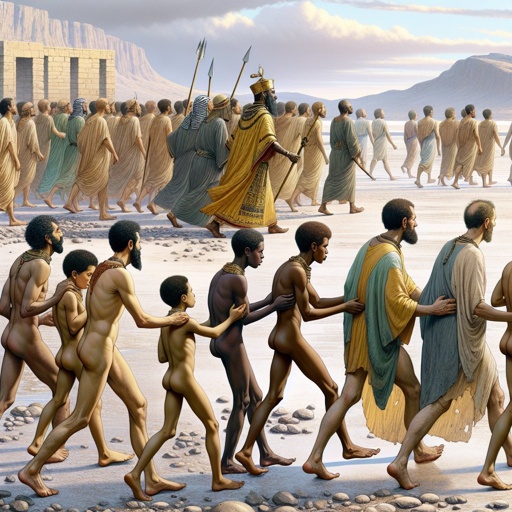
Isaiah 20:4 - "So shall the king of Assyria lead away the Egyptians prisoners, and the Ethiopians captives, young and old, naked and barefoot, even with their buttocks uncovered, to the shame of Egypt."
"So shall the king of Assyria lead away the Egyptians prisoners, and the Ethiopians captives, young and old, naked and barefoot, even with their buttocks uncovered, to the shame of Egypt." - Isaiah 20:4

2 Kings 20:4 - "And it came to pass, afore Isaiah was gone out into the middle court, that the word of the LORD came to him, saying,"

"And it came to pass, afore Isaiah was gone out into the middle court, that the word of the LORD came to him, saying," - 2 Kings 20:4

Isaiah 38:4 - "¶ Then came the word of the LORD to Isaiah, saying,"

Isaiah 3:20 - "The bonnets, and the ornaments of the legs, and the headbands, and the tablets, and the earrings,"

Isaiah 20:5 - "And they shall be afraid and ashamed of Ethiopia their expectation, and of Egypt their glory."

Isaiah 20:3 - "And the LORD said, Like as my servant Isaiah hath walked naked and barefoot three years for a sign and wonder upon Egypt and upon Ethiopia;"

Isaiah 8:20 - "To the law and to the testimony: if they speak not according to this word, it is because there is no light in them."

2 Kings 20:16 - "And Isaiah said unto Hezekiah, Hear the word of the LORD."

Isaiah 40:4

Isaiah 29:4

1 Corinthians 4:20

1 Corinthians 4:20

1 Corinthians 4:20

1 Corinthians 4:20

Isaiah 29:4

Isaiah 42:20 - "Seeing many things, but thou observest not; opening the ears, but he heareth not."

Revelation 20:4

Revelation 20:4

Revelation 20:4

Revelation 20:4

Revelation 20:4

Genesis 20-4

Jeremiah 20:4

"¶ Then came the word of the LORD to Isaiah, saying," - Isaiah 38:4

2 Kings 20:7 - "And Isaiah said, Take a lump of figs. And they took and laid it on the boil, and he recovered."

Isaiah 1:20 - "But if ye refuse and rebel, ye shall be devoured with the sword: for the mouth of the LORD hath spoken it."

Isaiah 29:20 - "For the terrible one is brought to nought, and the scorner is consumed, and all that watch for iniquity are cut off:"

Isaiah 22:20 - "¶ And it shall come to pass in that day, that I will call my servant Eliakim the son of Hilkiah:"