The Mourning of Joy: A Reflection on Isaiah 24:7
“The new wine mourneth, the vine languisheth, all the merryhearted do sigh.” — Isaiah 24:7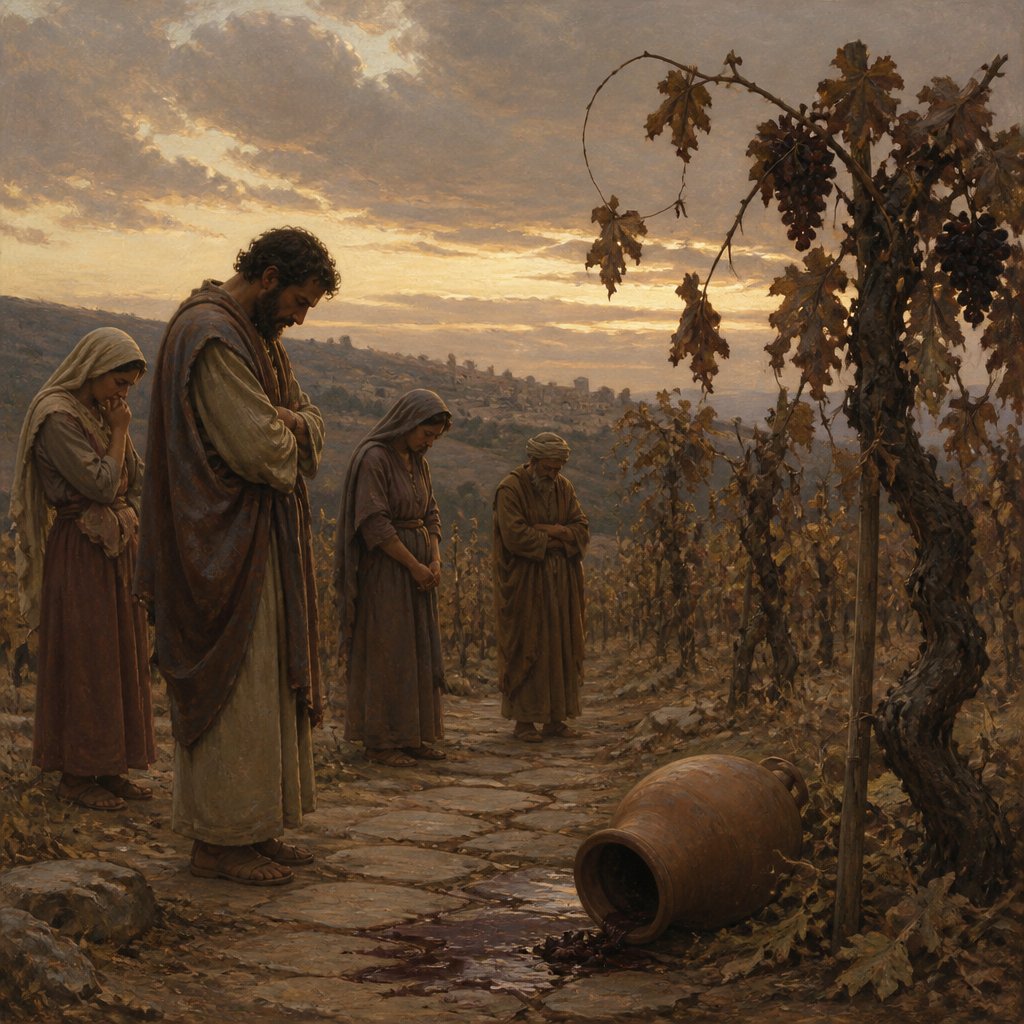
In Isaiah 24:7, we are presented with a poignant image: "The new wine mourneth, the vine languisheth, all the merryhearted do sigh." At first glance, this verse may seem to describe a moment of sorrow and despair. However, upon deeper reflection, it opens up a profound discussion on the nature of joy, the fragility of life, and the divine interconnection between creation and the Creator.
The mention of new wine traditionally symbolizes joy and celebration in biblical literature. In the cultural context of ancient Israel, wine was often associated with merriment and festivity. It marked significant moments of life—from weddings to harvest festivals. When Isaiah says, "The new wine mourneth," it symbolizes a reality that goes beyond mere physical intoxication; it speaks to a deeper spiritual barrenness. This mourning signifies a loss not only of joy but of hope and life itself.
The language of mourning paints a vivid picture of the state of God's creation in this world. When the vines languish, it is not just the physical grapes that suffer; the implications reach far, impacting communities, families, and ultimately our relationship with God. The flourishing of the vine is indicative of God’s blessing and grace, while its languishing speaks to the consequences of sin and disobedience.
Isaiah’s message here is twofold. First, it serves as a warning to the people of Israel. Their disobedience had dire consequences, resulting in a spiritual drought impacting their ability to rejoice. They had turned their hearts away from God, leading to their collective sighing and sorrow. Second, it is a reflection of our human experience. Just as the merryhearted now sigh, we too live in a time where joy seems transient, threatened by the circumstances surrounding us.
As followers of Christ, we are not exempt from the seasons of despair and sorrow. We find ourselves mourning the loss of dreams, relationships, and perhaps even our health. We witness a world that continues to groan under the weight of sin, war, and injustice, and at times, it feels as if joy is a distant memory—much like the new wine that's now desolate.
The reality of life is that we will experience seasons of both joy and mourning. The consonance between joy and sorrow in our lives reminds us that they coexist and shape our spiritual journey. In times of sorrow, it is crucial to remember that mourning is not the end. While the new wine may mourn and the merry-hearted sigh, there is an assurance that God is aware of our plight. In our mourning, He is there, waiting to comfort us, renew our spirits, and restore our joy.
The apostle Paul echoes this sentiment in 2 Corinthians 1:3-4 when he writes, "Blessed be God, even the Father of our Lord Jesus Christ, the Father of mercies, and the God of all comfort; Who comforteth us in all our tribulation." Our God is invested in our suffering; He does not abandon us during our dark nights.
In embracing this reality, we can seek to cultivate a heart of gratitude even amid our struggles. We may not always feel merry, but we can choose to lean into our faith, trusting that God is still at work in the seemingly barren places of our lives. As we emerge from such trials and find our footing again, we can appreciate the depths of joy that follow a season of mourning.
As we meditate on Isaiah 24:7, let us reflect on our lives in the present, acknowledging where we might be mourning or where joy feels distant. Let this verse lead us to prayer—finding hope and renewing our spirits in God's promise that joy comes in the morning (Psalm 30:5). When the new wine mourns, let our hearts cry out to God, knowing that He is the ultimate source of our joy, and through Him, there is always a path back to rejoicing.
Get our apps


Artwork for Isaiah 24:7

Isaiah 24:7 - "The new wine mourneth, the vine languisheth, all the merryhearted do sigh."
"The new wine mourneth, the vine languisheth, all the merryhearted do sigh." - Isaiah 24:7

Isaiah 7:24 - "With arrows and with bows shall men come thither; because all the land shall become briers and thorns."

Isaiah 24:1

Isaiah 24:1
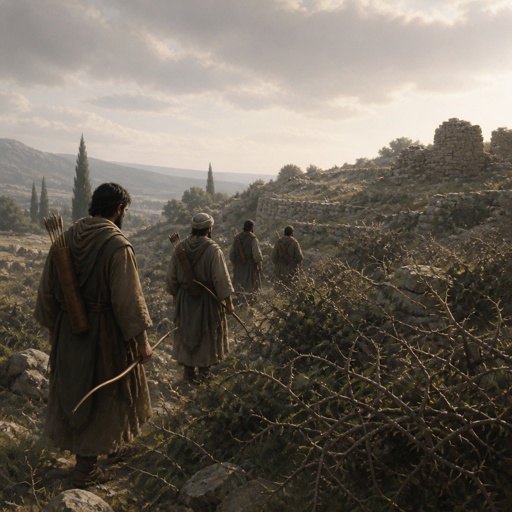
"With arrows and with bows shall men come thither; because all the land shall become briers and thorns." - Isaiah 7:24

Isaiah 24:12 - "In the city is left desolation, and the gate is smitten with destruction."

isaiah 6:7

Genesis 24-7

Isaiah 24:17 - "Fear, and the pit, and the snare, are upon thee, O inhabitant of the earth."

Isaiah 49:24 - "¶ Shall the prey be taken from the mighty, or the lawful captive delivered?"

isaiah 6:7

Isaiah 24:11 - "There is a crying for wine in the streets; all joy is darkened, the mirth of the land is gone."

Matthew 7:24-29

Matthew 7:24-29

Matthew 7:24-27

Isaiah 24:9 - "They shall not drink wine with a song; strong drink shall be bitter to them that drink it."

Isaiah 19:24 - "In that day shall Israel be the third with Egypt and with Assyria, even a blessing in the midst of the land:"

Isaiah 24:3 - "The land shall be utterly emptied, and utterly spoiled: for the LORD hath spoken this word."

Isaiah 24:19 - "The earth is utterly broken down, the earth is clean dissolved, the earth is moved exceedingly."

Isaiah 24:8 - "The mirth of tabrets ceaseth, the noise of them that rejoice endeth, the joy of the harp ceaseth."

Isaiah 41:24 - "Behold, ye are of nothing, and your work of nought: an abomination is he that chooseth you."

Isaiah 29:24 - "They also that erred in spirit shall come to understanding, and they that murmured shall learn doctrine."

Exodus 7:14-24

Psalm 24:7-11

Isaiah 7:7 - "Thus saith the Lord GOD, It shall not stand, neither shall it come to pass."

Nehemiah 7:24 - "The children of Hariph, an hundred and twelve."

Isaiah 50:7–9

Isaiah 49 1-7

Isaiah 24:10 - "The city of confusion is broken down: every house is shut up, that no man may come in."