Turning Toward the Wall: A Prayer of Distress and Hope
“Then Hezekiah turned his face toward the wall, and prayed unto the LORD, And said, Remember now, O LORD, I beseech thee, how I have walked before thee in truth and with a perfect heart, and have done that which is good in thy sight. And Hezekiah wept sore. Then came the word of the LORD to Isaiah, saying, Go, and say to Hezekiah, Thus saith the LORD, the God of David thy father, I have heard thy prayer, I have seen thy tears: behold, I will add unto thy days fifteen years.” — Isaiah 38:2-5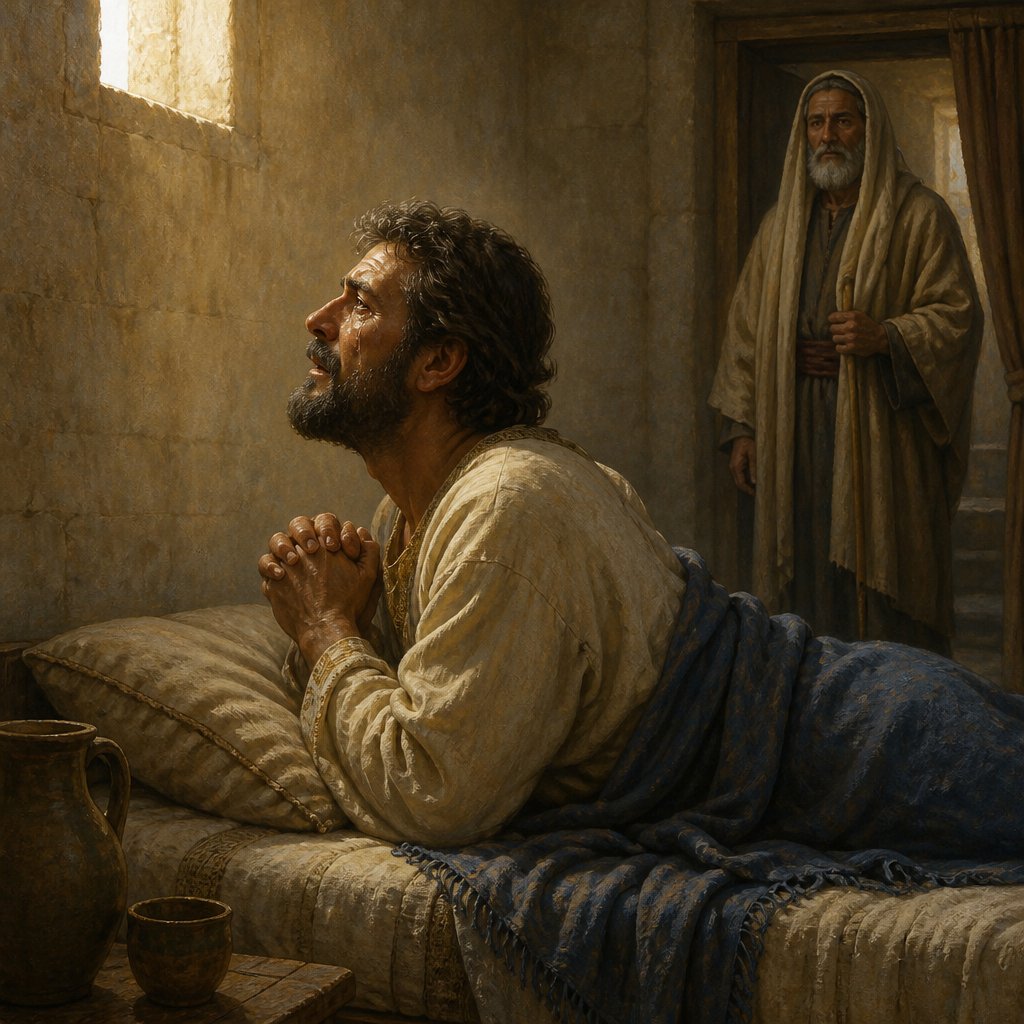
In the book of Isaiah, we encounter a poignant moment in the life of King Hezekiah, a man revered for his dedication to God and his unwavering faith. Isaiah 38:2-5 narrates a personal crisis that Hezekiah faced as he turned to the wall in desperation, praying to the Lord amidst his fears of impending death.
The narrative begins with Hezekiah’s earnest plea: "Then Hezekiah turned his face toward the wall, and prayed unto the Lord" (Isaiah 38:2). This act of turning his face toward the wall signifies a profound moment of introspection and vulnerability. It showcases the human condition in times of distress—when circumstances loom large and fill the horizon with despair, we often find solace in solitude and earnest prayer.
The wall, often a symbol of barriers or obstacles, can also represent a sacred space for reflection. Hezekiah's choice to face the wall—rather than the courtiers surrounding him—indicates a conscious decision to seek God with all his heart, free from distractions. In times of calamity, our first inclination may lead us toward worldly ways to seek solutions; however, turning toward God is the truest act of faith.
Hezekiah's prayer is a heartfelt proclamation of his life before God: "And said, Remember now, O Lord, I beseech thee, how I have walked before thee in truth and with a perfect heart, and have done that which is good in thy sight" (Isaiah 38:3). In these verses, we see the power of remembrance and testimony. Hezekiah isn't merely recounting his good deeds but rather appealing to God's sense of justice and mercy. In his moment of need, Hezekiah reminds God of his faithfulness, which is not an accusation but rather an invocation of God’s covenant promise. It begs the question, how often do we reflect on our own walk with God when faced with difficulties?
The emotion in Hezekiah's plea is palpable: "And Hezekiah wept sore" (Isaiah 38:3). His tears were not mere expressions of sorrow; they were reflections of a deeper anguish—the fear of loss, the regret of unfinished business, and the desire for more time to serve the Lord. Crying out to God in desperation is not a sign of weakness but an acknowledgment of our human frailty and our absolute dependence on divine grace. How comforting is it to know that God listens to our heartfelt cries and sees our tears?
God's response to Hezekiah is immediate and compassionate. "Then came the word of the Lord to Isaiah, saying, Go, and say to Hezekiah, Thus saith the Lord, the God of David thy father, I have heard thy prayer, I have seen thy tears: behold, I will add unto thy days fifteen years" (Isaiah 38:4-5). The assurance that the Lord hears our prayers and sees our pain brings hope in our darkest hours. God is moved by our cries and acknowledges our struggles. He does not merely respond to our needs; he exceeds our expectations. Fifteen more years of life were not given to Hezekiah based solely on his merits but through God’s grace and compassion.
As we meditate on these verses, may we be reminded of the importance of prayer in our lives. Prayer is our direct line to God, an opportunity to bring our requests, gratefulness, and fears before Him. When we face our walls—those moments of anxiety, despair, and hopelessness—let us turn toward them, just as Hezekiah did, and pray earnestly. Let us remember that while we may feel alone, God sees our struggles, hears our pleas, and has the power to intervene.
In conclusion, let us embrace the example of King Hezekiah. In moments of distress, we too can turn inward, seek God fervently, and be assured of His listening ear and loving heart. No matter how insurmountable our challenges may seem, God remains sovereign and compassionate, ready to extend His grace to those who earnestly call upon Him.
Get our apps


Artwork for Isaiah 38:2-5

Isaiah 38:2-5 - "Then Hezekiah turned his face toward the wall, and prayed unto the LORD, And said, Remember now, O LORD, I beseeek thee, how I have walked before thee in truth and with a perfect heart, and have done that which is good in thy sight. And Hezekiah wept sore. Then came the word of the LORD to Isaiah, saying, Go, and say to Hezekiah, Thus saith the LORD, the God of David thy father, I have heard thy prayer, I have seen thy tears: behold, I will add unto thy days fifteen years."
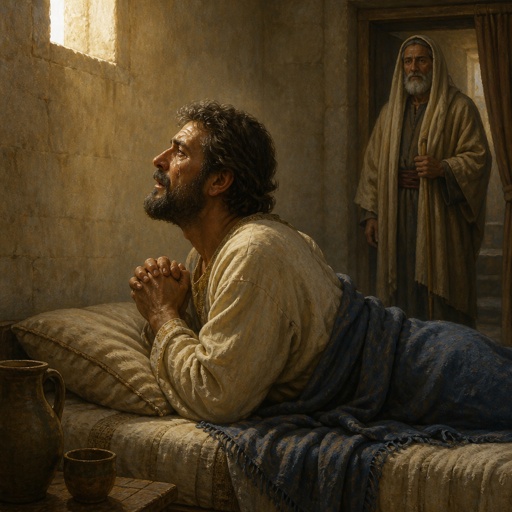
"Then Hezekiah turned his face toward the wall, and prayed unto the LORD, And said, Remember now, O LORD, I beseeek thee, how I have walked before thee in truth and with a perfect heart, and have done that which is good in thy sight. And Hezekiah wept sore. Then came the word of the LORD to Isaiah, saying, Go, and say to Hezekiah, Thus saith the LORD, the God of David thy father, I have heard thy prayer, I have seen thy tears: behold, I will add unto thy days fifteen years." - Isaiah 38:2-5

Isaiah 38:2 - "Then Hezekiah turned his face toward the wall, and prayed unto the LORD,"

"Then Hezekiah turned his face toward the wall, and prayed unto the LORD," - Isaiah 38:2

Isaiah 38:4 - "¶ Then came the word of the LORD to Isaiah, saying,"

Isaiah 38:17

Isaiah 38:5 - "Go, and say to Hezekiah, Thus saith the LORD, the God of David thy father, I have heard thy prayer, I have seen thy tears: behold, I will add unto thy days fifteen years."

"¶ Then came the word of the LORD to Isaiah, saying," - Isaiah 38:4

2 Kings 19:5 - "So the servants of king Hezekiah came to Isaiah."

Matthew 5:38

Matthew 5:38

Isaiah 38:21 - "For Isaiah had said, Let them take a lump of figs, and lay it for a plaister upon the boil, and he shall recover."

Isaiah 2:5 - "O house of Jacob, come ye, and let us walk in the light of the LORD."

Isaiah 38:6 - "And I will deliver thee and this city out of the hand of the king of Assyria: and I will defend this city."

Isaiah 38:9 - "¶ The writing of Hezekiah king of Judah, when he had been sick, and was recovered of his sickness:"

Isaiah 38:22 - "Hezekiah also had said, What is the sign that I shall go up to the house of the LORD?"

Isaiah 38:7 - "And this shall be a sign unto thee from the LORD, that the LORD will do this thing that he hath spoken;"

Psalms 38:5 - "My wounds stink and are corrupt because of my foolishness."

Ezekiel 38:5 - "Persia, Ethiopia, and Libya with them; all of them with shield and helmet:"

Luke 5:38 - "But new wine must be put into new bottles; and both are preserved."

Isaiah 38:18 - "For the grave cannot praise thee, death can not celebrate thee: they that go down into the pit cannot hope for thy truth."

Acts 2:38

Acts 2:38

Acts 2:38

Acts 2:38

Acts 2:38

Acts 2:38

Acts 2:38

Acts 2:38

Acts 2:38