The Weight of Justice: A Call to Compassion
“What mean ye that ye beat my people to pieces, and grind the faces of the poor? saith the Lord GOD of hosts.” — Isaiah 3:15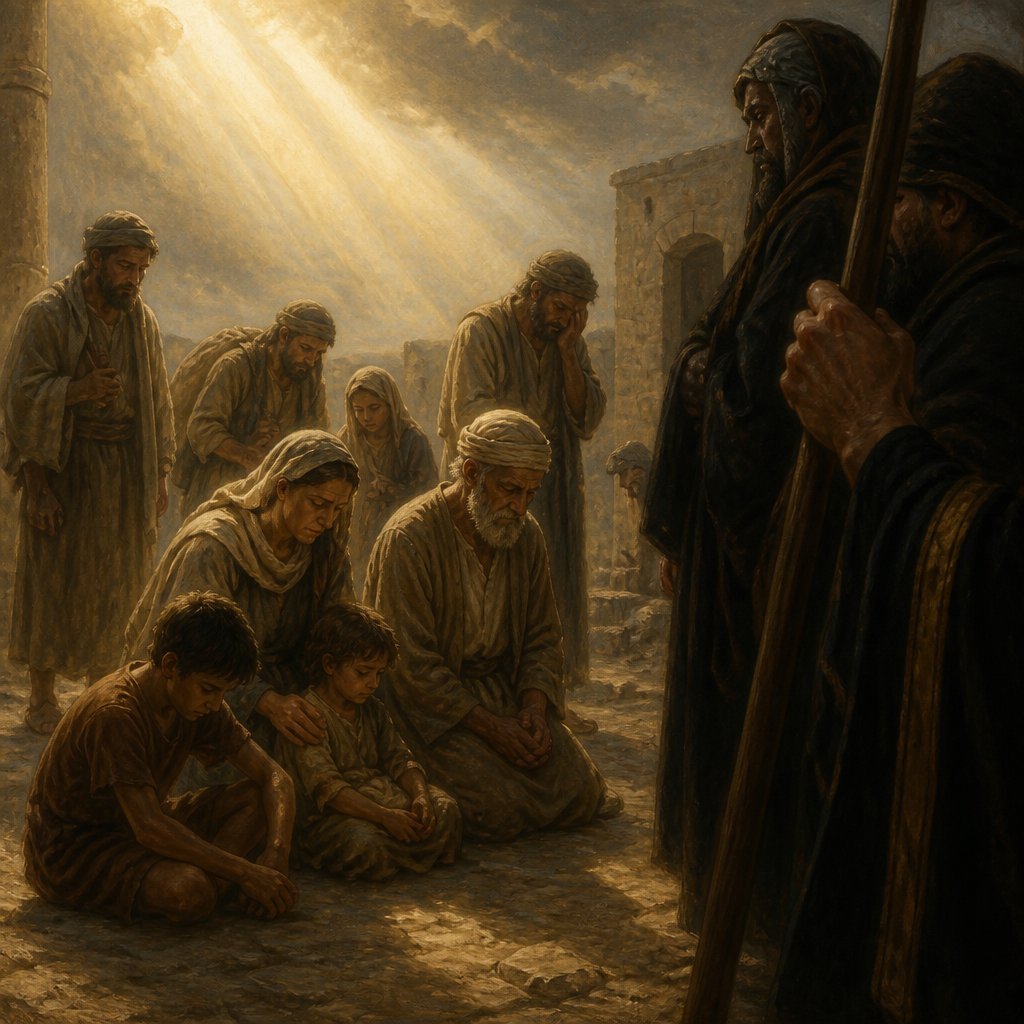
In the book of Isaiah, chapter 3, verse 15, we encounter a piercing question from God that rings through the ages: "What mean ye that ye beat my people to pieces, and grind the faces of the poor? saith the Lord GOD of hosts." This verse strikes at the very core of human morality and justice, imploring us to examine our treatment of others, especially those who are marginalized and oppressed.
Isaiah’s prophetic voice emerges during a time of societal decay in ancient Israel, where injustice and exploitation are rampant. Leaders and those in power are depicted as oppressive, using their positions to crush the weak and vulnerable. This behavior was not merely an issue of social inequity; it represented a fundamental rebellion against God’s heart. In the context of this passage, God is not just lamenting what is happening among the people; He is directly addressing those responsible for such actions.
Let’s first unpack the imagery found within the verse. To "beat my people to pieces" conveys a brutality that is shocking. It evokes images of violent oppression, where the strong crush the weak underfoot. ‘Grinding the faces of the poor’ further illustrates a lack of compassion and respect for human dignity. Throughout scripture, God consistently emphasizes His deep concern for the poor and the oppressed. This imagery reinforces the gravity of our actions, serving as a stark reminder that how we treat others—especially those less fortunate—matters profoundly to God.
As we reflect on this verse today, we must ask ourselves: Are we a voice for the voiceless? Are we standing up against injustice in our own communities? A heart that embraces Christ is one that cannot tolerate injustice. To live as Christ did is to embody His compassion and empathy, taking action when we see the vulnerable being oppressed. This can be demonstrated through various means: volunteering, advocating for those in need, or simply providing a listening ear and a helping hand.
Moreover, the message from Isaiah calls to mind the social structures in our own society that perpetuate inequality. Though the context may differ, the principles remain the same. We exist in systems where the poor are often overlooked, marginalized, or treated as mere statistics. Whether it’s in the realm of economic disparity, racial inequality, or social injustices, God’s heart still grieves when His people suffer unjustly. As believers, we are called to reflect His heart by championing justice and equity.
The words of the Lord in this passage remind us that He is fully aware of our actions and their consequences. God, identified here as the "GOD of hosts," signifies His authority over all creation, reinforcing that injustice against His people will not go unnoticed. There are severe implications for those who misuse power for selfish gain or who contribute to systems of oppression. The Lord’s anger toward the injustices faced by the poor underscores that our complacency in witnessing wrongdoing is, in fact, complicit. For every time we turn a blind eye to poverty or abuse, we are participating in the cycle that God vehemently opposes.
Therefore, in our daily lives, how do we operationalize the truth of Isaiah 3:15? We should challenge ourselves to cultivate a heart of justice. This may involve advocating for policies that aid the impoverished, educating ourselves about social justice issues, and engaging in active service. Every small step toward compassion and justice matters in the greater scheme of the Kingdom of God.
As we close, let us earnestly pray for a spirit that embodies God’s love and justice. May we respond to His question with action; may our hearts break for what breaks His. Let us not only refrain from physical violence but also join the fight against societal and systemic injustices. In doing so, we fulfill our calling as children of God, reflecting His nature and loving those who need it most. Each act of kindness done in faith echoes in eternity, and our commitment to justice reflects the heart of our Creator.
Get our apps


Artwork for Isaiah 3:15
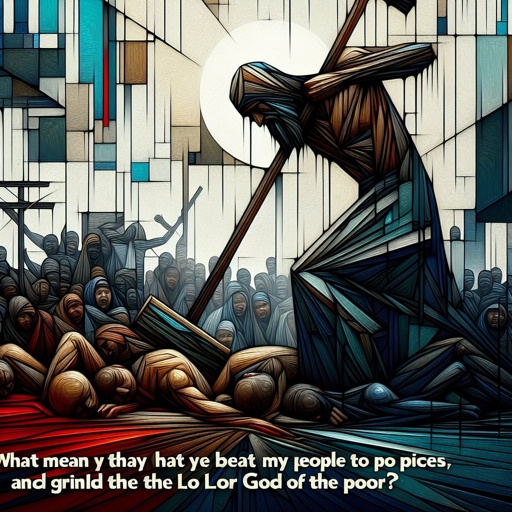
Isaiah 3:15 - "What mean ye that ye beat my people to pieces, and grind the faces of the poor? saith the Lord GOD of hosts."
"What mean ye that ye beat my people to pieces, and grind the faces of the poor? saith the Lord GOD of hosts." - Isaiah 3:15

Isaiah 15:3 - "In their streets they shall gird themselves with sackcloth: on the tops of their houses, and in their streets, every one shall howl, weeping abundantly."
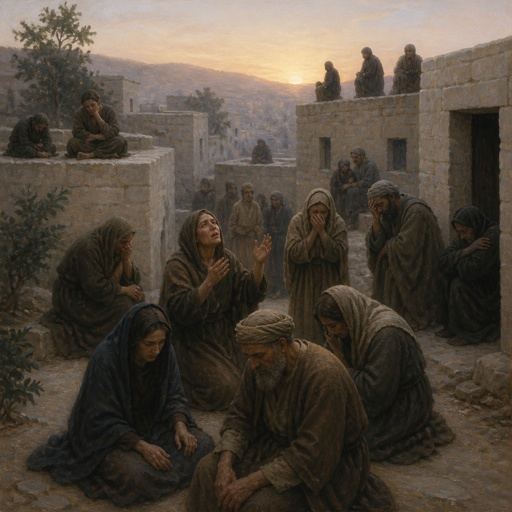
"In their streets they shall gird themselves with sackcloth: on the tops of their houses, and in their streets, every one shall howl, weeping abundantly." - Isaiah 15:3

Isaiah 3:14-15 - "The LORD enters into judgment against the elders and leaders of his people: "It is you who have ruined my vineyard; the plunder from the poor is in your houses. What do you mean by crushing my people and grinding the faces of the poor?" declares the Lord, the LORD Almighty."

Isaiah 37:15 - "And Hezekiah prayed unto the LORD, saying,"

Isaiah 12:3
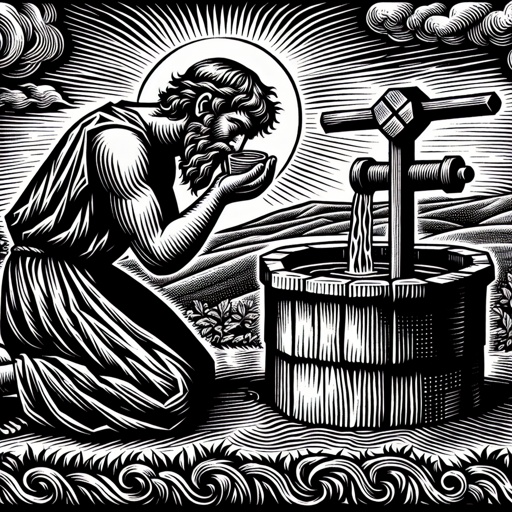
Isaiah 12:3

Isaiah 12:3

Isaiah 12:3

Isaiah 12:3

Isaiah 12:3

Isaiah 12:3

Isaiah 12:3

Isaiah 12:3

isaiah 44:3

Isaiah 12:3

Isaiah 12:3

Isaiah 12:3

Isaiah 12:3

Isaiah 12:3

Isaiah 12:3

Isaiah 26:3

Isaiah 12:3

Isaiah 12:3

Isaiah 12:3

Isaiah 12:3

Isaiah 12:3
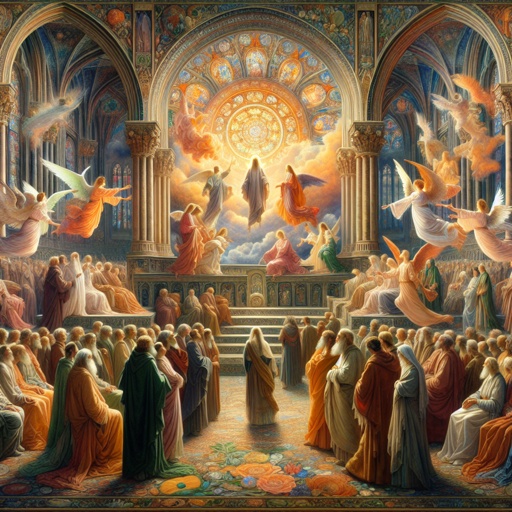
Isaiah 12:3

Isaiah 12:3