From Darkness to Light: A Journey Through Adversity
“Nevertheless the dimness shall not be such as was in her vexation, when at the first he lightly afflicted the land of Zebulun and the land of Naphtali, and afterward did more grievously afflict her by the way of the sea, beyond Jordan, in Galilee of the nations.” — Isaiah 9:1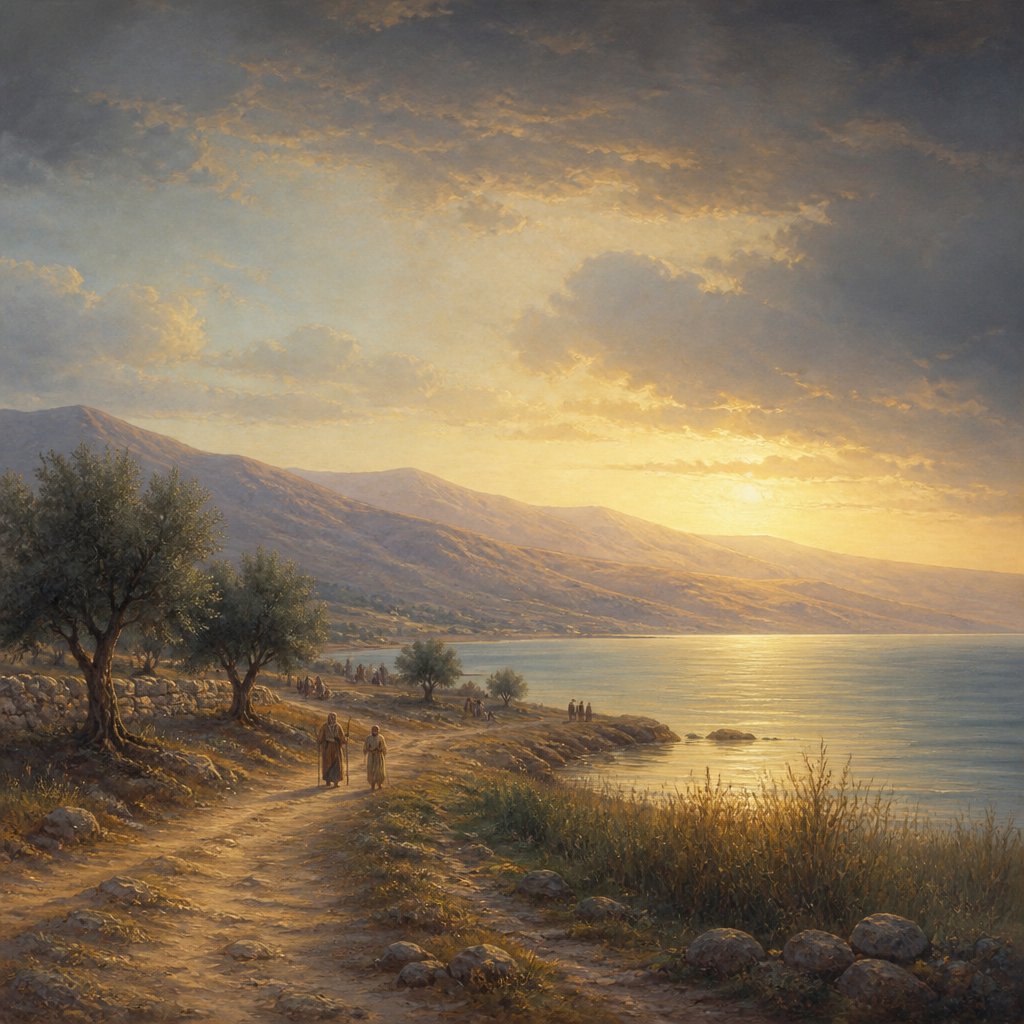
In Isaiah 9:1, we encounter a profound declaration of hope amidst the shadows of despair: "Nevertheless the dimness shall not be such as was in her vexation, when at the first he lightly afflicted the land of Zebulun and the land of Naphtali, and afterward did more grievously afflict her by the way of the sea, beyond Jordan, in Galilee of the nations." This verse, while reflecting a somber reality, conveys a promise of redemption that is foundational to our faith as we navigate our own journeys through suffering and uncertainty.
The context of this passage speaks to a historical moment for the lands of Zebulun and Naphtali, regions that were among the first to suffer under Assyrian invasion. Their plight is not merely a geographical concern, but a vivid metaphor for the struggles we may encounter in our spiritual lives. The word "dimness" evokes the feelings of confusion, despair, and hopelessness that often accompany trials and tribulations. Yet, as we dig deeper, we find a thread of hope woven into the fabric of this lamentation.
Isaiah begins with the word "Nevertheless," signaling a pivotal turning point. While the affliction and darkness were real—painfully tangible—the promise that follows emphasizes that the dimness shall not be as great as the past. This serves as a reminder that, although we may experience suffering, it is not the final word. God is not indifferent to our trials. Instead, He is fully aware of them and has a plan for deliverance. The land of Zebulun and Naphtali, once grievously afflicted, would later witness the dawning of a new light. This light would be none other than Jesus Christ, who walked through these lands, bringing healing and hope to those who dwelt in darkness.
As followers of Christ, we likewise face our own periods of vexation. Life's storms can rage around us, leaving us feeling as if we are enveloped in a cloud of darkness. The trials can seem overwhelming, and we may even question God's presence in our lives. Yet, Isaiah's words remind us not to lose heart; for God is in the business of transforming pain into purpose. The afflictions we face, while severe, may very well be the crucible through which God prepares us for His greater plans.
When we reflect upon our own challenging moments, we might feel like we are also straddling that line between the dimness and the light. Perhaps we have felt 'lightly afflicted' at one point, only to be overwhelmed later 'more grievously.' These stages of suffering remind us of our humanity and our need for divine intervention. This is a vital moment of introspection—how often do we look back on our struggles and see the growth they have produced? How often do we find ourselves closer to God in our darkest times?
As we continue to meditate on Isaiah 9:1, we are led to recognize that it’s through our trials that the faithfulness of God can be more clearly observed. When darkness surrounds us, God's light can shine even brighter. The 'Galilee of the nations' denotes a place often seen as lowly, yet it became a significant focal point in the life of Christ. Likewise, our own lowly situations can serve as platforms for God's glory to be revealed.
Let us, therefore, embrace the process of transformation linked to our afflictions. Embrace the promise that the dimness we experience is not the entirety of our story; it is merely a chapter. God has infused our struggles with the potential for joy, restoration, and a deeper understanding of His grace. In this transformational journey, may we remain steadfast in our walk, ever hopeful for the light that will break through the darkness, as surely as the dawn follows the night.
Get our apps


Artwork for Isaiah 9:1

Isaiah 9:1-4

Isaiah 9:1 - "Nevertheless the dimness shall not be such as was in her vexation, when at the first he lightly afflicted the land of Zebulun and the land of Naphtali, and afterward did more grievously afflict her by the way of the sea, beyond Jordan, in Galilee of the nations."
"Nevertheless the dimness shall not be such as was in her vexation, when at the first he lightly afflicted the land of Zebulun and the land of Naphtali, and afterward did more grievously afflict her by the way of the sea, beyond Jordan, in Galilee of the nations." - Isaiah 9:1

Isaiah 11:1-9

Isaiah 11:1-9

Isaiah 11:1-9

Isaiah 9:6

Isaiah 9:6

Isaiah 9:6

Isaiah 9:6

Isaiah 1:9 - "Except the LORD of hosts had left unto us a very small remnant, we should have been as Sodom, and we should have been like unto Gomorrah."

Isaiah 50:7–9

Isaiah 9:9 - "And all the people shall know, even Ephraim and the inhabitant of Samaria, that say in the pride and stoutness of heart,"

Isaiah 10:9 - "Is not Calno as Carchemish? is not Hamath as Arpad? is not Samaria as Damascus?"

Isaiah 30:9 - "That this is a rebellious people, lying children, children that will not hear the law of the LORD:"

Isaiah 9:16 - "For the leaders of this people cause them to err; and they that are led of them are destroyed."

Isaiah 19:9 - "Moreover they that work in fine flax, and they that weave networks, shall be confounded."

Isaiah 9:8 - "¶ The Lord sent a word into Jacob, and it hath lighted upon Israel."

Isaiah 9:15 - "The ancient and honourable, he is the head; and the prophet that teacheth lies, he is the tail."

Isaiah 24:9 - "They shall not drink wine with a song; strong drink shall be bitter to them that drink it."

Isaiah 56:9 - "¶ All ye beasts of the field, come to devour, yea, all ye beasts in the forest."

Isaiah 9:13 - "¶ For the people turneth not unto him that smiteth them, neither do they seek the LORD of hosts."

Isaiah 2:9 - "And the mean man boweth down, and the great man humbleth himself: therefore forgive them not."

Isaiah 2:1 - "The word that Isaiah the son of Amoz saw concerning Judah and Jerusalem."

Isaiah 1:1 - "The vision of Isaiah the son of Amoz, which he saw concerning Judah and Jerusalem in the days of Uzziah, Jotham, Ahaz, and Hezekiah, kings of Judah."

Isaiah 9:14 - "Therefore the LORD will cut off from Israel head and tail, branch and rush, in one day."

Isaiah 38:9 - "¶ The writing of Hezekiah king of Judah, when he had been sick, and was recovered of his sickness:"

Isaiah 29:9 - "¶ Stay yourselves, and wonder; cry ye out, and cry: they are drunken, but not with wine; they stagger, but not with strong drink."

Isaiah 9:5 - "For every battle of the warrior is with confused noise, and garments rolled in blood; but this shall be with burning and fuel of fire."

Isaiah 13:1 - "The burden of Babylon, which Isaiah the son of Amoz did see."