Sowing Seeds of Peace: The Fruit of Righteousness
“And the fruit of righteousness is sown in peace of them that make peace.” — James 3:18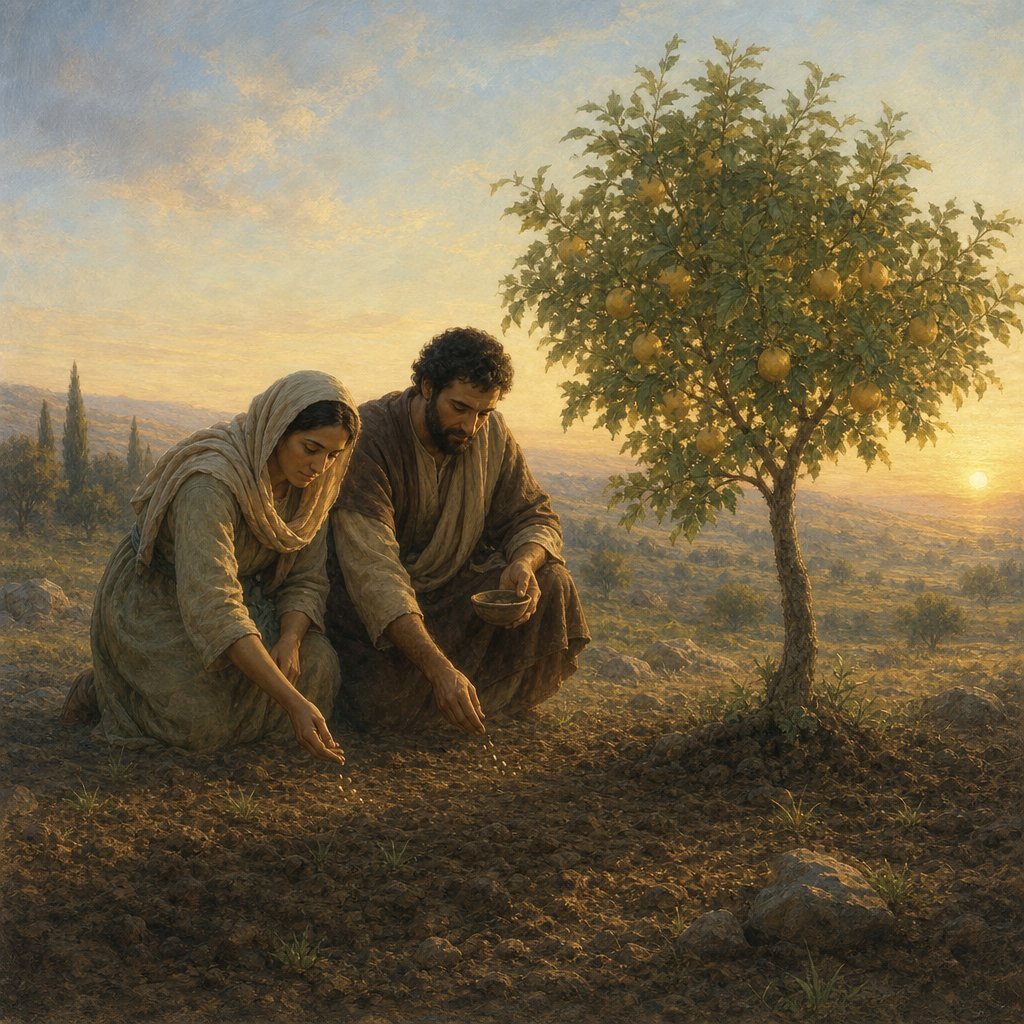
James 3:18 tells us, "And the fruit of righteousness is sown in peace of them that make peace." This verse invites us to reflect on the nature of righteousness and peace, two concepts deeply intertwined in the fabric of our lives as believers. The passage speaks of a profound truth: that righteousness, the quality of being morally right or justifiable, is a harvest that springs from the soil of peace, cultivated by peacemakers.
To understand the richness of this verse, we must first examine the term "fruit of righteousness." In biblical theology, fruit often symbolizes the visible expression of one’s faith. It signifies actions, behaviors, and outcomes that align with God’s will. The prospect of reaping righteousness is not merely about personal piety; it represents the active influence we can have on the world around us, a ripple effect stemming from our relationship with God. The fruits of righteousness can be seen through acts of kindness, justice, and love—elements that reflect the heart of Christ.
Yet, James emphasizes that this fruit is "sown in peace." This notion suggests that peace is not a passive state but an active endeavor. It is a daily choice we make, influenced not only by our internal circumstances but also by our interpersonal relationships. The peace referred to here is not a soothing absence of conflict but an active pursuit of reconciliation, understanding, and harmony among individuals. Jesus, the Prince of Peace, modeled this beautifully during His ministry, reaching out to the marginalized and breaking down barriers that divided people.
As followers of Christ, we are called to be those who "make peace." This means taking the initiative to foster an environment where love and understanding reign. Matthew 5:9 reminds us that "Blessed are the peacemakers: for they shall be called the children of God." Herein lies our identity as believers; we are to embody the character of our Heavenly Father by actively promoting peace. This can manifest in our families, workplaces, and communities. Small acts of peacemaking can yield significant impacts—offering forgiveness, listening actively, or standing against injustice all contribute to sowing peace.
The connection between righteousness and peace has dire implications for how we engage with the world. In times of turmoil—whether in our personal lives or in a broader societal context—we are challenged to respond not with retaliation or bitterness, but with the grace of peacemaking. When we choose to remain silent in conflict, it often leads to misunderstanding and division. Conversely, when we step forward with a desire for peace, we nourish the ground in which righteousness can take root.
Reflecting further, we might ask ourselves: Are we truly sowing peace in our environments? Are we fostering relationships that promote understanding rather than discord? It can be tempting to approach disputes with an attitude that seeks to win an argument rather than cultivating an atmosphere conducive to resolution. However, true wisdom—the type that James speaks of earlier in his letter—"is first pure, then peaceable," (James 3:17 KJV) challenging us to focus not just on being right, but on being righteous.
Our world is desperately in need of peacemakers—individuals who will stand up for what is right while embracing others with love. As we endeavor to sow peace, let us remember that the fruit of righteousness will not only be evident in our lives, but will also inspire those around us to seek peace, ultimately reflecting the goodness of God.
As we conclude this reflection, let us pray to be diligent sowers of peace, ready to nurture the seeds of righteousness in our hearts and community. May our actions, deeply rooted in God's love, bring forth a harvest that glorifies Him in our world.
Get our apps


Artwork for James 3:18

James 3:18 - "And the fruit of righteousness is sown in peace of them that make peace."
"And the fruit of righteousness is sown in peace of them that make peace." - James 3:18

Mark 3:18 - "And Andrew, and Philip, and Bartholomew, and Matthew, and Thomas, and James the son of Alphaeus, and Thaddaeus, and Simon the Canaanite,"

Mark 3:18 - "And Andrew, and Philip, and Bartholomew, and Matthew, and Thomas, and James the son of Alphaeus, and Thaddaeus, and Simon the Canaanite,"

Mark 3:18 - "And Andrew, and Philip, and Bartholomew, and Matthew, and Thomas, and James the son of Alphaeus, and Thaddaeus, and Simon the Canaanite,"

Mark 3:18 - "And Andrew, and Philip, and Bartholomew, and Matthew, and Thomas, and James the son of Alphaeus, and Thaddaeus, and Simon the Canaanite,"

"And Andrew, and Philip, and Bartholomew, and Matthew, and Thomas, and James the son of Alphaeus, and Thaddaeus, and Simon the Canaanite," - Mark 3:18

Mark 3:17 - "And James the son of Zebedee, and John the brother of James; and he surnamed them Boanerges, which is, The sons of thunder:"

James 5:18 - "And he prayed again, and the heaven gave rain, and the earth brought forth her fruit."

Acts 21:18 - "And the day following Paul went in with us unto James; and all the elders were present."

James 1:3 - "Knowing this, that the trying of your faith worketh patience."

James 3:15 - "This wisdom descendeth not from above, but is earthly, sensual, devilish."

James 3:16 - "For where envying and strife is, there is confusion and every evil work."

James 3:3 - "Behold, we put bits in the horses' mouths, that they may obey us; and we turn about their whole body."

James 1:18 - "Of his own will begat he us with the word of truth, that we should be a kind of firstfruits of his creatures."

James 3:11 - "Doth a fountain send forth at the same place sweet water and bitter?"

James 3:8 - "But the tongue can no man tame; it is an unruly evil, full of deadly poison."

James 3:1 - "My brethren, be not many masters, knowing that we shall receive the greater condemnation."

James 3:14 - "But if ye have bitter envying and strife in your hearts, glory not, and lie not against the truth."

James 3:10 - "Out of the same mouth proceedeth blessing and cursing. My brethren, these things ought not so to be."

James 1:18 that we might be a kind of firstfruits of all he created. no words

"And James the son of Zebedee, and John the brother of James; and he surnamed them Boanerges, which is, The sons of thunder:" - Mark 3:17

James 1:18 that we might be a kind of firstfruits of all he created. no words

James 1:18 that we might be a kind of firstfruits of all he created. no words

James 1:18 that we might be a kind of firstfruits of all he created. no words

James 1:18 that we might be a kind of firstfruits of all he created. no words

Matthew 10:3 - "Philip, and Bartholomew; Thomas, and Matthew the publican; James the son of Alphaeus, and Lebbaeus, whose surname was Thaddaeus;"

James 3:7 - "For every kind of beasts, and of birds, and of serpents, and of things in the sea, is tamed, and hath been tamed of mankind:"

James 4:3 KJVA (3) Ye ask, and receive not, because ye ask amiss, that ye may consume it upon your lusts.

Acts 21:18 On the following day Paul went in with us to James, and all the elders were present.