The Paradox of Sowing and Reaping: A Reflection on Jeremiah 12:13
"They have sown wheat, but shall reap thorns: they have put themselves to pain, but shall not profit: and they shall be ashamed of your revenues because of the fierce anger of the LORD." - Jeremiah 12:13
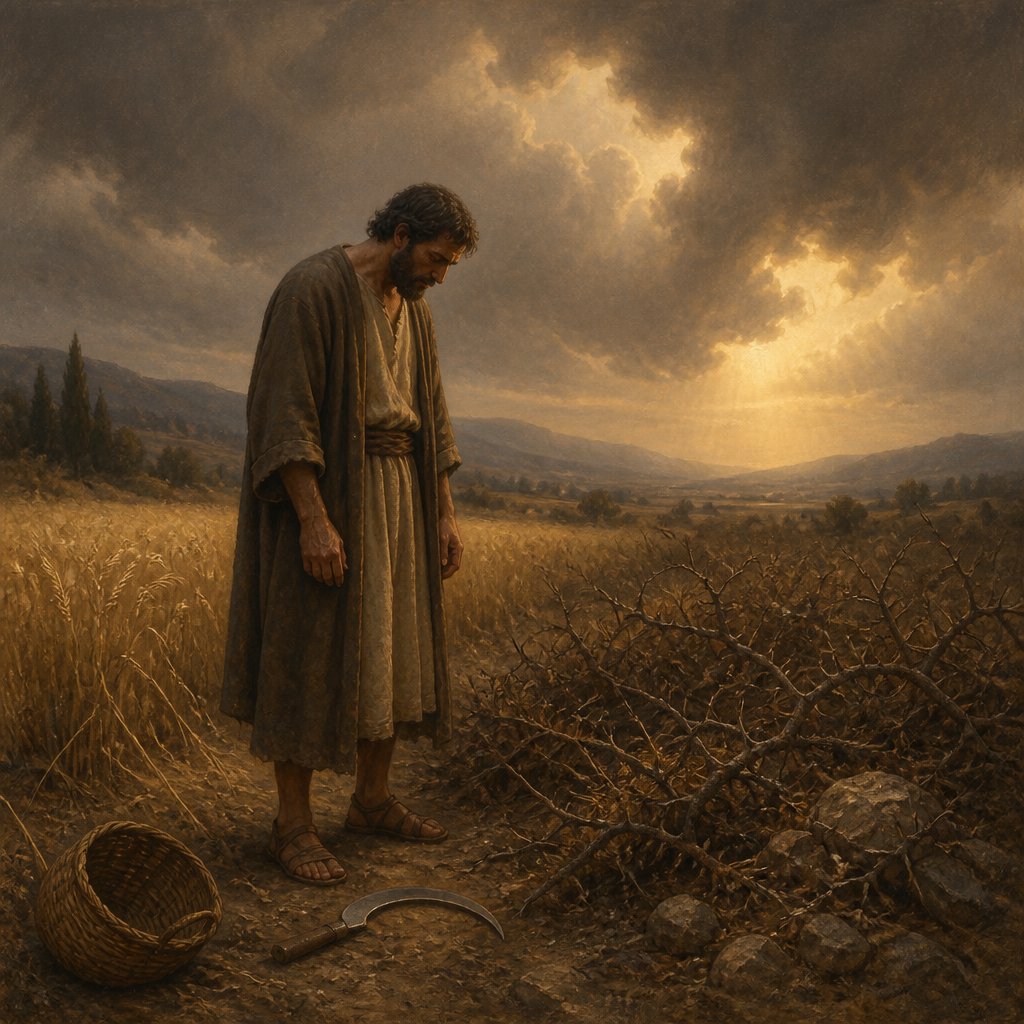
In Jeremiah 12:13, we read, "They have sown wheat, but shall reap thorns: they have put themselves to pain, but shall not profit: and they shall be ashamed of your revenues because of the fierce anger of the LORD." This verse contains deep truths that resonate not just in the context of God’s message to Israel, but also within our personal spiritual journeys today.
### Understanding the Context
Jeremiah was the prophet chosen to speak to a rebellious nation. The people of Israel had turned away from God, pursuing idolatry and immoral practices. The agricultural metaphor used here is striking and poignant. Essentially, the Prophet Jeremiah conveys a stark warning: What seems like a normal act of sowing (in this case, wheat) will yield a harvest of thorns instead of bounteous grain. This reversal of expectation serves as both a prophecy and a lesson – a clear indication that the actions of the people are disconnected from the blessings they seek.
The agrarian society in ancient Israel understood the importance of planting seeds that would yield food for sustenance. To sow wheat was to take a step of faith that reaping a good harvest would follow. However, Jeremiah’s words highlight a religious and moral decay; the people had not only misplaced their faith in God but also in their actions. They worked hard, sowed with expectation, yet their harvest was filled with disappointment, regret, and shame.
### The Spiritual Lesson of the Harvest
While the verse draws attention to Israel's condition, it resonates profoundly in today's world where we often find ourselves reaping thorns from our own sowings. What does this mean for us as modern believers?
Sometimes in life, we find ourselves investing time, energy, and resources into pursuits that seem promising but lead us to thorns. As we navigate through our careers, relationships, or ambitions, we may sow seeds of resentment, bitterness, or pride, only to reap a harvest of sorrow and discontent. Like the Israelites, we too can become frustrated when the fruits of our labor do not yield the blessings we expected. We may feel as though our hard work has been in vain, leading us to question God’s goodness and even our worth.
### The Danger of Disconnecting from God
Jeremiah's warning points specifically to the fierce anger of the Lord as a consequence of disconnected sowing. When we live outside the framework of God’s design, we are susceptible to ruin. Prosperity, good health, peace, and joy are not merely products of diligence; they require alignment with God's will. This suggests that our sincerity and good intentions, if detached from God, can lead us down a path to despair. Like the thorns, our sinful habits can choke the joy from our lives and bring about feelings of shame.
### Call to Renewed Sowing
What, then, is the solution? The key is to be mindful of what we are sowing into our lives and into the lives of others. We are called to sow "in the Spirit" (Galatians 6:8) rather than in the flesh. This begins with prayer, the reading of Scripture, and fellowship with believers. When we sow seeds of faith, hope, and love, rooted in God’s truth, we will surely reap a bountiful harvest—but this takes a conscious commitment.
Each morning offers us a new opportunity to examine our hearts: Are we investing in activities and relationships that honor God? Are we seeking first His kingdom and His righteousness in all that we do? When we properly align our sowing with God’s will, we can escape the sting of thorns and truly experience the fullness of His blessings.
### Conclusion
In conclusion, let Jeremiah 12:13 serve as not just a somber reminder, but as an encouragement for self-examination and redirection. No matter where we find ourselves today, we can choose to turn back, to repent from the thorns of our past choices, and to commit to sowing in God's fertile ground. Let us strive to sow wheat—seeds of righteousness, love, and faith—confident in the promise that a glorious harvest awaits those who trust in the Lord.
Want to reflect more on Jeremiah 12:13?
Continue your spiritual journey with Bible Chat — an AI-powered tool for exploring God's Word through conversation. Ask questions, discover connections, and deepen your understanding.
Get Our Apps


Jeremiah 12:13 Artwork
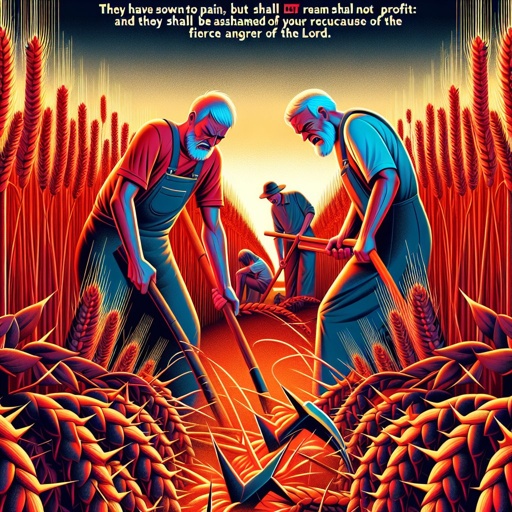
Jeremiah 12:13 - "They have sown wheat, but shall reap thorns: they have put themselves to pain, but shall not profit: and they shall be ashamed of your revenues because of the fierce anger of the LORD."
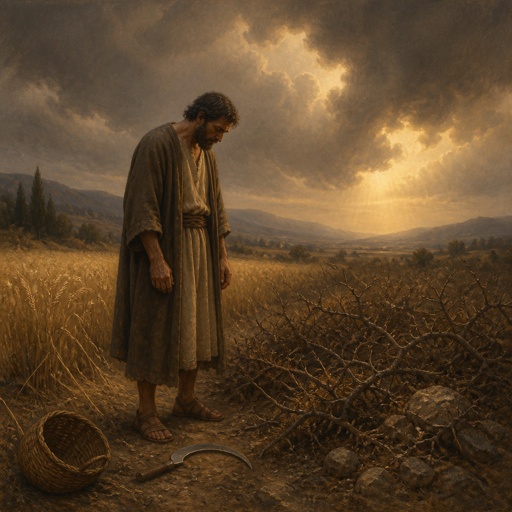
"They have sown wheat, but shall reap thorns: they have put themselves to pain, but shall not profit: and they shall be ashamed of your revenues because of the fierce anger of the LORD." - Jeremiah 12:13

1 Chronicles 12:13 - "Jeremiah the tenth, Machbanai the eleventh."

"Jeremiah the tenth, Machbanai the eleventh." - 1 Chronicles 12:13

Jeremiah 29:12-13 - "Then you will call on me and come and pray to me, and I will listen to you. You will seek me and find me when you seek me with all your heart."

Jeremiah 35:12 - "¶ Then came the word of the LORD unto Jeremiah, saying,"

Jeremiah 13:12 - "¶ Therefore thou shalt speak unto them this word; Thus saith the LORD God of Israel, Every bottle shall be filled with wine: and they shall say unto thee, Do we not certainly know that every bottle shall be filled with wine?"

Jeremiah 38:13 - "So they drew up Jeremiah with cords, and took him up out of the dungeon: and Jeremiah remained in the court of the prison."

Jeremiah 29:11-13

Jeremiah 29:11-13

Jeremiah 29:11-13

Jeremiah 29:11-13

Jeremiah 30:12 "For thus says the Lord: 'Your affliction is incurable, Your wound is severe. 13 There is no one to plead your cause, That you may be bound up; You have no healing medicines.

Jeremiah 34:12 - "¶ Therefore the word of the LORD came to Jeremiah from the LORD, saying,"

Jeremiah 13:23

Jeremiah 13:12 "Therefore you shall speak to them this word: 'Thus says the Lord God of Israel: "Every bottle shall be filled with wine." ' And they will say to you, 'Do we not certainly know that every bottle will be filled with wine?'

Jeremiah 28:12 - "Then the word of the LORD came unto Jeremiah the prophet, after that Hananiah the prophet had broken the yoke from off the neck of the prophet Jeremiah, saying,"

Nehemiah 12:12 - "And in the days of Joiakim were priests, the chief of the fathers: of Seraiah, Meraiah; of Jeremiah, Hananiah;"

Jeremiah 38:1–13

Jeremiah 37:12 - "Then Jeremiah went forth out of Jerusalem to go into the land of Benjamin, to separate himself thence in the midst of the people."

Jeremiah 46:13 - "¶ The word that the LORD spake to Jeremiah the prophet, how Nebuchadrezzar king of Babylon should come and smite the land of Egypt."

Jeremiah 38:12 - "And Ebed-melech the Ethiopian said unto Jeremiah, Put now these old cast clouts and rotten rags under thine armholes under the cords. And Jeremiah did so."

1 Corinthians 12:12-13

Jeremiah 10:12-13 - "But God made the earth by his power; he founded the world by his wisdom and stretched out the heavens by his understanding. When he thunders, the waters in the heavens roar; he makes clouds rise from the ends of the earth. He sends lightning with the rain and brings out the wind from his storehouses."

Nehemiah 12:34 - "Judah, and Benjamin, and Shemaiah, and Jeremiah,"

"¶ Then came the word of the LORD unto Jeremiah, saying," - Jeremiah 35:12

1 Chronicles 12:10 - "Mishmannah the fourth, Jeremiah the fifth,"

Jeremiah 32:13 - "¶ And I charged Baruch before them, saying,"

Jeremiah 13:8 - "Then the word of the LORD came unto me, saying,"

Jeremiah 15:12 - "Shall iron break the northern iron and the steel?"