Hidden Lessons: The Marred Girdle of Jeremiah
"Then I went to Euphrates, and digged, and took the girdle from the place where I had hid it: and, behold, the girdle was marred, it was profitable for nothing." - Jeremiah 13:7
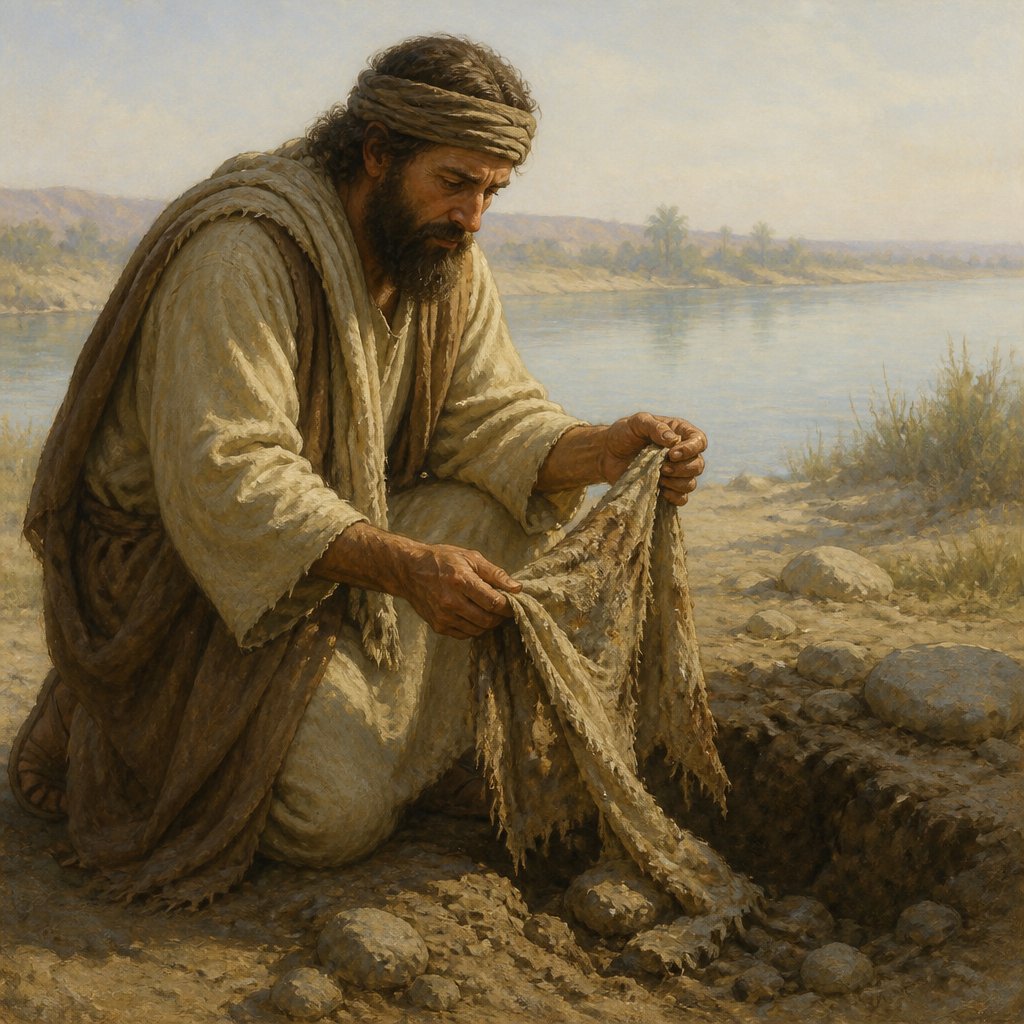
In the book of Jeremiah, chapter 13, verse 7, we encounter a powerful symbolic act that resonates deeply with our spiritual condition. The verse states, "Then I went to Euphrates, and digged, and took the girdle from the place where I had hid it: and, behold, the girdle was marred, it was profitable for nothing."
To truly appreciate this passage, we must first understand the context in which this event unfolds. God instructs Jeremiah to procure a linen girdle, a metaphorical object meant to illustrate the relationship between God and His people, Israel. The girdle, symbolic of closeness and binding, signifies how the Israelites were supposed to be close to God, their covenant partner. However, as the narrative progresses, we learn that this girdle becomes marred and ultimately useless—reflecting the state of Israel's relationship with God.
When Jeremiah retrieves the girdle from under the Euphrates river—an act of obedience to God’s command—he discovers its condition has changed significantly. This marred state serves as a powerful metaphor of how sin and disobedience can affect our relationship with God. The girdle was meant to be valuable, beautiful, and useful, much like our intended purpose in God’s eyes. Yet, when sin seeps into our lives, when we stray from His ways, we become marred. The purpose intended for us becomes obscured, rendering us less effective in our spiritual walk.
Understanding the implications of this marred girdle invites us to reflect on our own lives. Just as Jeremiah hid the girdle with expectation, we often harbor hopes and dreams under the surface. But what happens when we unearth them? Are they still intact, or have they been marred by our choices, our sins, and our neglect?
The act of digging at Euphrates can symbolize digging into our own lives. Are we willing to excavate those hidden areas that may need God’s touch? The removal of the girdle prompts us to examine ourselves, leading us to consider what hidden sins or unconfessed areas we might need to address. Sometimes we bury issues deep within ground that should be fertile but has become hard and unyielding over time. To restore the usefulness of the girdle—a metaphor for our lives—requires work, requires humility, and demands a willingness to face our true condition.
The phrase "profitable for nothing" speaks volumes. When we allow our lives to stray from the design God has for us, we risk becoming useless. The world is filled with endeavors that may seem attractive or fulfilling, but if they are devoid of divine purpose, they are ultimately fruitless. This truth challenges us: Are we pursuing goals that align with God's kingdom, or are we merely chasing the mirage of worldly success that leads to spiritual stagnation?
Furthermore, the marred girdle is an invitation to the grace of restoration. Just as Jeremiah witnessed the girdle's sad state, we too can experience God’s repair. The good news is that Christ came to mend the broken — to restore not only our relationship with the Father but also our personal callings when they have been rendered ineffective.
In conclusion, let us take a moment today at our own Euphrates and dig deep into our hearts. What do we discover there? Is our girdle marred, or are we still bound closely to our Creator? May we recognize the areas we need to bring before God, knowing we serve a God who can turn our marred state into one that is profitable, beautiful, and effective for His glory. As we meditate on Jeremiah’s experience, let it encourage us to unveil the hidden things, seeking God’s grace—transformative and restorative. Let our prayer be one of restoration and purpose, so that we might become, once again, profitable in His kingdom.
Want to reflect more on Jeremiah 13:7?
Continue your spiritual journey with Bible Chat — an AI-powered tool for exploring God's Word through conversation. Ask questions, discover connections, and deepen your understanding.
Get Our Apps


Jeremiah 13:7 Artwork

Jeremiah 13:7 - "Then I went to Euphrates, and digged, and took the girdle from the place where I had hid it: and, behold, the girdle was marred, it was profitable for nothing."
"Then I went to Euphrates, and digged, and took the girdle from the place where I had hid it: and, behold, the girdle was marred, it was profitable for nothing." - Jeremiah 13:7

Jeremiah 7:13 - "And now, because ye have done all these works, saith the LORD, and I spake unto you, rising up early and speaking, but ye heard not; and I called you, but ye answered not;"

Jeremiah 38:13 - "So they drew up Jeremiah with cords, and took him up out of the dungeon: and Jeremiah remained in the court of the prison."

Jeremiah 29:11-13

Jeremiah 29:11-13

Jeremiah 29:11-13

Jeremiah 29:11-13

Jeremiah 7:1 - "The word that came to Jeremiah from the LORD, saying,"

Jeremiah 13:23

Jeremiah 42:7 - "¶ And it came to pass after ten days, that the word of the LORD came unto Jeremiah."

Jeremiah 38:1–13

Jeremiah 46:13 - "¶ The word that the LORD spake to Jeremiah the prophet, how Nebuchadrezzar king of Babylon should come and smite the land of Egypt."

Jeremiah 26:7 - "So the priests and the prophets and all the people heard Jeremiah speaking these words in the house of the LORD."

1 Chronicles 12:13 - "Jeremiah the tenth, Machbanai the eleventh."

Jeremiah 17:7-8

Jeremiah 17:7-8

Jeremiah 17:7-8

Jeremiah 17:7-8

Jeremiah 13:8 - "Then the word of the LORD came unto me, saying,"

Jeremiah 32:13 - "¶ And I charged Baruch before them, saying,"

"The word that came to Jeremiah from the LORD, saying," - Jeremiah 7:1

Jeremiah 7:7 - "Then will I cause you to dwell in this place, in the land that I gave to your fathers, for ever and ever."

Matthew 7:13-14

Matthew 7:13-14

Matthew 7:13-14

Matthew 7:13-14

Matthew 7:13-14

Matthew 7:13-14

Matthew 7:13-14