The Futility of Ill-Gotten Gains
"As the partridge sitteth on eggs, and hatcheth them not; so he that getteth riches, and not by right, shall leave them in the midst of his days, and at his end shall be a fool." - Jeremiah 17:11

In the book of Jeremiah, we find a powerful admonition regarding the pursuit of wealth and the integrity through which it should be acquired. Jeremiah 17:11 presents a poignant image: "As the partridge sitteth on eggs, and hatcheth them not; so he that getteth riches, and not by right, shall leave them in the midst of his days, and at his end shall be a fool."
To understand this verse, we must first consider the metaphor of the partridge. The partridge is known for its tendency to nest on other birds’ eggs in its search for safety, warmth, and nurturing. This behavior, however, ultimately leads to disappointment as the partridge cannot bring forth life from eggs that are not its own. Similarly, when one seeks to acquire wealth through dishonest or unethical means, the riches may appear promising, but they will never yield the true fulfillment and purpose that comes from hard work and honesty.
This verse highlights a stark truth about the nature of wealth—especially wealth that is acquired through deceitful, unethical actions. The end of the verse starkly warns that those who gain riches unjustly will ultimately find themselves without true value in those riches—they will be left with nothing. The words, "shall leave them in the midst of his days," serve as a grave reminder that life is fleeting and that what we accumulate in material wealth cannot accompany us when we depart from this Earth. In the end, those who pursue wealth at any cost can find themselves in regret, having squandered their lives chasing after something that held no substance.
The second part of this verse posits an alarming conclusion: "...and at his end shall be a fool." In the eyes of God, what we amass in wealth is not as significant as how we acquire those resources. To leave this world with riches gained through dishonesty is, according to scripture, a foolish venture. A fool is one who lacks wisdom, insight, or discernment—qualities that are essential for understanding the temporal nature of our earthly existence and the importance of moral integrity.
As followers of Christ, we are called to a higher standard. The life of a believer is one marked by integrity, hard work, and a deep trust in God as our provider. Instead of seeking riches that may slip through our fingers, our focus should be on the treasures that are eternal—those things that hold value in the Kingdom of God, such as love, truth, and righteousness.
Jesus himself addressed the futility of wealth in Matthew 6:19-21, cautions us not to store up treasures on Earth where moth and rust destroy but to store up treasures in heaven. The quest for material possessions often leads to a cycle of craving and dissatisfaction, leaving us empty and discontent. In contrast, when we place our trust in God and are committed to living according to His will, He fills our lives with joy, peace, and contentment that no material possession could offer.
The picture painted by Jeremiah challenges us to assess our own lives and motivations. Are we chasing after wealth in ways that do not honor God? Are we placing our trust in our capabilities rather than in the providence of God? As we reflect on this verse, let it be a catalyst for introspection and a call to redirect our efforts towards what is right.
Ultimately, the pursuit of wealth should not be driven by greed or desire for status, but rather by a heart that desires to honor God. We must learn, as seen in the parable of the rich fool in Luke 12:16-21, that life does not consist of the abundance of possessions but of the relationship we cultivate with our Creator.
In a world that often measures success by financial gain, let us strive to be wise stewards of our resources, ensuring that every endeavor we undertake aligns with God’s principles of righteousness. Only through such obedience can we experience true prosperity—one that endures and enriches not only our lives but also the lives of those around us, thereby contributing to the Kingdom of God.
Want to reflect more on Jeremiah 17:11?
Continue your spiritual journey with Bible Chat — an AI-powered tool for exploring God's Word through conversation. Ask questions, discover connections, and deepen your understanding.
Get Our Apps


Jeremiah 17:11 Artwork

Jeremiah 17:11 - "As the partridge sitteth on eggs, and hatcheth them not; so he that getteth riches, and not by right, shall leave them in the midst of his days, and at his end shall be a fool."

"As the partridge sitteth on eggs, and hatcheth them not; so he that getteth riches, and not by right, shall leave them in the midst of his days, and at his end shall be a fool." - Jeremiah 17:11
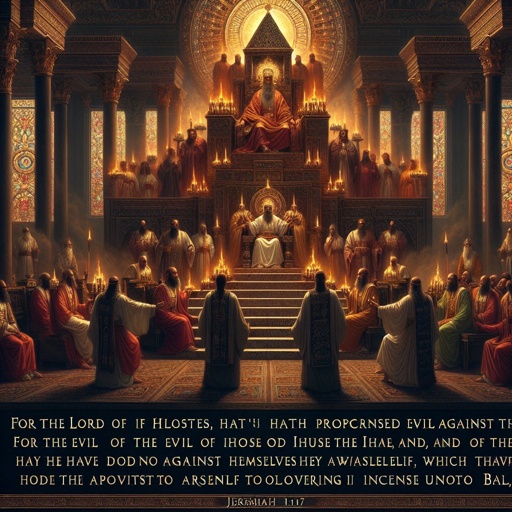
Jeremiah 11:17 - "For the LORD of hosts, that planted thee, hath pronounced evil against thee, for the evil of the house of Israel and of the house of Judah, which they have done against themselves to provoke me to anger in offering incense unto Baal."

Exodus 17:11

Jeremiah 17:17 - "Be not a terror unto me: thou art my hope in the day of evil."

Jeremiah 11:1 - "The word that came to Jeremiah from the LORD, saying,"

Jeremiah 29:11-13

Jeremiah 29:11-13

Jeremiah 17:7-8

Jeremiah 29:11-13

Jeremiah 29:11-13

Jeremiah 17:7-8

Jeremiah 17:7-8

Jeremiah 17:7-8

Jeremiah 29:11

Jeremiah 29:11

Jeremiah 29:11

Jeremiah 29:11

Revelation 1:7

Ephesians 1:7

Ephesians 1:7

Jeremiah 39:11 - "¶ Now Nebuchadrezzar king of Babylon gave charge concerning Jeremiah to Nebuzar-adan the captain of the guard, saying,"

Revelation 1:7

Jeremiah 33:2-11

Jeremiah 33:2-11

Numbers 11:17

"The word that came to Jeremiah from the LORD, saying," - Jeremiah 11:1

Jeremiah 28:17 - "So Hananiah the prophet died the same year in the seventh month."

Jeremiah 7:17 - "¶ Seest thou not what they do in the cities of Judah and in the streets of Jerusalem?"

Jeremiah 17:12 - "¶ A glorious high throne from the beginning is the place of our sanctuary."