The Weight of Shame: Understanding Moab's Fall
“They shall howl, saying, How is it broken down! how hath Moab turned the back with shame! so shall Moab be a derision and a dismaying to all them about him.” — Jeremiah 48:39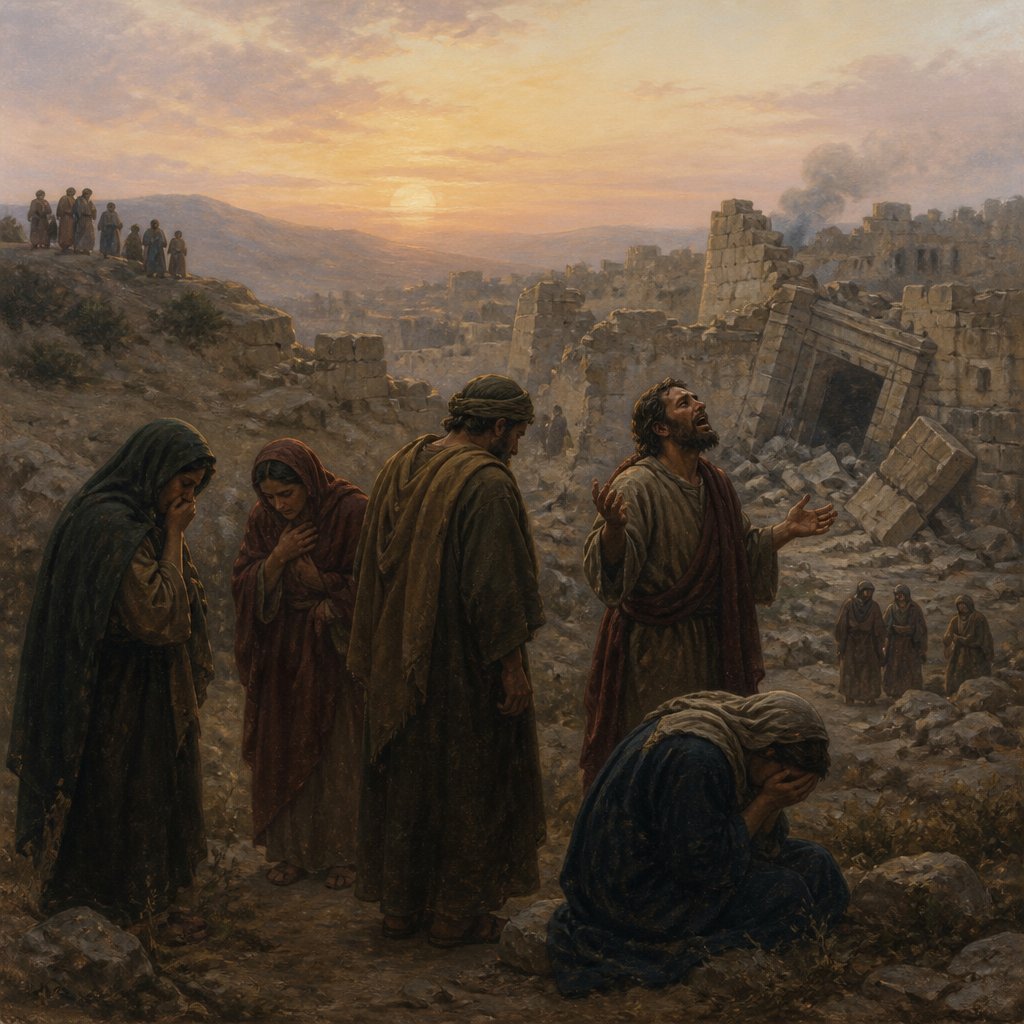
**Introduction**
Jeremiah 48:39 reflects a somber moment in the prophetic landscape of ancient Israel, particularly concerning the nation of Moab. The King James Version captures the essence of despair as it declares, "They shall howl, saying, How is it broken down! how hath Moab turned the back with shame! so shall Moab be a derision and a dismaying to all them about him." This scripture invites us to explore the themes of shame, the fall of nations, and the broader implications of turning away from God.
**The Historical Context**
Moab, historically a neighbor and often an enemy of Israel, represents human pride and independence from God. The Moabites descended from Lot and often found themselves at odds with the Israelites. Their eventual downfall, as prophesied by Jeremiah, was a consequence of their idolatry and rejection of the living God. Understanding this context enables us to grasp the gravity of the verse. The howling and lamentation signify not just physical destruction but also deep spiritual loss. The nation that once stood strong is now reduced to a state of ridicule.
**Elements of Shame**
Shame is a powerful emotion, often associated with failure, dishonor, and loss of dignity. Here, the phrase “how hath Moab turned the back with shame” points to a tragic reversal; a once proud nation is left in a state of despair. Moab's shame stems from their abandonment of God, leading to their downfall. The text serves as a warning against pride and self-reliance. In our lives, when we turn away from God, we too can experience a spiritual collapse that leaves us feeling empty and defeated.
**The Howl of Distress**
The howling mentioned in the verse indicates profound grief and shock. It’s interesting to note that this howl is not just a personal lamentation but a collective one. The surrounding nations observe Moab’s fall and react with horror and disbelief. This brings to light an important truth: our actions do not only impact us. When we stray from God’s path, it can lead to communal shame and embarrassment. In the case of Moab, their defeat becomes a teaching moment for others—a stark reminder of the consequences of rebellion against God.
**Derision and Dismaying**
The prophecy continues to portray Moab as a “derision and a dismaying to all them about him.” In Hebrew culture, a name often carries significant meaning, and to be mocked or ridiculed signifies a deep loss of identity and purpose. For Moab, their identity as a proud nation is stripped away, resulting in despair and irrelevance.
This derision reflects how in the rhythms of life, when we experience failure or shame, we can often feel isolated and unworthy. Our shortcomings can sometimes lead to a disconnection from our community, friends, and even God. As believers, how do we respond when we see others fall? Are we quick to ridicule, or do we extend grace and mercy?
**Application**
Jeremiah 48:39 challenges us to consider our own lives and the dangers of neglecting our spiritual health. Where in our lives are we turning our backs on God? What idols have we allowed to creep into our hearts? This verse implores us to reflect on the foundational truths of our faith—to remain steadfast in our devotion to God, ensuring that pride doesn’t lead to our downfall.
Let us also remember that God’s call is one of redemption. While Moab’s story is one of tragedy, it also serves as a powerful reminder of the importance of repentance. God welcomes us back into His embrace no matter how far we’ve wandered. In humility, let us approach Him, rid ourselves of shame, and seek restoration.
**Conclusion**
As we meditate on Jeremiah 48:39, may we allow it to penetrate our hearts and guide our steps. While the howl of Moab resonates with sorrow, the message of hope lies in returning to the Lord. Let us choose to walk in His ways, so we may avoid the pitfalls of shame and destruction, and instead, be vessels of His honor and glory.
Get our apps


Artwork for Jeremiah 48:39

Jeremiah 48:39 - "They shall howl, saying, How is it broken down! how hath Moab turned the back with shame! so shall Moab be a derision and a dismaying to all them about him."
"They shall howl, saying, How is it broken down! how hath Moab turned the back with shame! so shall Moab be a derision and a dismaying to all them about him." - Jeremiah 48:39

Jeremiah 48:22 - "And upon Dibon, and upon Nebo, and upon Beth-diblathaim,"

Jeremiah 48:6 - "Flee, save your lives, and be like the heath in the wilderness."

Jeremiah 48:16 - "The calamity of Moab is near to come, and his affliction hasteth fast."

Jeremiah 48:23 - "And upon Kiriathaim, and upon Beth-gamul, and upon Beth-meon,"

Jeremiah 48:14 - "¶ How say ye, We are mighty and strong men for the war?"

Jeremiah 48:3 - "A voice of crying shall be from Horonaim, spoiling and great destruction."

Jeremiah 39:15 - "¶ Now the word of the LORD came unto Jeremiah, while he was shut up in the court of the prison, saying,"

Jeremiah 39:11 - "¶ Now Nebuchadrezzar king of Babylon gave charge concerning Jeremiah to Nebuzar-adan the captain of the guard, saying,"

Jeremiah 48:25 - "The horn of Moab is cut off, and his arm is broken, saith the LORD."

Jeremiah 48:4 - "Moab is destroyed; her little ones have caused a cry to be heard."

Jeremiah 48:13 - "And Moab shall be ashamed of Chemosh, as the house of Israel was ashamed of Beth-el their confidence."

Jeremiah 48:20 - "Moab is confounded; for it is broken down: howl and cry; tell ye it in Arnon, that Moab is spoiled,"

Jeremiah 48:21 - "And judgment is come upon the plain country; upon Holon, and upon Jahazah, and upon Mephaath,"

Jeremiah 48:43 - "Fear, and the pit, and the snare, shall be upon thee, O inhabitant of Moab, saith the LORD."

Jeremiah 48:24 - "And upon Kerioth, and upon Bozrah, and upon all the cities of the land of Moab, far or near."
Jeremiah 48:30 - "I know his wrath, saith the LORD; but it shall not be so; his lies shall not so effect it."

Jeremiah 48:42 - "And Moab shall be destroyed from being a people, because he hath magnified himself against the LORD."

Jeremiah 48:19 - "O inhabitant of Aroer, stand by the way, and espy; ask him that fleeth, and her that escapeth, and say, What is done?"

Jeremiah 48:47 - "¶ Yet will I bring again the captivity of Moab in the latter days, saith the LORD. Thus far is the judgment of Moab."

Jeremiah 48:40 - "For thus saith the LORD; Behold, he shall fly as an eagle, and shall spread his wings over Moab."

Jeremiah 48:10 - "Cursed be he that doeth the work of the LORD deceitfully, and cursed be he that keepeth back his sword from blood."

Jeremiah 39:8 - "¶ And the Chaldeans burned the king's house, and the houses of the people, with fire, and brake down the walls of Jerusalem."

Jeremiah 39:2 - "And in the eleventh year of Zedekiah, in the fourth month, the ninth day of the month, the city was broken up."

Jeremiah 48:41 - "Kerioth is taken, and the strong holds are surprised, and the mighty men's hearts in Moab at that day shall be as the heart of a woman in her pangs."

Jeremiah 48:37 - "For every head shall be bald, and every beard clipped: upon all the hands shall be cuttings, and upon the loins sackcloth."

Jeremiah 48:27 - "For was not Israel a derision unto thee? was he found among thieves? for since thou spakest of him, thou skippedst for joy."

Jeremiah 48:46 - "Woe be unto thee, O Moab! the people of Chemosh perisheth: for thy sons are taken captives, and thy daughters captives."

"Flee, save your lives, and be like the heath in the wilderness." - Jeremiah 48:6