A Cry for Justice: Understanding Jeremiah 51:35
“The violence done to me and to my flesh be upon Babylon, shall the inhabitant of Zion say; and my blood upon the inhabitants of Chaldea, shall Jerusalem say.” — Jeremiah 51:35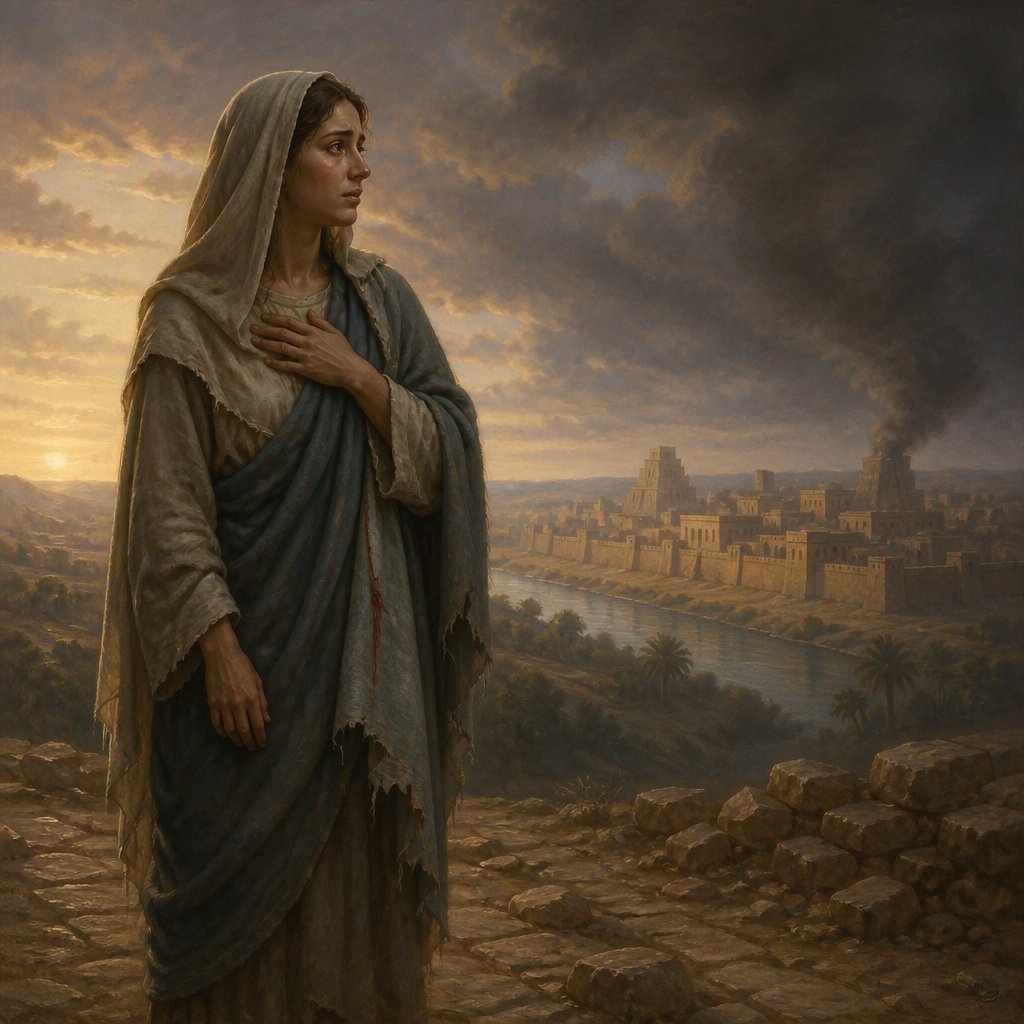
As we dive into the rich tapestry of the Book of Jeremiah, we arrive at a poignant verse in Chapter 51, verse 35: "The violence done to me and to my flesh be upon Babylon, shall the inhabitant of Zion say; and my blood upon the inhabitants of Chaldea, shall Jerusalem say." This verse encapsulates a moment of profound grievance and longing for justice amidst oppression and suffering.
To fully grasp the weight of this proclamation, we must consider the historical context surrounding Jeremiah’s ministry. The people of Israel were amid a turbulent time, grappling with conquest, exile, and the ensuing consequences of their choices and actions. Babylon, under the reign of King Nebuchadnezzar II, had become a dominant force, leveling Jerusalem, destroying their holy temple, and dragging many into exile. In these verses, we see Jerusalem, personified as a grieving mother or a wounded daughter, crying out to God for retribution against her oppressors.
What does this violent imagery teach us about our relationship with suffering, justice, and God? First, we must recognize that violence, in whatever form it takes—physical, emotional, or spiritual—is deeply agonizing. To cry out against injustices, whether done against ourselves or those we love, is a natural human reaction. This verse demonstrates how pain reverberates through communities and individuals alike; the inhabitants of Zion carry the weight of their collective trauma and anguish. In storytelling fashion, Jeremiah conveys this suffering not only as a personal lament but as a communal cry for empathy and recognition of their torment.
Moreover, this passage opens a door to the concept of divine justice. The inhabitants of Zion express a hope that their cries do not go unheard. What comforts the soul amid injustice is the fierce notion that God sees and remembers. Such a proclamation is a reminder that when atrocities occur, it isn’t forgotten by divine memory.
Additionally, in verse 35, we grasp a deeper understanding of the longing for justice. The phrase “be upon Babylon” signifies an appeal for accountability, indicating that there is a divine order, a moral compass within the universe that God will ultimately uphold. The plea acknowledges the reality that ultimately, vengeance belongs to God. Romans 12:19 echoes this sentiment, urging us to leave room for God’s wrath. The inhabitants of Zion reminded themselves and each other that even when they felt powerless against their oppressors, God remains their stronghold—a refuge who sees all injustices and promises retribution.
This cry for vengeance is not indiscriminate violence but rather a prayer for justice. The people of God seek God’s will to prevail—this cry is often heard throughout the Psalms, where lamentation intertwines with a firm belief in God’s sovereignty. Therefore, Jeremiah’s words resonate with us, echoing through generations even to our present struggles. We may not be able to change the circumstances around us directly, but we can voice our suffering, petition God, and seek His action.
As we apply this scripture to our lives today, it reminds us of the need to advocate for those suffering from injustice in our world. Perhaps we may feel that our voices are small against the mighty structure of societal injustices. Yet, through prayer and petition, we align ourselves with a God who responds. We can become intercessors for justice, holding space for those who cannot cry out.
May we learn to bring our anguish and our cries to God, trusting in His power to rectify wrongs. Furthermore, may we do so with a heart that seeks justice, not revenge, reflecting Christ’s love even amid pain. Let us embody the cry of Jerusalem, that we, too, may stand witness to our God who hears us and who will act in accordance with His righteousness.
In closing, Jeremiah 51:35 serves not only as a historical lament but a spiritual lesson for our hearts—to recognize the pain around us, bring it to God, and trust deeply in His promise to restore justice.
Get our apps


Artwork for Jeremiah 51:35

Jeremiah 51:35 - "The violence done to me and to my flesh be upon Babylon, shall the inhabitant of Zion say; and my blood upon the inhabitants of Chaldea, shall Jerusalem say."
"The violence done to me and to my flesh be upon Babylon, shall the inhabitant of Zion say; and my blood upon the inhabitants of Chaldea, shall Jerusalem say." - Jeremiah 51:35

Jeremiah 51:51 - "We are confounded, because we have heard reproach: shame hath covered our faces: for strangers are come into the sanctuaries of the LORD'S house."

Jeremiah 51:61 - "And Jeremiah said to Seraiah, When thou comest to Babylon, and shalt see, and shalt read all these words;"

Jeremiah 51:18 - "They are vanity, the work of errors: in the time of their visitation they shall perish."

Jeremiah 51:60 - "So Jeremiah wrote in a book all the evil that should come upon Babylon, even all these words that are written against Babylon."

Jeremiah 35:12 - "¶ Then came the word of the LORD unto Jeremiah, saying,"

Jeremiah 51:38 - "They shall roar together like lions: they shall yell as lions' whelps."

Jeremiah 51:32 - "And that the passages are stopped, and the reeds they have burned with fire, and the men of war are affrighted."

Jeremiah 51:42 - "The sea is come up upon Babylon: she is covered with the multitude of the waves thereof."
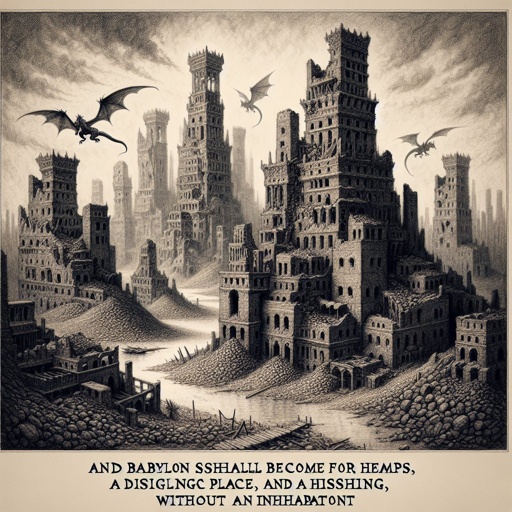
Jeremiah 51:37 - "And Babylon shall become heaps, a dwellingplace for dragons, an astonishment, and an hissing, without an inhabitant."

Jeremiah 51:4 - "Thus the slain shall fall in the land of the Chaldeans, and they that are thrust through in her streets."

Jeremiah 51:54 - "A sound of a cry cometh from Babylon, and great destruction from the land of the Chaldeans:"

Jeremiah 51:40 - "I will bring them down like lambs to the slaughter, like rams with he goats."

Jeremiah 51:64 - "And thou shalt say, Thus shall Babylon sink, and shall not rise from the evil that I will bring upon her: and they shall be weary. Thus far are the words of Jeremiah."

Jeremiah 51:49 - "As Babylon hath caused the slain of Israel to fall, so at Babylon shall fall the slain of all the earth."

Jeremiah 51:8 - "Babylon is suddenly fallen and destroyed: howl for her; take balm for her pain, if so be she may be healed."

Jeremiah 51:26 - "And they shall not take of thee a stone for a corner, nor a stone for foundations; but thou shalt be desolate for ever, saith the LORD."

Jeremiah 51:59 - "¶ The word which Jeremiah the prophet commanded Seraiah the son of Neriah, the son of Maaseiah, when he went with Zedekiah the king of Judah into Babylon in the fourth year of his reign. And this Seraiah was a quiet prince."

Jeremiah 51:41 - "How is Sheshach taken! and how is the praise of the whole earth surprised! how is Babylon become an astonishment among the nations!"

Jeremiah 51:13 - "O thou that dwellest upon many waters, abundant in treasures, thine end is come, and the measure of thy covetousness."

Jeremiah 51:21 - "And with thee will I break in pieces the horse and his rider; and with thee will I break in pieces the chariot and his rider;"

"¶ Then came the word of the LORD unto Jeremiah, saying," - Jeremiah 35:12

Jeremiah 35:1 - "The word which came unto Jeremiah from the LORD in the days of Jehoiakim the son of Josiah king of Judah, saying,"

Jeremiah 51:63 - "And it shall be, when thou hast made an end of reading this book, that thou shalt bind a stone to it, and cast it into the midst of Euphrates:"

Jeremiah 51:28 - "Prepare against her the nations with the kings of the Medes, the captains thereof, and all the rulers thereof, and all the land of his dominion."
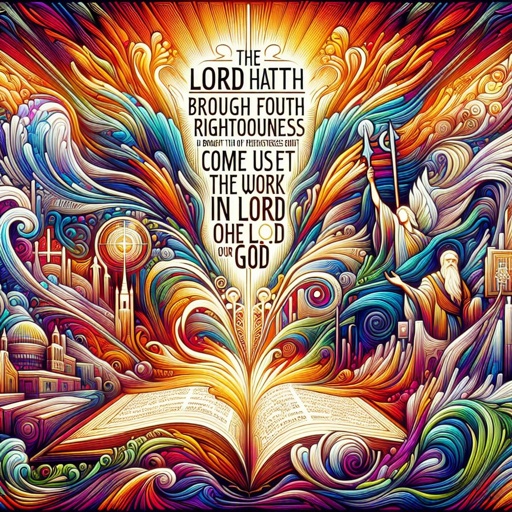
Jeremiah 51:10 - "The LORD hath brought forth our righteousness: come, and let us declare in Zion the work of the LORD our God."

Jeremiah 35:3 - "Then I took Jaazaniah the son of Jeremiah, the son of Habaziniah, and his brethren, and all his sons, and the whole house of the Rechabites;"

"They are vanity, the work of errors: in the time of their visitation they shall perish." - Jeremiah 51:18

Jeremiah 51:19 - "The portion of Jacob is not like them; for he is the former of all things: and Israel is the rod of his inheritance: the LORD of hosts is his name."