The Value of the Ordinary: Treasures in the House of the Lord
“The caldrons also, and the shovels, and the snuffers, and the bowls, and the spoons, and all the vessels of brass wherewith they ministered, took they away.” — Jeremiah 52:18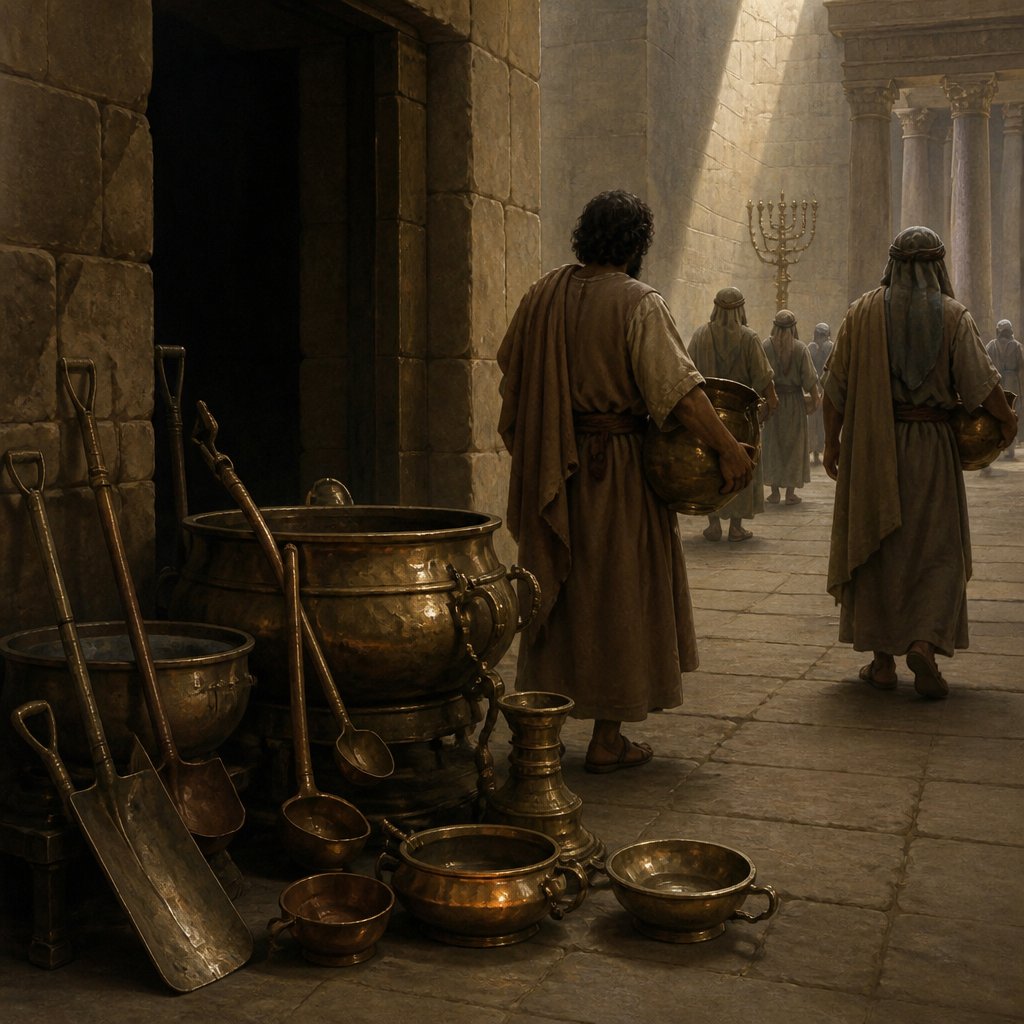
In the midst of Jeremiah's prophecy regarding the fall of Jerusalem, we encounter a seemingly mundane detail in Jeremiah 52:18, which states: "The caldrons also, and the shovels, and the snuffers, and the bowls, and the spoons, and all the vessels of brass wherewith they ministered, took they away." Such a verse might appear insignificant at first glance, overshadowed by the gravity of the surrounding narrative. Yet, this passage carries profound implications about the sanctity and significance of the ordinary vessels used in the service of God.
The context of Jeremiah speaks to a time of great anguish for the people of Israel. Jerusalem’s destruction was not just a physical loss; it represented a spiritual rupture between God and His chosen people. The Babylonians, in their conquest, pillaged the temple of the Lord—an act symbolizing the desecration of their worship and the loss of their communal identity. In the midst of this chaos, what stands out are the simple utensils: the caldrons, shovels, snuffers, bowls, and spoons. These objects may seem like trivial items, lacking glamour, yet they were crucial in the rituals and offerings made to God.
In this context, we are reminded that God is interested not just in the grand gestures of worship but also in the humble acts of faithfulness. The caldron that boiled sacrifices, the shovels that handled ashes, the snuffers that tended the lamp, the bowls that caught the offerings, and the spoons that served the temple’s meals—each of these items played an indispensable role in maintaining the sacred arena where God was worshiped and revered. God’s desire is not found in might alone but in the hearts of those who commit their every act—no matter how ordinary—to His glory.
In our modern context, we often find ourselves aligning spiritual value with grandeur. We aspire to be mighty vessels for God, yet what if the call was to steward the mundane well? Our daily routines, our workspaces, and the simple tasks we engage in can also be places of worship. Bringing the caldron of our daily lives before God is a call to honor Him in the smallest of details, believing that there is a touch of the divine even in the ordinary. When we sweep our floors, prepare our meals, or offer a comforting word, we engage with the same spirit of worship that dwelled in the temple of Solomon with the caldrons and spoons.
In the New Testament, we see Jesus reaffirm the value of ordinary life in His parables and interactions. He often chose the unremarkable: He called fishermen to be His disciples, dined with tax collectors, and confounded the wise by inviting the little ones to come to Him. Similarly, Paul reminds us in 1 Corinthians 1:27 that "God hath chosen the foolish things of the world to confound the wise; and God hath chosen the weak things of the world to confound the things which are mighty." What does this mean for us today? It speaks to a transformational understanding of our purpose. The ordinary becomes extraordinary when it is placed firmly in the hands of the Almighty.
As stewards of God's grace, we must recognize the importance of every vessel, whether it be a caldron or a spoon. Let us commit ourselves to ministering through all aspects of our lives, honoring God with every ordinary task. In doing so, we will find that we are not just preserving the mundane but witnessing the creation of sacred spaces.
Through our engagement in the ordinary, we come to understand the depth of Jeremiah’s lament not merely as a loss, but rather as a reminder—the power of God rests not only in the temple’s gold but also in the humble vessels with which we serve. Let us ennoble our everyday tasks, for they are the caldrons where love brews, the spoons that serve kindness, and the snuffers that keep our lights shining bright.
Get our apps


Artwork for Jeremiah 52:18

Jeremiah 52:18 - "The caldrons also, and the shovels, and the snuffers, and the bowls, and the spoons, and all the vessels of brass wherewith they ministered, took they away."
"The caldrons also, and the shovels, and the snuffers, and the bowls, and the spoons, and all the vessels of brass wherewith they ministered, took they away." - Jeremiah 52:18

Jeremiah 52:16

Jeremiah 52:5 - "So the city was besieged unto the eleventh year of king Zedekiah."

Jeremiah 52:16 - "But Nebuzar-adan the captain of the guard left certain of the poor of the land for vinedressers and for husbandmen."

Jeremiah 52:2 - "And he did that which was evil in the eyes of the LORD, according to all that Jehoiakim had done."

Jeremiah 52:6 - "And in the fourth month, in the ninth day of the month, the famine was sore in the city, so that there was no bread for the people of the land."

Jeremiah 52:26 - "So Nebuzar-adan the captain of the guard took them, and brought them to the king of Babylon to Riblah."

Jeremiah 52:1 - "Zedekiah was one and twenty years old when he began to reign, and he reigned eleven years in Jerusalem. And his mother's name was Hamutal the daughter of Jeremiah of Libnah."

Jeremiah 52:24 - "¶ And the captain of the guard took Seraiah the chief priest, and Zephaniah the second priest, and the three keepers of the door:"

Jeremiah 52:32 - "And spake kindly unto him, and set his throne above the throne of the kings that were with him in Babylon,"

Jeremiah 52:14 - "And all the army of the Chaldeans, that were with the captain of the guard, brake down all the walls of Jerusalem round about."

Jeremiah 52:28 - "This is the people whom Nebuchadrezzar carried away captive: in the seventh year three thousand Jews and three and twenty:"
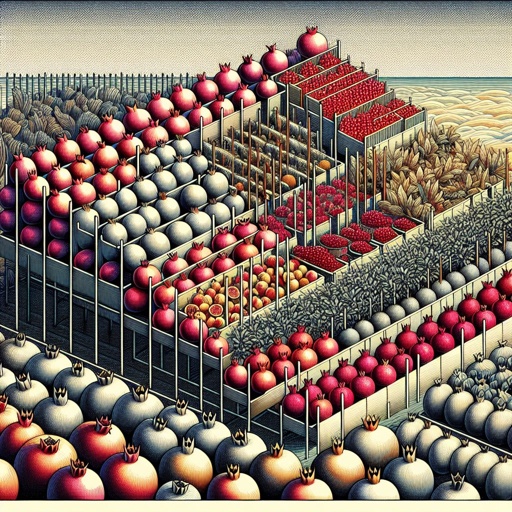
Jeremiah 52:23 - "And there were ninety and six pomegranates on a side; and all the pomegranates upon the network were an hundred round about."

Jeremiah 52:29 - "In the eighteenth year of Nebuchadrezzar he carried away captive from Jerusalem eight hundred thirty and two persons:"
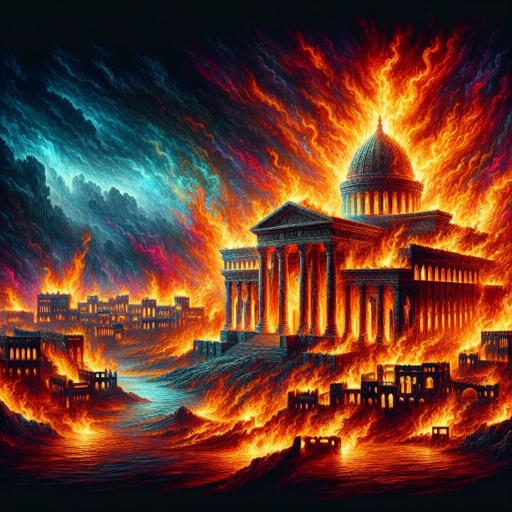
Jeremiah 52:13 - "And burned the house of the LORD, and the king's house; and all the houses of Jerusalem, and all the houses of the great men, burned he with fire:"

Jeremiah 52:33 - "And changed his prison garments: and he did continually eat bread before him all the days of his life."
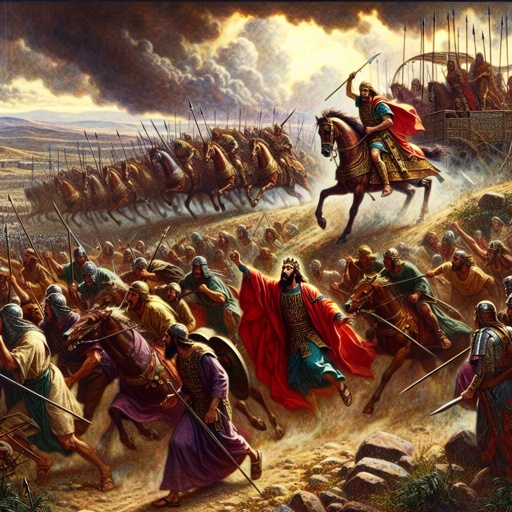
Jeremiah 52:8 - "¶ But the army of the Chaldeans pursued after the king, and overtook Zedekiah in the plains of Jericho; and all his army was scattered from him."

Jeremiah 52:10 - "And the king of Babylon slew the sons of Zedekiah before his eyes: he slew also all the princes of Judah in Riblah."

Jeremiah 52:9 - "Then they took the king, and carried him up unto the king of Babylon to Riblah in the land of Hamath; where he gave judgment upon him."
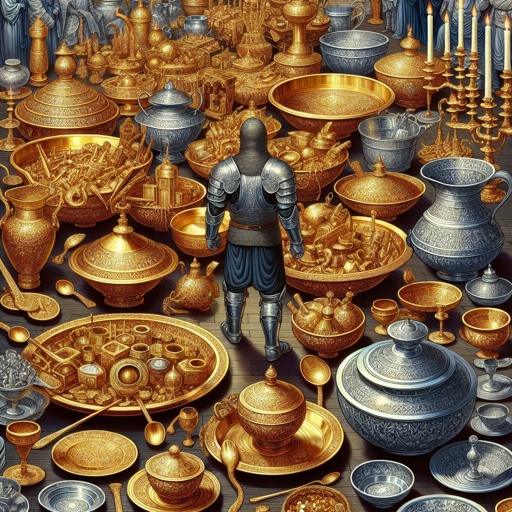
Jeremiah 52:19 - "And the basons, and the firepans, and the bowls, and the caldrons, and the candlesticks, and the spoons, and the cups; that which was of gold in gold, and that which was of silver in silver, took the captain of the guard away."
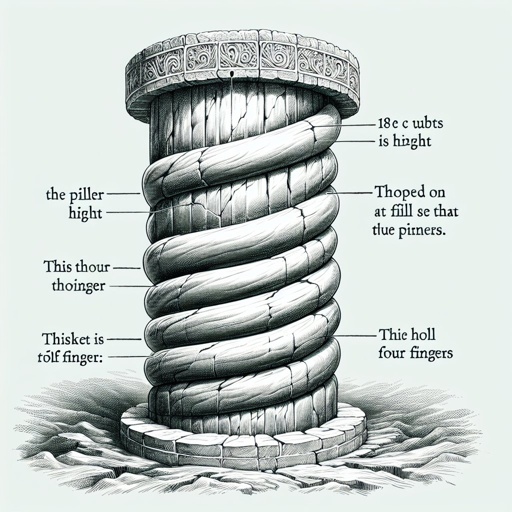
Jeremiah 52:21 - "And concerning the pillars, the height of one pillar was eighteen cubits; and a fillet of twelve cubits did compass it; and the thickness thereof was four fingers: it was hollow."
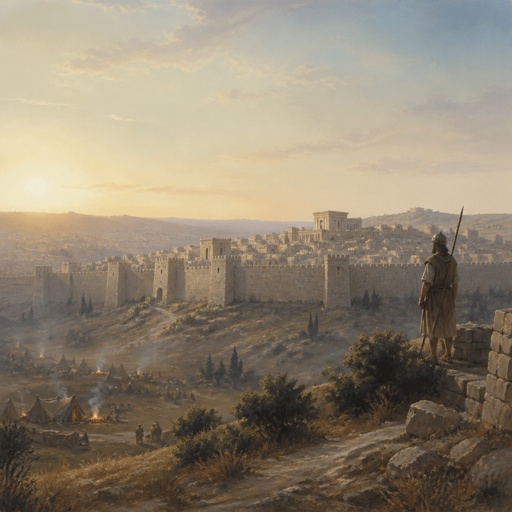
"So the city was besieged unto the eleventh year of king Zedekiah." - Jeremiah 52:5

Jeremiah 52:17 - "Also the pillars of brass that were in the house of the LORD, and the bases, and the brasen sea that was in the house of the LORD, the Chaldeans brake, and carried all the brass of them to Babylon."
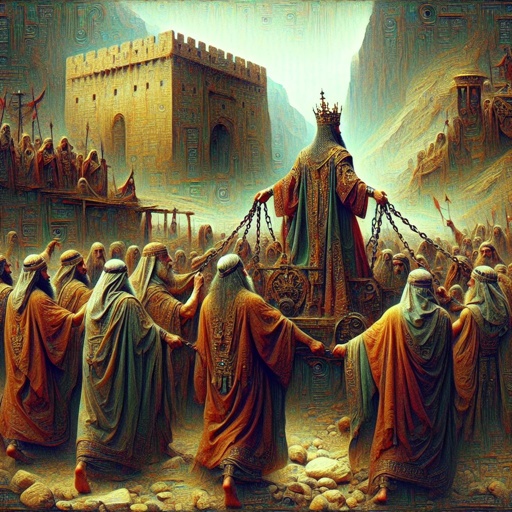
Jeremiah 52:11 - "Then he put out the eyes of Zedekiah; and the king of Babylon bound him in chains, and carried him to Babylon, and put him in prison till the day of his death."

Jeremiah 52:34 - "And for his diet, there was a continual diet given him of the king of Babylon, every day a portion until the day of his death, all the days of his life."

Jeremiah 52:27 - "And the king of Babylon smote them, and put them to death in Riblah in the land of Hamath. Thus Judah was carried away captive out of his own land."

Jeremiah 52:28-30 - "Jeremiah 52:28-30: 28 This is the people whom Nebuchadrezzar carried away captive: in the seventh year three thousand Jews and three and twenty: 29 In the eighteenth year of Nebuchadrezzar he carried away captive from Jerusalem eight hundred thirty and two persons: 30 In the three and twentieth year of Nebuchadrezzar Nebuzaradan the captain of the guard carried away captive of the Jews seven hundred forty and five persons: all the persons were four thousand and six hundred."

Jeremiah 51:52 - "Wherefore, behold, the days come, saith the LORD, that I will do judgment upon her graven images: and through all her land the wounded shall groan."

Jeremiah 52:12 - "¶ Now in the fifth month, in the tenth day of the month, which was the nineteenth year of Nebuchadrezzar king of Babylon, came Nebuzar-adan, captain of the guard, which served the king of Babylon, into Jerusalem,"