The Call to Mourning: A Reflection on Jeremiah 9:17
“Thus saith the LORD of hosts, Consider ye, and call for the mourning women, that they may come; and send for cunning women, that they may come:” — Jeremiah 9:17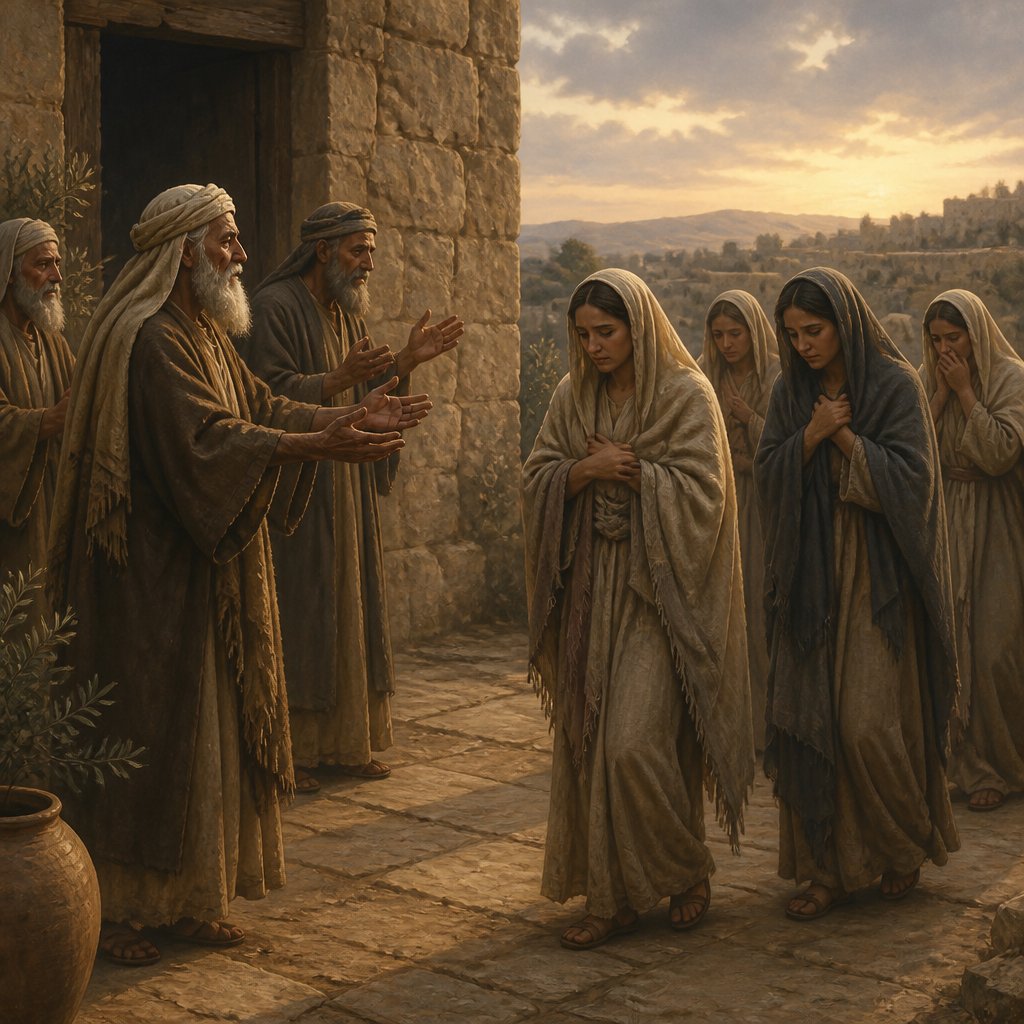
In the book of Jeremiah, we are presented with a profound observation of the human condition as it grapples with sorrow and the consequences of sin. The verse Jeremiah 9:17 states, "Thus saith the LORD of hosts, Consider ye, and call for the mourning women, that they may come; and send for cunning women, that they may come.” This verse introduces us to a poignant moment where the Lord is urging not only recognition of profound mourning but also the necessity of invoking those who can express it vividly.
To fully grasp the depth of this exhortation, we must consider the cultural context of ancient Israel. Mourning for the dead was a communal act; it involved hired mourners, often women, who were skilled in the art of lamentation. Their role was to express grief in a manner that would resonate with the grief of the community. They wore garments of mourning, their voices carried the wails of anguish, and their presence was an acknowledgment of loss—loss that had spiritual, communal, and personal implications.
The Lord’s call for such women to come is twofold. Firstly, it is an acknowledgment of the gravity of Israel’s situation. They are in a state of spiritual decline, having turned from their covenant with God, and thus they have invited calamity upon themselves. This devastation is not merely physical but also spiritual. The mourning women serve as a reminder of what has been lost—intimacy with God, a vibrant relationship with one another, and the blessings that come from living rightly. Sin creates a void, and the call to mourn is an invitation to recognize the losses that sin has brought in the lives (of individuals, families, and the community at large).
Secondly, it is a testament to the necessity of grief in healing and restoration. In our modern, often fast-paced society, we frequently shy away from mourning. We suppress our sadness, uncomfortable with vulnerability or perceiving that grief conveys weakness. However, Jeremiah’s call to the mourners reminds us that tragedy and loss should be met with honest expressions of sorrow. Mourning allows us to confront our reality, encourages communal support, and ultimately prepares us to seek God afresh.
Let us not overlook the mention of “cunning women.” These were not merely skilled in lamentation, but they were wise in navigating the expressions of grief, helping others articulate their anguish. They represent the need for wisdom in our sorrow and the power of shared mourning. It is essential to gather those within our communities who can guide us through our pain, who can help us articulate what feels too deep for words. In a world where individuals often hide their struggles behind a facade, there is wisdom in acknowledging our grief collectively.
Knowing this, how do we respond to Jeremiah’s call today?
1. **Acknowledge Your Pain**: Allow yourself to feel what you’re feeling. Whether it is sorrow, disappointment, or grief from personal loss, understand that these feelings are valid. God is not afraid of your questions or your pain. By naming your grief, you begin the crisis of restoration.
2. **Seek Community**: Reach out to those who can walk alongside you in your sorrow. Just as the Lord called for the mourning women, we must seek those wise voices in our lives who can provide comfort, solidarity, and understanding.
3. **Express Your Grief**: Consider what forms of expression resonate with your heart—writing, art, or verbal lament. Don’t shy away from pouring out your heart to God and those who understand your battle.
4. **Turn to God**: In all forms of our grief, let us turn our eyes back to God, who is the ultimate source of healing. We may grieve, but we do not grieve as those without hope (1 Thessalonians 4:13).
As we reflect on Jeremiah 9:17, let us remember that even in our deepest mourning, the Lord is ever-present. His call to mourn is not merely for the sake of lamentation but a gateway to a deeper relationship with Him—a reminder that He is comfortable amidst our grief and stands ready to restore our hearts.
Get our apps


Artwork for Jeremiah 9:17

Jeremiah 9:17 - "¶ Thus saith the LORD of hosts, Consider ye, and call for the mourning women, that they may come; and send for cunning women, that they may come:"
"¶ Thus saith the LORD of hosts, Consider ye, and call for the mourning women, that they may come; and send for cunning women, that they may come:" - Jeremiah 9:17

Jeremiah 17:9 - "¶ The heart is deceitful above all things, and desperately wicked: who can know it?"

Jeremiah 17:9 (KJVA) 9 The heart is deceitful above all things, and desperately wicked: who can know it?

Jeremiah 17:9 (KJVA) 9 The heart is deceitful above all things, and desperately wicked: who can know it?

"¶ The heart is deceitful above all things, and desperately wicked: who can know it?" - Jeremiah 17:9

Jeremiah 17:9-10 - "The heart is deceitful above all things and beyond cure. Who can understand it? “I the Lord search the heart and examine the mind, to reward each person according to their conduct, according to what their deeds deserve."

Jeremiah 17:17 - "Be not a terror unto me: thou art my hope in the day of evil."

Jeremiah 17:7-8

Jeremiah 17:7-8

Jeremiah 17:7-8

Jeremiah 17:7-8

Rev 9:17

Jeremiah 28:17 - "So Hananiah the prophet died the same year in the seventh month."

Jeremiah 7:17 - "¶ Seest thou not what they do in the cities of Judah and in the streets of Jerusalem?"

Jeremiah 17:12 - "¶ A glorious high throne from the beginning is the place of our sanctuary."

Jeremiah 17:7 - "Blessed is the man that trusteth in the LORD, and whose hope the LORD is."

Jeremiah 9:9 - "¶ Shall I not visit them for these things? saith the LORD: shall not my soul be avenged on such a nation as this?"

Young prophet Jeremiah 17 years old

Genesis 17:9

Jeremiah 41:17 (KJVA) 17 And they departed, and dwelt in the habitation of Chimham, which is by Bethlehem, to go to enter into Egypt,

Jeremiah 41:17 (KJVA) 17 And they departed, and dwelt in the habitation of Chimham, which is by Bethlehem, to go to enter into Egypt,

Jeremiah 10:17 - "¶ Gather up thy wares out of the land, O inhabitant of the fortress."

Jeremiah 12:17 - "But if they will not obey, I will utterly pluck up and destroy that nation, saith the LORD."

"Be not a terror unto me: thou art my hope in the day of evil." - Jeremiah 17:17
1 Samuel 9:17

1 Samuel 9:17

mat 17:1-9

Jeremiah 41:17 - "And they departed, and dwelt in the habitation of Chimham, which is by Beth-lehem, to go to enter into Egypt,"

Jeremiah 26:17 - "Then rose up certain of the elders of the land, and spake to all the assembly of the people, saying,"