From Ashes to Life: The Impermanence of Our Pain
“Your remembrances are like unto ashes, your bodies to bodies of clay.” — Job 13:12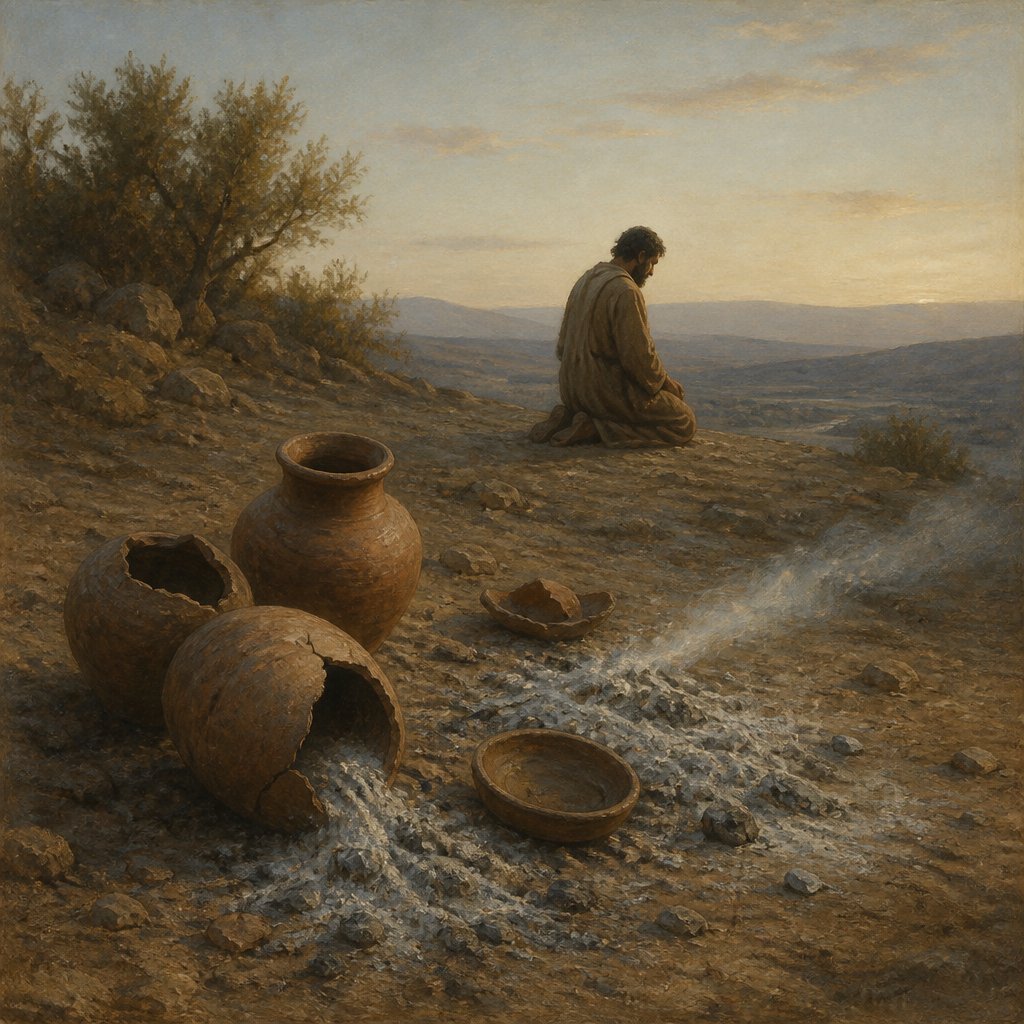
Job 13:12 reads, "Your remembrances are like unto ashes, your bodies to bodies of clay." This verse, steeped in the profound depths of human suffering and the fragility of life, offers us a poignant reflection on the transitory nature of our existence and the memories that burden or define us.
As we delve into the context of this declaration by Job—an exemplar of patience amidst extreme despair—we cannot ignore the weight of his words. Job's life had been turned upside down; he lost his wealth, his children, and his health. His friends, presumably well-meaning yet misled, initiated a debate about sin and punishment, seeking to reconcile his undeserved suffering with their understanding of divine justice. In the midst of this turmoil, Job wrestled with pain, loss, doubt, and the quest for understanding. It is in this context that we hear his plaintive cry: memories and the physical bodies we inhabit are but dust—fragile and fading.
When Job likens memories to ashes, he draws our attention to the fleeting nature of human existence. Ashes are remnants of something that once burned brightly; they are the leftover evidence of what was, now reduced to fine particles that scatter with the wind. This serves as a stark reminder that our troubles often feel monumental at the moment, yet, in time, they can become mere memories, stripped of their power to wound us.
Life can often feel as though we are holding tightly to ashes—thoughts that linger, grievances that chafe, heartbreaks that ache. These are memories woven into the very fabric of our beings. Yet, what Job teaches us is the wisdom that these remembrances, while weighty and real in our current plight, are ultimately transient. They do not define us. The challenge lies in learning to let go—transforming these ashes into a foundation for growth.
The second part of Job’s verse, “your bodies to bodies of clay,” extends this metaphor of fragility. Clay has no permanence; it is easily molded, shaped, and ultimately reshaped. In essence, it reminds us of our humanity—our bodies are temporary vessels, subject to decay and limitations. The concept of being “bodies of clay” speaks to our vulnerability and our mortality. Every wrinkle, scar, and ache tells a story, but they also remind us that life on this earth is brief.
Yet, there is profound beauty in this fragility. As we move through our lives, we engage in the sacred process of creation and recreation. Just as a potter crafts clay into something beautiful, God shapes our lives through our experiences of joy, sorrow, triumph, and defeat. The ashes of our painful memories can become the fertile ground for hope, healing, and transformation.
God offers us the promise of renewal. In 2 Corinthians 5:17 (KJV), it is written: "Therefore if any man be in Christ, he is a new creature: old things are passed away; behold, all things are become new." The struggles we endure and the ashes we sift through can, through God’s grace, foster new beginnings. Our physical tribulations may feel heavy, but they serve to remind us of our dependence on the Creator who formed us. The clay of our bodies, in its fragility, invites God’s hand to mold us, to shape us, and even to create beauty from our struggles.
In moments of despair, let us remember Job’s insights. Let us find solace not just in the bitter taste of ashes but in the hope of resurrection, adjustment, and new life. We are more than our memories; we are shaped by them. We are more than the clay that holds us; we are souls with purpose. As we surrender our remembrances of pain to God, we entrust our lives into the hands of the Master Potter, who can create wonders out of our shattered spots and transform our ashes into beauty.
Get our apps


Artwork for Job 13:12

Job 13:12 - "Your remembrances are like unto ashes, your bodies to bodies of clay."
"Your remembrances are like unto ashes, your bodies to bodies of clay." - Job 13:12

Job 12:13 - "With him is wisdom and strength, he hath counsel and understanding."

"With him is wisdom and strength, he hath counsel and understanding." - Job 12:13

Job 12:1 - "And Job answered and said,"

Job 12:12 - "With the ancient is wisdom; and in length of days understanding."

"And Job answered and said," - Job 12:1

Job 39:13-25

Job 2:11-13

Job 32:12 - "Yea, I attended unto you, and, behold, there was none of you that convinced Job, or that answered his words:"

Job 2:11-13

Job 2:11-13

"With the ancient is wisdom; and in length of days understanding." - Job 12:12

Job 13:13 - "Hold your peace, let me alone, that I may speak, and let come on me what will."

Genesis 46:13 - "¶ And the sons of Issachar; Tola, and Phuvah, and Job, and Shimron."

Job 12:16 - "With him is strength and wisdom: the deceived and the deceiver are his."

Job 42:13 - "He had also seven sons and three daughters."

Job 13:7 - "Will ye speak wickedly for God? and talk deceitfully for him?"

Job 40:13 - "Hide them in the dust together; and bind their faces in secret."

Job 13:4 - "But ye are forgers of lies, ye are all physicians of no value."

Job 21:12 - "They take the timbrel and harp, and rejoice at the sound of the organ."

Job 13:28 - "And he, as a rotten thing, consumeth, as a garment that is moth eaten."

Job 21:13 - "They spend their days in wealth, and in a moment go down to the grave."

Job 13:8 - "Will ye accept his person? will ye contend for God?"

Job 35:13 - "Surely God will not hear vanity, neither will the Almighty regard it."

Job 12:2 - "No doubt but ye are the people, and wisdom shall die with you."

Job 12:19 - "He leadeth princes away spoiled, and overthroweth the mighty."

Job 28:12 - "But where shall wisdom be found? and where is the place of understanding?"

Job 12:9 - "Who knoweth not in all these that the hand of the LORD hath wrought this?"

Job 13:17 - "Hear diligently my speech, and my declaration with your ears."