The Fire of God: A Test of Faith and Resilience
“While he was yet speaking, there came also another, and said, The fire of God is fallen from heaven, and hath burned up the sheep, and the servants, and consumed them; and I only am escaped alone to tell thee.” — Job 1:16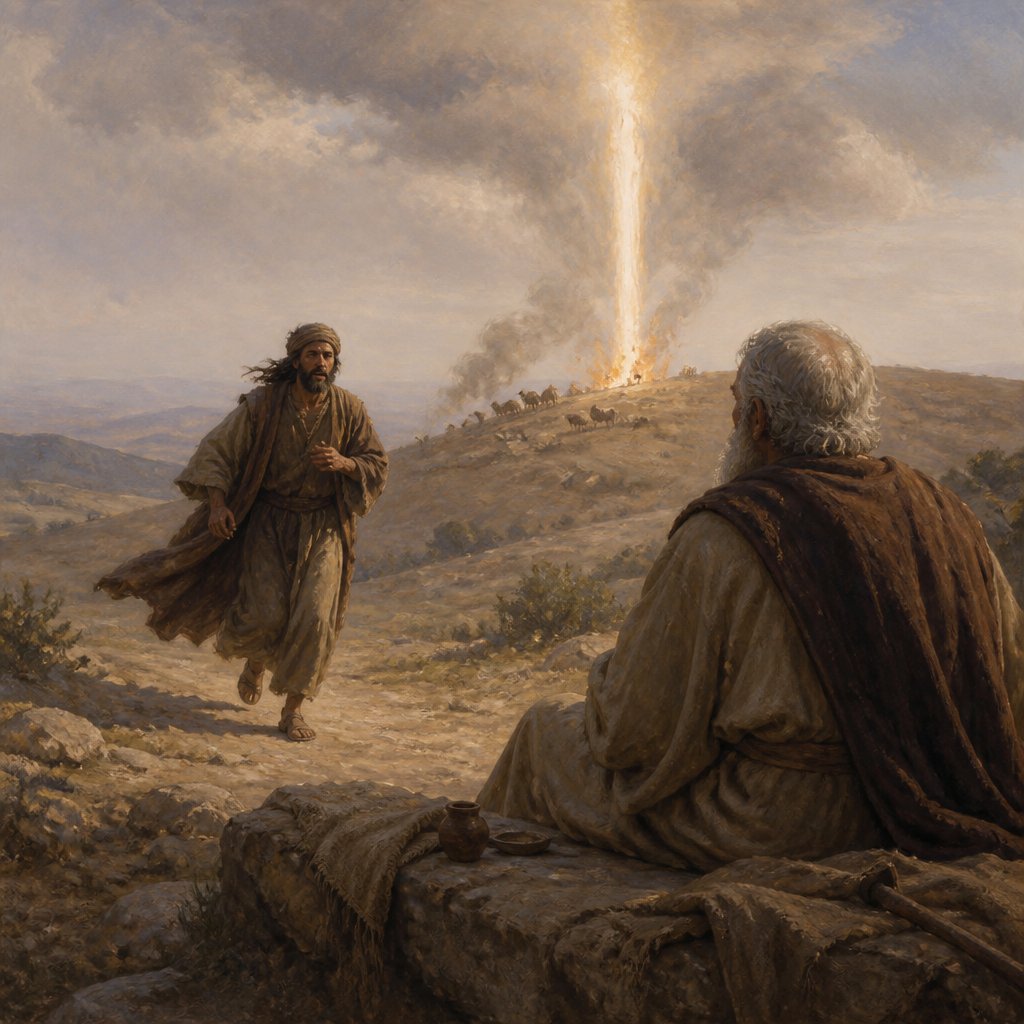
When we encounter the depths of human suffering and trial, it is easy to feel despondent. Job 1:16 takes us to a moment of profound despair: "While he was yet speaking, there came also another, and said, The fire of God is fallen from heaven, and hath burned up the sheep, and the servants, and consumed them; and I only am escaped alone to tell thee." This verse teaches us about sudden loss, overwhelming grief, and the fragility of human existence in ways that resonate deeply in our own lives when we face adversity.
At first glance, this verse illustrates a string of calamities that fall upon Job, a righteous man, one who is described as "perfect and upright" in the earlier verses of the book. The messenger’s words, delivered with urgency and despair, reveal the magnitude of the disaster he describes. The fire of God has not only consumed the sheep—Job’s wealth and livelihood—but has also taken the lives of his servants, leaving behind a stark reminder of the precariousness of human endeavours. The devastation is complete, and in the wilderness of trial like Job, we may often find ourselves feeling abandoned and heartbroken.
Yet, this narrative does not solely focus on destruction; it surprisingly invites reflection on faith, perspective, and divine sovereignty. When calamity strikes, as it did when "fire from heaven" wreaked havoc in Job’s life, one must grapple with the concept of God allowing suffering for reasons beyond our understanding. Far from reducing God to a mere spectator of our pain, the verse challenges us to consider a higher purpose, one that is woven within the fabric of our trials. As we process sorrow, we must ask ourselves: What does it mean to trust in God amid turmoil?
Trust is not merely an emotion; it is an act of the will. For Job, this act would unfold against the backdrop of chaotic despair. In subsequent verses, we witness Job’s reaction—not one of anger directed towards God, but rather an example of profound submission. "Naked came I out of my mother’s womb, and naked shall I return thither: the Lord gave, and the Lord hath taken away; blessed be the name of the Lord" (Job 1:21). Here, we see Job’s heart positioned to honor God even in loss, which speaks of a deep resilience borne of faith.
Resilience emerges in the acknowledgement of the duality of life: blessing and hardship coexisting. The blessings we enjoy can be swept away in an instant, likened to Job’s sheep that were consumed in moments by divine fire. However, through faith, we recognize that life’s most profound lessons often arise within these ashes. This moment of devastation became an opportunity for supreme demonstration of faith—Job's understanding of God was not contingent upon his circumstances. Instead, it was rooted deep within a relational trust cultivated over time.
In our contemporary context, how often might we encounter ‘fires’ in our lives, whether they be physical, emotional, or spiritual? These crises may come abruptly, leaving us to sift through the wreckage. In reflecting on Job 1:16, we are encouraged to respond not with despair, but perhaps with a renewed commitment—to seek God's presence while remaining steadfast in faith amidst trials.
We may find ourselves asking, how then do we navigate such moments? The answer lies in prayer, community support, and the unwavering truth of Scripture. Engage in conversations with God about your fears, your sadness, and your hopes. Gather with fellow believers who can illuminate the path of encouragement. Allow Scripture to be your anchor, drawing hope from its promises during life's tumultuous storms.
In conclusion, the moment Job received the harrowing news, he was introduced to a pathway not only of loss but a testimony of divine presence in adversity. Let us embrace the truth that while the fires of life may scorch, they can also forge within us a greater faith. May we step forward, trusting in His everlasting arms, knowing that we are never truly alone in the trials we face.
Get our apps


Artwork for Job 1:16

Job 1:16 - "While he was yet speaking, there came also another, and said, The fire of God is fallen from heaven, and hath burned up the sheep, and the servants, and consumed them; and I only am escaped alone to tell thee."
"While he was yet speaking, there came also another, and said, The fire of God is fallen from heaven, and hath burned up the sheep, and the servants, and consumed them; and I only am escaped alone to tell thee." - Job 1:16

Job 16:1 - "Then Job answered and said,"

"Then Job answered and said," - Job 16:1

Job 1:6 - "¶ Now there was a day when the sons of God came to present themselves before the LORD, and Satan came also among them."

Job 16:16 - "My face is foul with weeping, and on my eyelids is the shadow of death;"
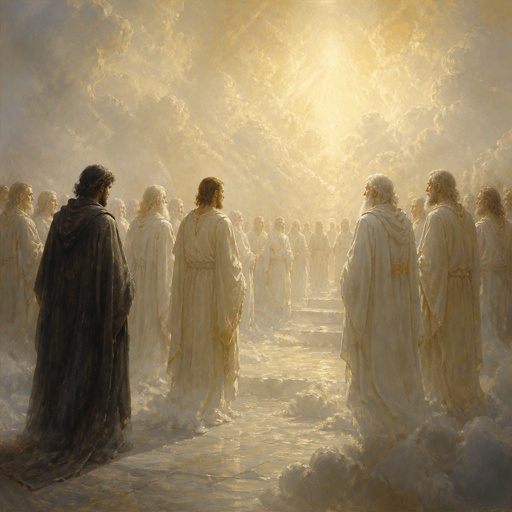
"¶ Now there was a day when the sons of God came to present themselves before the LORD, and Satan came also among them." - Job 1:6

Job 35:16 - "Therefore doth Job open his mouth in vain; he multiplieth words without knowledge."

Job 42:16 - "After this lived Job an hundred and forty years, and saw his sons, and his sons' sons, even four generations."

Job 12:16 - "With him is strength and wisdom: the deceived and the deceiver are his."

Job 33:16 - "Then he openeth the ears of men, and sealeth their instruction,"

Job 6:16 - "Which are blackish by reason of the ice, and wherein the snow is hid:"

Job 28:16 - "It cannot be valued with the gold of Ophir, with the precious onyx, or the sapphire."

Job 16:17 - "Not for any injustice in mine hands: also my prayer is pure."

Job 5:16 - "So the poor hath hope, and iniquity stoppeth her mouth."

"My face is foul with weeping, and on my eyelids is the shadow of death;" - Job 16:16

Job 34:16 - "If now thou hast understanding, hear this: hearken to the voice of my words."

Job 23:16 - "For God maketh my heart soft, and the Almighty troubleth me:"

Job 21:16 - "Lo, their good is not in their hand: the counsel of the wicked is far from me."

Job 12:1 - "And Job answered and said,"

Job 23:1 - "Then Job answered and said,"

Job 13:16 - "He also shall be my salvation: for an hypocrite shall not come before him."

Job 17:16 - "They shall go down to the bars of the pit, when our rest together is in the dust."

Job 16:21 - "O that one might plead for a man with God, as a man pleadeth for his neighbour!"

Job 16:11 - "God hath delivered me to the ungodly, and turned me over into the hands of the wicked."

Job 42:1 - "Then Job answered the LORD, and said,"

Job 9:1 - "Then Job answered and said,"

Job 19:1 - "Then Job answered and said,"

Job 21:1 - "But Job answered and said,"

Job 26:1 - "But Job answered and said,"