The Fleeting Nature of Wealth: A Reflection on Job 20:28
“The increase of his house shall depart, and his goods shall flow away in the day of his wrath.” — Job 20:28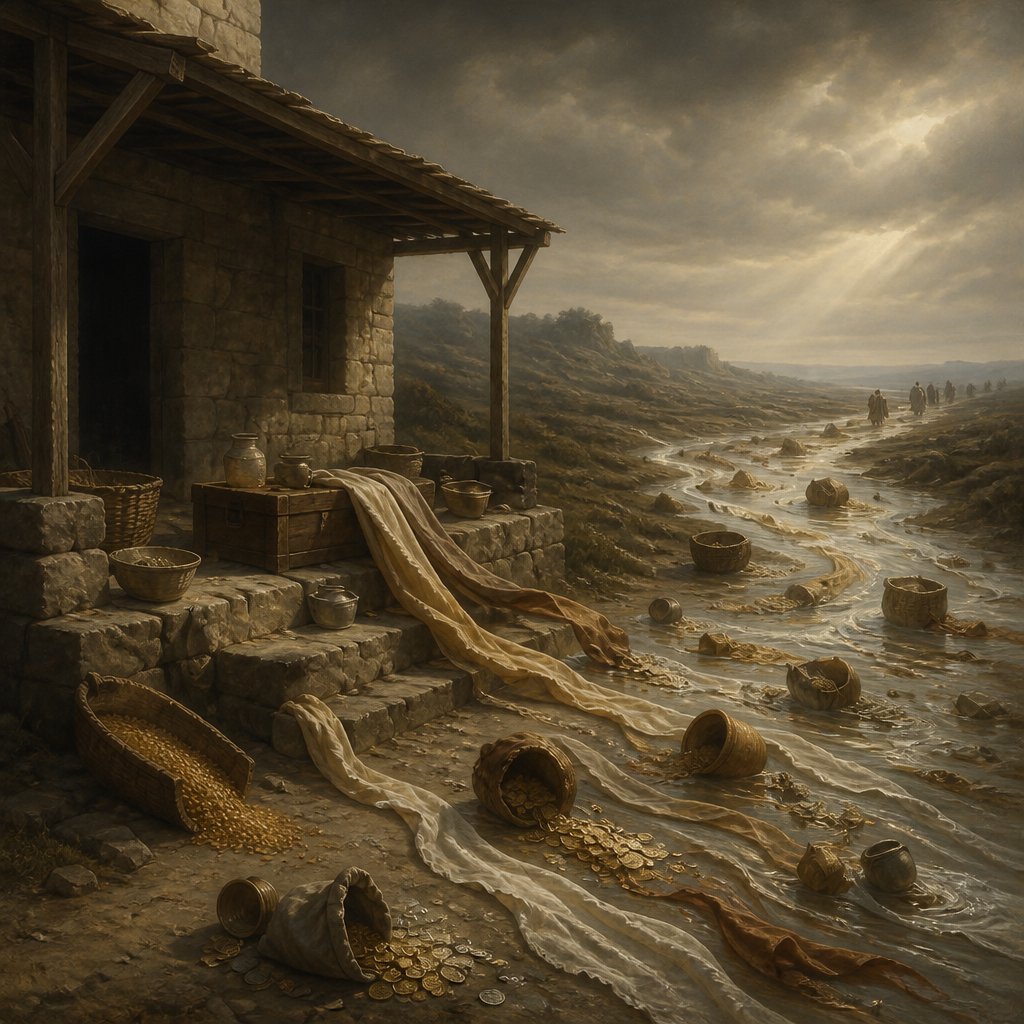
As we explore the truths found in Job 20:28, "The increase of his house shall depart, and his goods shall flow away in the day of his wrath," we are confronted with the transient nature of earthly possessions and the grave consequences of living a life distant from God. In this verse, Zophar the Naamathite speaks concerning the fate of the wicked, underscoring a central theme of the Book of Job: the ultimate justice of God.
Job, a man who had lost almost everything he held dear, serves as a poignant backdrop to Zophar's declarations. Throughout the discourse between Job and his friends, we see varying opinions about suffering and retribution, but one thread remains consistent: the precariousness of material wealth and the destiny that awaits those who rely solely on it.
The phrase "increase of his house shall depart" speaks volumes about the nature of wealth. In our society, much emphasis is placed on acquiring wealth as a mark of success and security. We build our houses, gather possessions—hoping to provide a sense of stability and comfort. Yet, as Zophar warns, that very increase can vanish when least expected. The day of the Lord’s wrath symbolizes a time of divine judgment—a moment when all that was held dear can be stripped away in an instant.
How often do we place our trust in the things that are unsteady? We invest in careers, relationships, and material goods, often blinding ourselves to the truth of their temporality. Even as we accumulate assets and elevate our status, the reality remains: these things can dissolve like mist in a morning sun, leaving behind only an echo of what was once thought secure.
The latter part of the verse, "and his goods shall flow away in the day of his wrath," speaks not only to the loss of possessions but also to the profound implications of apathy toward God. When we prioritize earthly pursuits over relationship with the Creator, we risk being caught unprepared when He calls us to account. The wrath of God, while often perceived solely in judgments and destruction, carries with it the weight of divine righteousness—where sin cannot prevail, and justice must ultimately triumph.
Let us consider what it means to have goods that can flow away. In our personal lives, this may relate to a job loss, a failed investment, or relationships built on the wrong foundation. The moment of reckoning—whether in this life or the next—prompts reflection: what are we really investing in? Are we clinging to the leaves of a tree that can be uprooted at any time, or are we committed to building on the solid rock of Jesus Christ?
Jesus teaches in Matthew 6:19-20, "Lay not up for yourselves treasures upon earth, where moth and rust doth corrupt, and where thieves break through and steal: But lay up for yourselves treasures in heaven, where neither moth nor rust doth corrupt, and where thieves do not break through nor steal." In stark contrast to the worldly treasures that can so easily slip away, an investment in heavenly treasures ensures permanence.
In the end, wealth and possessions are not inherently evil; it is the prioritization of these over our relationship with God that leads to spiritual peril. May we come to understand the significance of Job 20:28 as a divine reminder to evaluate where our hearts lie. Let us pursue relationships, faith, and righteousness that remain, even in the face of life’s unavoidable trials.
In adversity, like Job, we must seek to obey and trust in God, who remains our refuge. May our hearts and homes be filled with divine love and purpose, ensuring that even as material things wane, our spirits remain steadfast in His grace. Let us hold fast to this truth: while earthly treasures may depart, the treasures of heaven are eternal, enriching our souls for the days to come.
Get our apps


Artwork for Job 20:28
Job 20:28 - "The increase of his house shall depart, and his goods shall flow away in the day of his wrath."
"The increase of his house shall depart, and his goods shall flow away in the day of his wrath." - Job 20:28

Job 28:20 - "Whence then cometh wisdom? and where is the place of understanding?"
"Whence then cometh wisdom? and where is the place of understanding?" - Job 28:20

Job 28:3

Job 30:28

Job 30:28

Job 30:28

Job 30:28

Job 28:3

Job 28:3

Job 30:28

Job 28:28 - "And unto man he said, Behold, the fear of the Lord, that is wisdom; and to depart from evil is understanding."

Genesis 28-20

Luke 20:28

Job 1:20

Job 1:20

Job 28:14 - "The depth saith, It is not in me: and the sea saith, It is not with me."

Job 28:6 - "The stones of it are the place of sapphires: and it hath dust of gold."

Job 28:1 - "Surely there is a vein for the silver, and a place for gold where they fine it."

Job 28:16 - "It cannot be valued with the gold of Ophir, with the precious onyx, or the sapphire."

Job 28:12 - "But where shall wisdom be found? and where is the place of understanding?"

Job 3:20-21 - "Job 3:20-21: Why is light given to those in misery, and life to the bitter of soul, to those who long for death that does not come, who search for it more than for hidden treasure?"

Job 28:25 - "To make the weight for the winds; and he weigheth the waters by measure."

Job 13:28 - "And he, as a rotten thing, consumeth, as a garment that is moth eaten."

Job 28:8 - "The lion's whelps have not trodden it, nor the fierce lion passed by it."

Job 28:2 - "Iron is taken out of the earth, and brass is molten out of the stone."

Job 38:28 - "Hath the rain a father? or who hath begotten the drops of dew?"

Job 28:7 draw a hidden path

2 Chronicles 20:28