The Joyful Sound of Praise Amidst Struggles
“They take the timbrel and harp, and rejoice at the sound of the organ.” — Job 21:12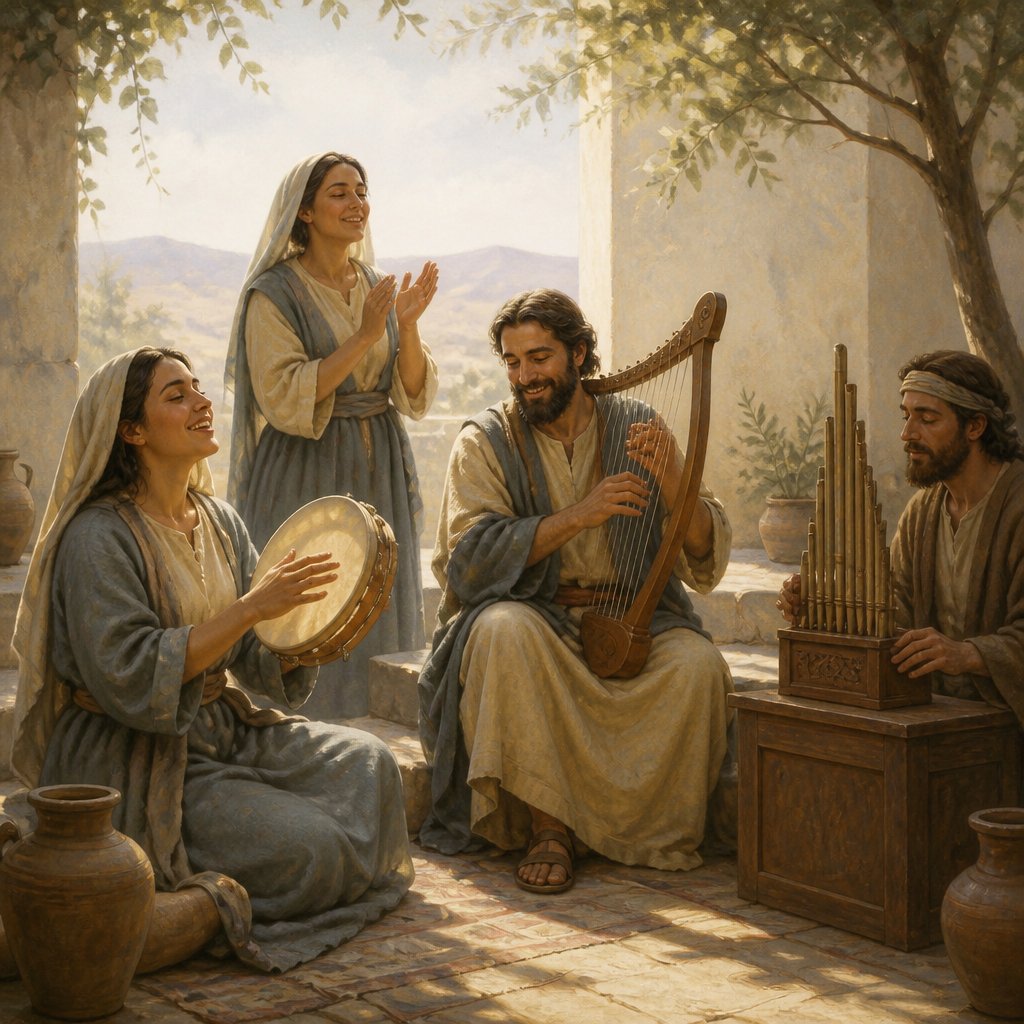
In Job 21:12, we find a captivating image of joy amid despair: "They take the timbrel and harp, and rejoice at the sound of the organ." This verse, nestled within one of the oldest books of the Bible, resonates deeply with the human experience. It paints a picture of celebration and music, counterpointed against the backdrop of Job's profound suffering and confusion.
To fully understand the depth of this verse, we must consider the context in which it is found. Job is responding to his friends who believe that suffering is a punishment for wrongdoing. He asserts that the wicked often prosper and enjoy the fruits of the earth while innocent people suffer. Yet, within this stark discussion of justice and human suffering, Job reminds us of a fundamental truth: joy and praise often arise not merely from circumstances but from a deep-rooted relationship with God.
The instruments mentioned—the timbrel, the harp, and the organ—are symbols of worship and community celebration. Each has its own unique contribution to the symphony of praise. The timbrel, a hand-held percussion instrument, signifies lively joy and spontaneity. The harp, with its melodious strings, evokes a sense of peace and reflection. The organ, grand and majestic, binds the community in rich harmonies and powerful expressions of faith. Together, these instruments illustrate the fullness of praise that comes from both individual and communal worship.
In our lives, we often find ourselves in situations akin to Job's turmoil. There are moments of uncertainty, grief, and heartache where praising God feels impossible. Yet, Job’s passage urges us to consider: how can we, too, pick up our proverbial timbrels and harps? How can we cultivate a spirit of rejoicing even when life becomes unexpectedly challenging?
To rejoice in the Lord requires us to look beyond our immediate circumstances and focus on God's abiding presence and unwavering faithfulness. Worship is a powerful antidote to despair. When we actively engage in praising God—whether through singing, prayer, or silent meditation—we shift our perspective from our trials to the goodness of our Creator. This does not negate our pain or suffering, but rather enriches our understanding of God as faithful amidst trials.
The act of worship honors God and refreshes our spirits, reminding us that He understands our struggles and walks with us through them. Just as Job expressed his turmoil, he never stopped seeking God, worshiping, and ultimately acknowledging His sovereignty. In this light, we see that singing praises can be a testament to faith—a declaration that despite the hardships we face, God is worthy of our adoration.
Moreover, the communal aspect of worship should not be overlooked. Music often has the power to bind people together. When we gather with fellow believers, sharing the burden of our struggles while simultaneously lifting our voices in praise, we reinforce the reality of God's presence in our lives. The harmonious blend of our praises, like the sound of the organ, resonates not only to glorify God but also to uplift and encourage one another. In moments when we may feel weak, our brothers and sisters’ joyful songs can bolster our spirit.
As we navigate our lives, let us remember Job’s assertion in this verse. Let it inspire us to create sacred spaces of worship—individually and communally—where we can rejoice, celebrate, and embrace the sound of praise. May we always take our timbrels and harps, rejoicing in the face of adversity, knowing that God is good regardless of our circumstances. Let our lives be an ongoing song of gratitude and faith, reflecting the joyful sound of the organ, a testament to His enduring love and grace.
Get our apps


Artwork for Job 21:12

Job 21:12 - "They take the timbrel and harp, and rejoice at the sound of the organ."

"They take the timbrel and harp, and rejoice at the sound of the organ." - Job 21:12

Job 12:21 - "He poureth contempt upon princes, and weakeneth the strength of the mighty."

Matthew 2:1-2

Genesis 2:1-2

Genesis 2:1-2

"He poureth contempt upon princes, and weakeneth the strength of the mighty." - Job 12:21

Job 21:1 - "But Job answered and said,"

Job 12:1 - "And Job answered and said,"

"But Job answered and said," - Job 21:1

Job 1:21

Job 1:21

Job 3:20-21 - "Job 3:20-21: Why is light given to those in misery, and life to the bitter of soul, to those who long for death that does not come, who search for it more than for hidden treasure?"

Job 12:12 - "With the ancient is wisdom; and in length of days understanding."

"And Job answered and said," - Job 12:1

Job 21:21 - "For what pleasure hath he in his house after him, when the number of his months is cut off in the midst?"

Job 32:12 - "Yea, I attended unto you, and, behold, there was none of you that convinced Job, or that answered his words:"

Job 21:8 - "Their seed is established in their sight with them, and their offspring before their eyes."

Job 21:2 - "Hear diligently my speech, and let this be your consolations."

Job 21:13 - "They spend their days in wealth, and in a moment go down to the grave."

Job 21:18 - "They are as stubble before the wind, and as chaff that the storm carrieth away."

Job 18:21 - "Surely such are the dwellings of the wicked, and this is the place of him that knoweth not God."

Job 21:24 - "His breasts are full of milk, and his bones are moistened with marrow."

"With the ancient is wisdom; and in length of days understanding." - Job 12:12

Job 21:10 - "Their bull gendereth, and faileth not; their cow calveth, and casteth not her calf."

Job 21:11 - "They send forth their little ones like a flock, and their children dance."

Job 21:16 - "Lo, their good is not in their hand: the counsel of the wicked is far from me."

Job 40:21 - "He lieth under the shady trees, in the covert of the reed, and fens."

Job 21:25 - "And another dieth in the bitterness of his soul, and never eateth with pleasure."

Job 21:32 - "Yet shall he be brought to the grave, and shall remain in the tomb."