From Dust to Dignity: Understanding Our Place in Creation
“How much less man, that is a worm? and the son of man, which is a worm?” — Job 25:6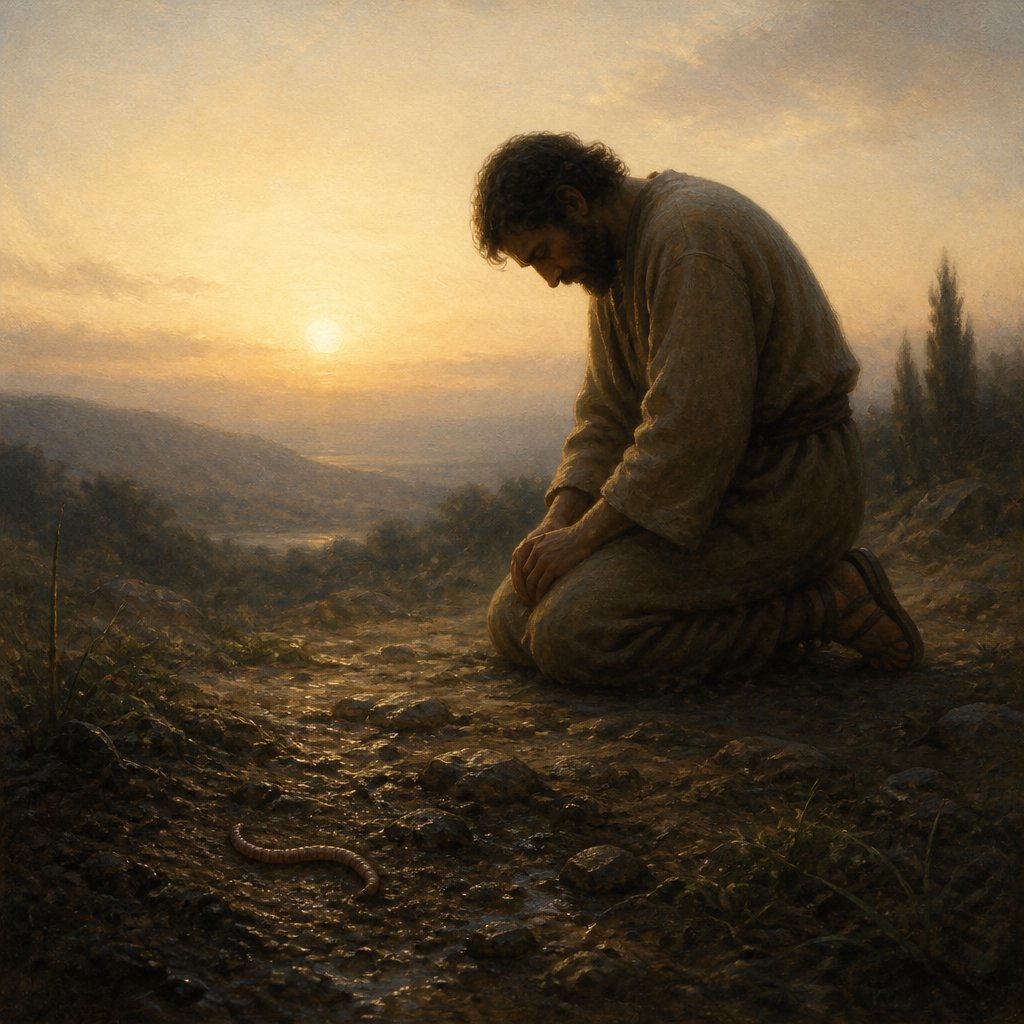
In the book of Job, amidst the profound suffering and questions of existence, we encounter a striking verse in Job 25:6: "How much less man, that is a worm? and the son of man, which is a worm?" This succinct yet powerfully evocative line encapsulates a myriad of themes—humility, human nature, and divine sovereignty—all of which invite us to reflect deeply on who we are in relation to God and creation.
### A Reflection on Our Humanity
At first glance, these words may evoke feelings of insignificance. The imagery of man being likened to a worm communicates a deep sense of humility. Worms are creatures of the earth, often overlooked and viewed as lowly. They play their part in the cycle of life, contributing to the fertility of the soil, yet they occupy a position that many would deem insignificant. Job’s friend Bildad the Shuhite spoke these words in response to Job’s lament, emphasizing the immense chasm between the Almighty and mankind. In comparing man to a worm, Bildad was underscoring humanity's frailty and sinfulness in light of God’s infinite holiness.
### Recognizing Our Limitations
The profound wisdom in acknowledging our limitations can be liberating, rather than debilitating. When we see ourselves as "worms" before God, we recognize our transient nature and the reality of our mortality. Psalm 103:14 says, "For he knoweth our frame; he remembereth that we are dust." This echoes the sentiment found in Genesis, where God formed man from the dust of the ground and breathed into his nostrils the breath of life. We are reminded of our humble origins and the need for dependence on our Creator.
However, this perspective should not lead us into despair but rather cultivate gratitude. For it's in acknowledging our frailty that we can fully appreciate God’s grace and love. God does not measure our worth by our achievements or status; instead, He sees our hearts. This revelation is beautifully captured in Romans 5:8, which proclaims, "But God commendeth his love toward us, in that, while we were yet sinners, Christ died for us." Our worth is found not in our inherent power or position but in our relationship with Christ.
### The Dignity of Being Made in His Image
Though we may be likened to worms, we must not overlook the truth that we are made in God’s image (Genesis 1:27). This truth elevates our existence, granting us dignity and purpose. Every individual bears the fingerprints of the Creator, possessing intrinsic value that cannot be diminished by our shortcomings or circumstances. Even in our lowest states, when we feel akin to the worms of the earth, we are reminded that God uses the meek and humble for His purposes. Think of how a simple worm aerates the soil and promotes growth; God’s plans often work through the seemingly insignificant.
### Living in the Light of Our Identity
Understanding our identity in light of this verse equips us to live with humility and confidence. We should approach life aware that, on our own, we are nothing. However, through Christ, we are transformed. In 2 Corinthians 5:17, we read that if anyone is in Christ, he is a new creation. Our so-called worm-like existence becomes a testimony of transformation and redemption, revealing the incredible grace that God extends to us.
### Concluding Thoughts
In moments of doubt and discouragement, let us cling to this truth: while we are worms in our own strength, we are also children of God—a precious identity that signifies worth beyond comprehension. Let us approach God with humility, recognizing our frailty yet also celebrating the incredible grace that redeems and restores. As we walk in this understanding, may we also extend that grace to others, helping them see their worth in God’s grand design.
In humility, we find strength; in weakness, we encounter grace. May we proclaim along with the psalmist, "I will bless the LORD at all times: his praise shall continually be in my mouth" (Psalm 34:1), celebrating the gift of our existence in Him.
Get our apps


Artwork for Job 25:6

Job 25:6 - "How much less man, that is a worm? and the son of man, which is a worm?"
"How much less man, that is a worm? and the son of man, which is a worm?" - Job 25:6

Job 6:25 - "How forcible are right words! but what doth your arguing reprove?"
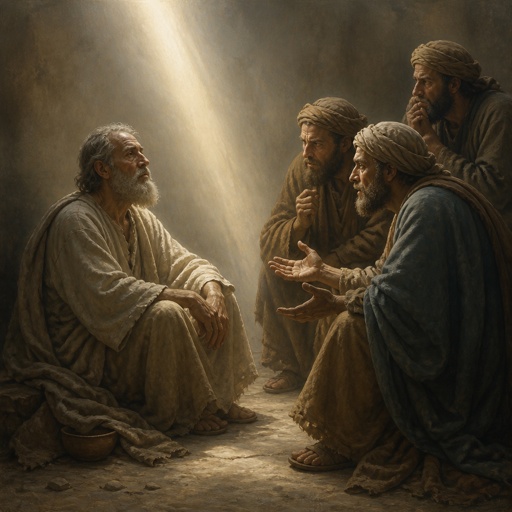
"How forcible are right words! but what doth your arguing reprove?" - Job 6:25

Job 39:13-25

Job 6:1 - "But Job answered and said,"

Job 25:1 - "Then answered Bildad the Shuhite, and said,"

Job 40:6 - "¶ Then answered the LORD unto Job out of the whirlwind, and said,"

Job 28:25 - "To make the weight for the winds; and he weigheth the waters by measure."

"But Job answered and said," - Job 6:1

Job 21:25 - "And another dieth in the bitterness of his soul, and never eateth with pleasure."

Job 30:25 - "Did not I weep for him that was in trouble? was not my soul grieved for the poor?"

Job 25:5 - "Behold even to the moon, and it shineth not; yea, the stars are not pure in his sight."

Job 36:25 - "Every man may see it; man may behold it afar off."

Job 25:2 - "Dominion and fear are with him, he maketh peace in his high places."

Job 38:25 - "Who hath divided a watercourse for the overflowing of waters, or a way for the lightning of thunder;"
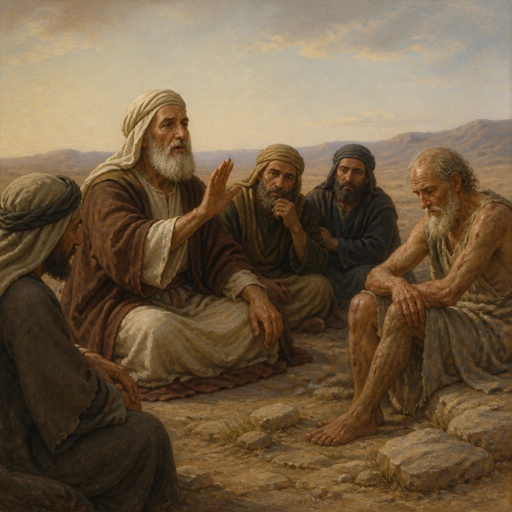
"Then answered Bildad the Shuhite, and said," - Job 25:1

Job 25:3 - "Is there any number of his armies? and upon whom doth not his light arise?"

Job 34:25 - "Therefore he knoweth their works, and he overturneth them in the night, so that they are destroyed."

Job 27:6

Job 9:25 - "Now my days are swifter than a post: they flee away, they see no good."

Job 22:25 - "Yea, the Almighty shall be thy defence, and thou shalt have plenty of silver."

Job 15:25 - "For he stretcheth out his hand against God, and strengtheneth himself against the Almighty."

Job 25:4 - "How then can man be justified with God? or how can he be clean that is born of a woman?"

Job 13:25 - "Wilt thou break a leaf driven to and fro? and wilt thou pursue the dry stubble?"

Job 41:25 - "When he raiseth up himself, the mighty are afraid: by reason of breakings they purify themselves."

Job 39:19-25 – "Do you give the horse its strength or clothe its neck with a flowing mane?"

Job 24:25 - "And if it be not so now, who will make me a liar, and make my speech nothing worth?"

Job 12:25 - "They grope in the dark without light, and he maketh them to stagger like a drunken man."

Job 6:6 - "Can that which is unsavoury be eaten without salt? or is there any taste in the white of an egg?"