From Dust to Destiny: Understanding Human Worth in God’s Eyes
“They were children of fools, yea, children of base men: they were viler than the earth.” — Job 30:8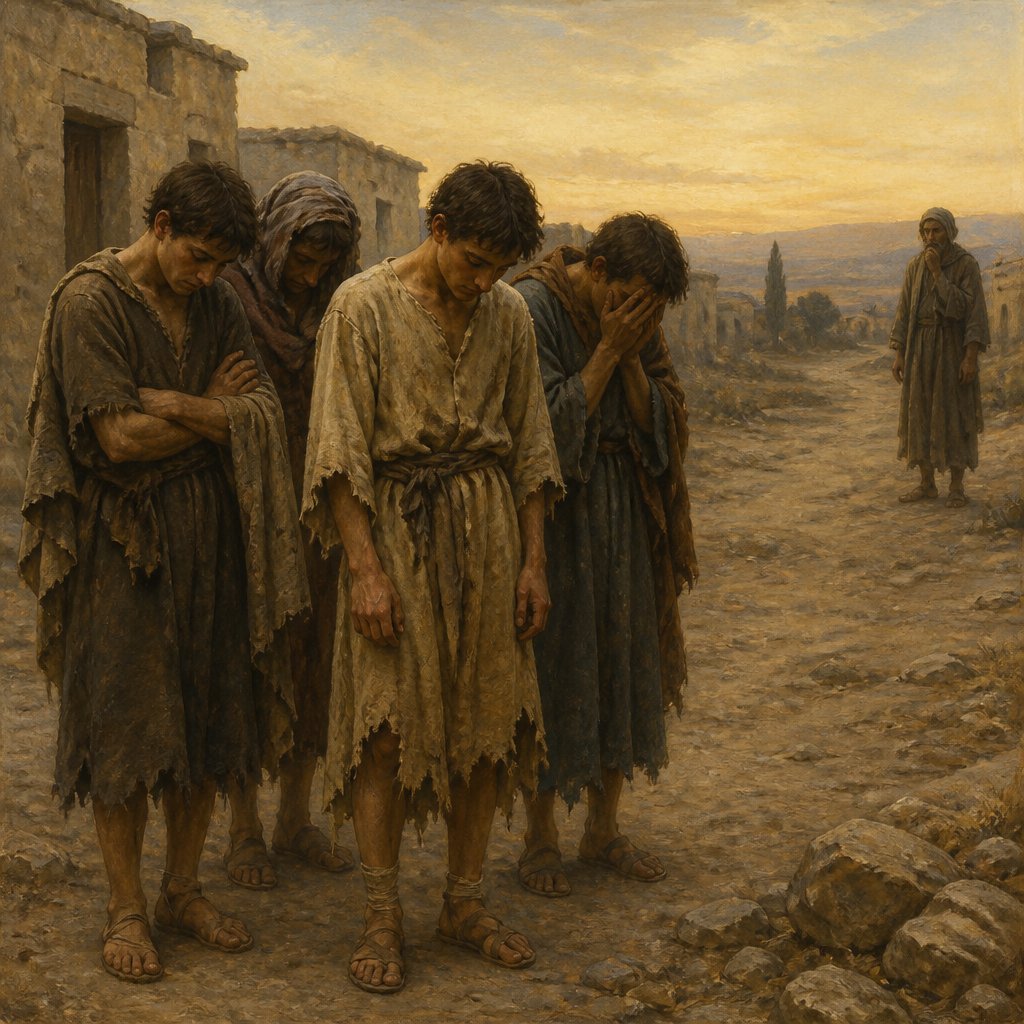
The Book of Job invites us into a profound dialogue about suffering, righteousness, and the nature of humanity. In Job 30:8, we read, "They were children of fools, yea, children of base men: they were viler than the earth." This stark declaration from Job paints a somber picture of those who are socially marginalized, often arising in contextual relevance through the deep pain of the narrative. It’s vital to unpack this verse, lifting it from its archaic phrasing into a contemporary understanding that can root us further in God’s holiness and grace.
In this verse, Job describes his former admiration and now his disdain for those who have lived life in folly, demonstrating their disregard for virtue and wisdom; he refers to them as the “children of fools” and “children of base men.” The words “fools” and “base” speak volumes about the nature of their actions and attitudes, identifying a lineage of poor choices and lack of discernment. Historically, we recognize that Job is responding in the face of his own overwhelming suffering, where he observes the moral decay surrounding him and feels the sting of injustice as the ungodly prosper.
It's easy to read Job 30:8 and dismiss it as simply the lament of a man who has lost everything. Yet, when we consider what Job communicates about societal values, the perspective sharpens. His remarks challenge us to consider how society defines worth and character. Are we not equally tempted to dismiss those who bear the marks of sin and folly as lesser beings? To view individuals through the lens of their failures rather than through the understanding of their inherent worth as God's creations can lead us down a dangerous path.
Children of fools symbolize a generation devoid of teaching—a society that forgets wisdom that should permeate our lives. There is an inherent warning in Job’s words speaking to the dangers of enjoying a life detached from divine guidance. However, the temptation exists touse this verse to foster pride or self-righteousness within our own hearts, mistakenly marking others as irredeemable. This posture contrasts starkly with our call to love and to serve as Christ did, reminding us of the great commandment to love our neighbors, even those we deem ‘viler than the earth.’
As we grapple with Job’s bitterness, let it transform into a holy desire for redemption. We are not justified in looking upon others from a place of condescension. Christ's work on the cross speaks to the truth that, no matter how far we stray, all of humanity is loved and valued by the Father. We were all once dead in sin, yet through grace, we are called to live as children of light (Ephesians 5:8).
While Job reflects on a society plagued by folly, the invitation through the gospel message is stark: take our focus off of human failure and redirect it wholly to the faithfulness of God. Where humanity may fail, God's grace triumphs, and it restores lives that have been wrecked by sin. We need to remember that even those whom society deems unworthy or ‘viler than the earth’ have souls that are desperately in need of the Savior. Our task becomes extending radical grace, mercy, and love towards them.
In community, let us then dare to redefine our understanding of worth. It's rooted not in our past actions or ancestry but in the beauty of created identity before God. As we seek to change the narrative, let’s commit to encouraging others, no matter their past, to live into the fullness of life found only in Christ—a life that reminds us that while we have all sinned, grace is indeed far greater than all sin.
Thus, as we reflect on Job 30:8, allow it to compel us towards humility, deepened compassion, and a desire to participate in the redemptive work of Christ. Only then can we stand firm against the tide of indignation and instead offer the astounding hope that, no matter our beginnings, each person can find their destiny within God’s majestic plan.
Get our apps


Artwork for Job 30:8

Job 30:8 - "They were children of fools, yea, children of base men: they were viler than the earth."
"They were children of fools, yea, children of base men: they were viler than the earth." - Job 30:8

Job 30:30 - "My skin is black upon me, and my bones are burned with heat."

Job 30:28

Job 30:28

Job 30:28

Job 30:28

Job 30:28

Job 34:30 - "That the hypocrite reign not, lest the people be ensnared."

Job 30:6 - "To dwell in the clifts of the valleys, in caves of the earth, and in the rocks."

Job 38:30 - "The waters are hid as with a stone, and the face of the deep is frozen."

Job 30:29 - "I am a brother to dragons, and a companion to owls."

Job 30:9 - "And now am I their song, yea, I am their byword."

Job 30:27 - "My bowels boiled, and rested not: the days of affliction prevented me."

Job 30:4 - "Who cut up mallows by the bushes, and juniper roots for their meat."

Job 30:7 - "Among the bushes they brayed; under the nettles they were gathered together."

"My skin is black upon me, and my bones are burned with heat." - Job 30:30

Job 22:30 - "He shall deliver the island of the innocent: and it is delivered by the pureness of thine hands."

Job 6:30 - "Is there iniquity in my tongue? cannot my taste discern perverse things?"

Job 30:25 - "Did not I weep for him that was in trouble? was not my soul grieved for the poor?"

Job 33:30 - "To bring back his soul from the pit, to be enlightened with the light of the living."

Job 30:13 - "They mar my path, they set forward my calamity, they have no helper."

Job 36:30 - "Behold, he spreadeth his light upon it, and covereth the bottom of the sea."

Job 21:30 - "That the wicked is reserved to the day of destruction? they shall be brought forth to the day of wrath."

Job 30:3 - "For want and famine they were solitary; fleeing into the wilderness in former time desolate and waste."

Leviticus 8:30

Job 30:31 - "My harp also is turned to mourning, and my organ into the voice of them that weep."

Job 30:17 - "My bones are pierced in me in the night season: and my sinews take no rest."

Job 30:10 - "They abhor me, they flee far from me, and spare not to spit in my face."

Job 30:28 - "I went mourning without the sun: I stood up, and I cried in the congregation."